Advertisement

Ever looked at your tyres and wondered what all those numbers and letters actually mean? You’re not alone. From sizes like 265/70R17 to load and speed ratings, here’s how to read tyre markings and understand what they really tell you – especially when it comes to choosing the right rubber for your 4×4.
Tyres are covered with numbers and letters, some of which are important, and some that aren’t. Here’s the tyre specifications and markings you need to know most about, so let’s start with the parts of a wheel and tyre:
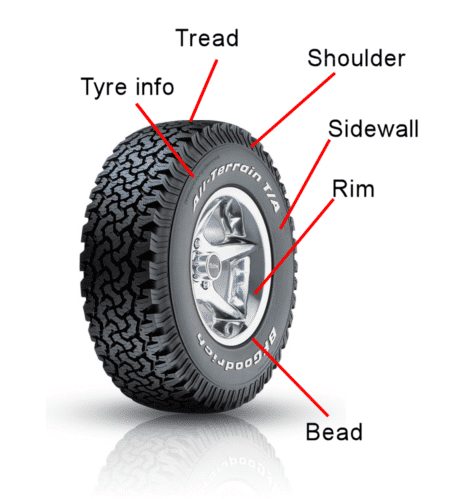
Now, let’s look at the markings
We’ll use an example tyre specification of:
LT265/70/R17 121/118S
Yours might be slightly different but it will look generally the same. Here’s what it all means:
LT
This specification refers to the construction of the tyre. In this case, LT stands for Light Truck, a tough, load-bearing construction suitable for not only light trucks but also 4x4s. The advantage of LT construction for 4x4s is more in the tough design, offering puncture resistance rather than load-bearing ability.
There is also P construction, which means Passenger tyres, but tyres are not usually prefixed P. Construction of the tyre is different from the tread pattern – aggressive, open tyres are not necessarily as tough or strong as more closed treads.
Many off-road-focused brands, including Predator Tyres, offer LT construction options designed for tougher terrain and better puncture resistance.
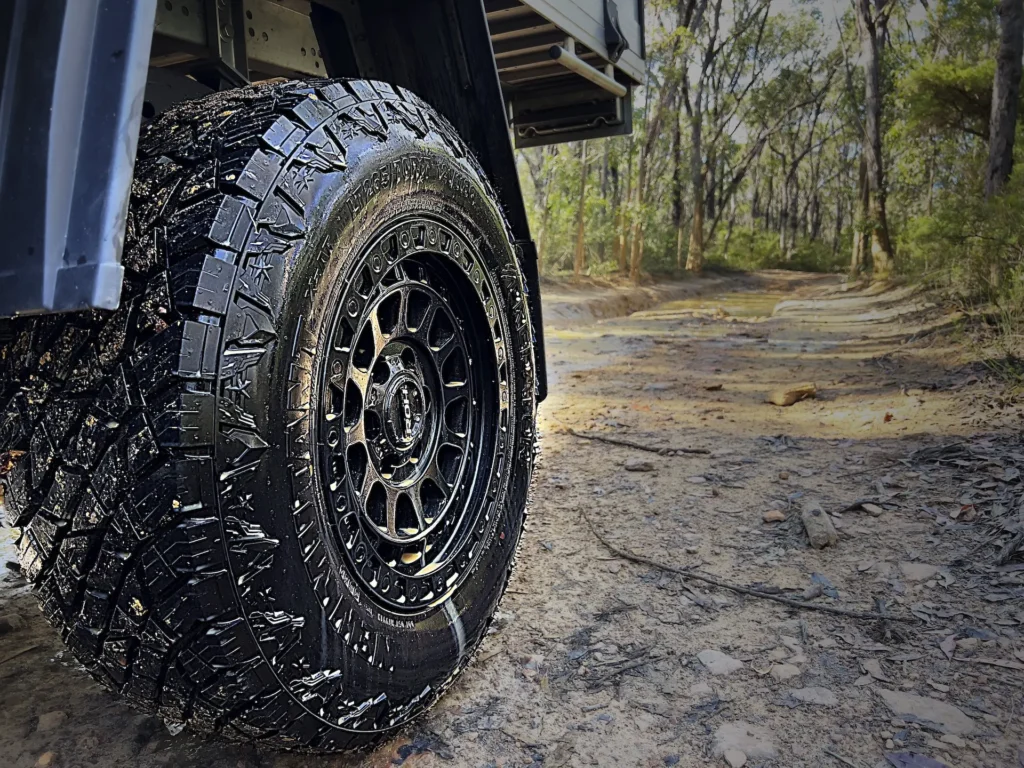
265/70/17
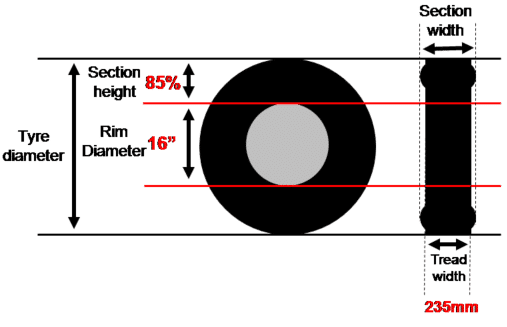
This refers to the size and the breakdown is complicated:
- 265 is the width of the tyre in mm (not the tread).
- 70 is the aspect ratio. It’s the sidewall height as a percentage of the width. So, a 265/70 tyre has 265 *0.7 = 186mm sidewall.
- 17 is the rim size in, of course…inches. 17 inches is 432mm.
The overall diameter of the tyre is the rim, 432mm, plus two of the sidewall, so 186*2 = 803mm. But we don’t talk about tyre diameter in millimetres, we talk in inches. So 803/25.4 = 31.6. This means that a 265/70/17 tyre is what we’d call a 31 or a 32, referring to its diameter in inches.
You’ll see these size markings across all brands, whether you’re running a highway tyre or something more aggressive from brands like Predator Tyres.
Here’s another tyre specification example, this time showing 235/85/16 tyres:
Confused?
Well, I don’t make the rules, I just report on them. So next time someone says they’re “running 35s”, that means 35-inch tyres. Make sure to put on your best “I’m impressed!” face. There are older ways of defining tyre sizes, but we’ll just keep with the above, which is now the most common, and move on to load rating tyre specifications.
Load ratings
Back to the examples of LT265/70/R17 121/118S. Here’s what the last few numbers and letters mean:
121/118S
Each tyre is designed to support a given load, and that’s denoted by a number next to a letter, in this case 121. That specification means the tyre can support a load of 1450kg at its maximum-inflate pressure. A rating of 120 is 1400kg, and 122 is 1500kg, but a 109 rated tyre is 1030 and a 108 is 1000, so the gap is not consistent.
The 118 is also a load rating, but that’s when the tyre is used on a dual-wheel axle vehicle like a truck, so four tyres on one axle. For the purposes of 4x4s we can ignore this rating and move to the speed rating, which is S.
This specification is the maximum speed the tyre should be run at. This is a letter, for example S which is 180km/h. A rating of T is 190km/h, and R is 170. For the ranges normal cars run at, going up or down one letter means a speed rating change of 10km/h. 4x4s have a dispensation to ignore the speed rating and fit N-rated tyres, but not to ignore the load rating.
Tread
The more open the tread pattern, the more ‘aggressive’ the tyre is, and generally, the better it performs off-road. Tread patterns are loosely categorised into road, all-terrain, rugged-terrain, mud, and extreme.
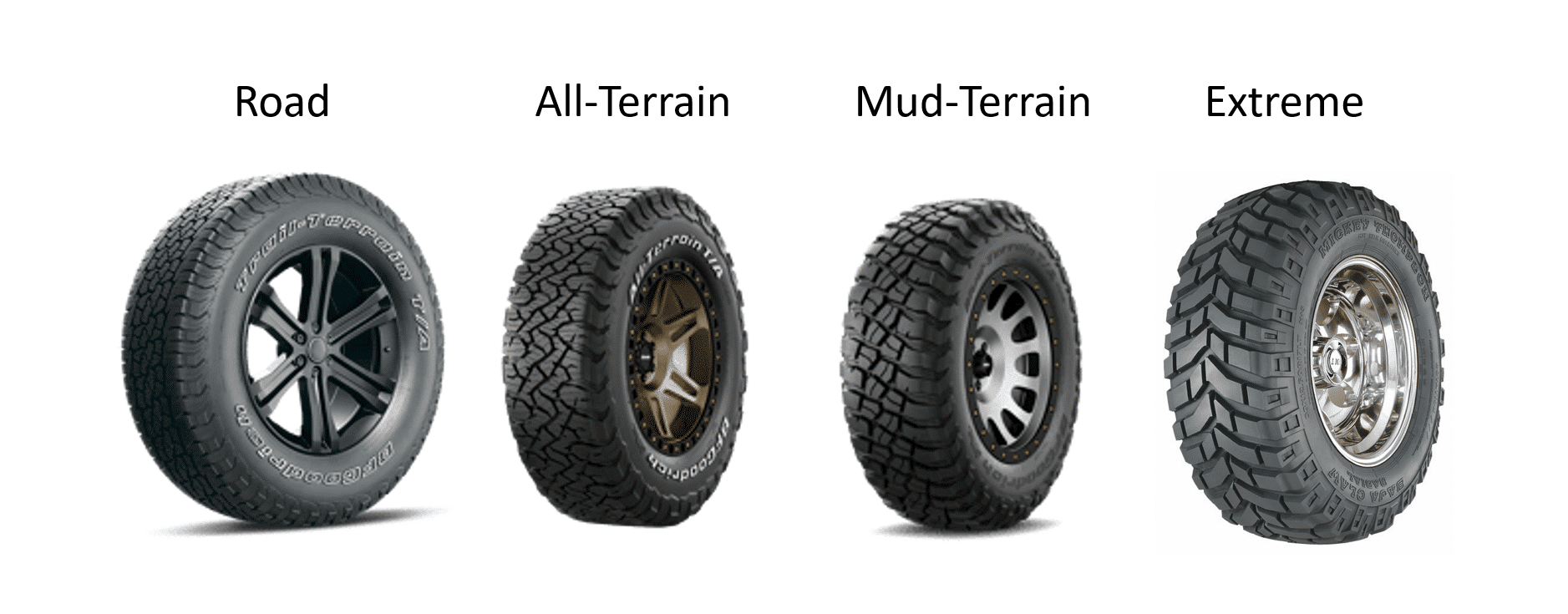
Road tyres have a tread pattern similar to roadcars, because they are for the road.
All-terrains are oriented towards road use, but have a more open pattern.
Rugged terrains are a relatively new invention and sit between mud and all-terrain. Arguably, this tyre specification distinction did not need to exist and is a marketing invention, but here we are.
Mud-terrains are misnamed, as while their open pattern works in mud, it is also good for terrains like rocks. If you want to learn more about this, read about macro-mechanical grip in our article on how 4×4 tyres work and why it matters. Mud tyres can certainly be daily-driven, but are more off-road than on-road focused.
Extreme tyres are very much off-road focused and have huge tread blocks. They’re heavy and not designed for any significant road use. You’ll find them on buggies and competition cars, or weekender off-roaders which don’t travel far to the tracks.
It is important to note that the openness of the tread pattern is only one factor in off-road performance, but it is the most visible, and the look of a tyre has a strong influence on sales by people who think they can assess a tyre on looks, or just want a particular look.
Brands like Predator Tyres offer a range of tread patterns across all-terrain, rugged-terrain and mud-terrain categories, depending on how far off-road you plan to go.
Wide vs narrow tyres
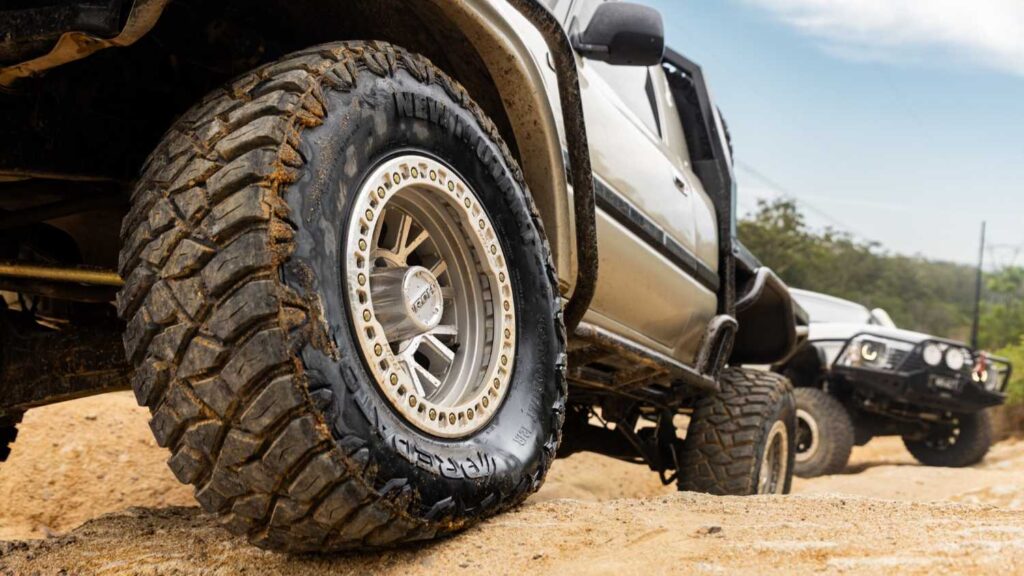
Take two tyres which are identical; construction, tread and diameter, but one is wider than the other. Which is best? For most 4×4 work, it is probably the narrow tyre specification. My tests, and those of others, show that there is a negligible difference in contact patch between narrow and wide tyres. The narrow tyres have a long, thin contact patch and the wider tyres a wider, shorter patch. The wider tyres are heavier, have greater rolling resistance, and may require wider and heavier rims.
Low and high profile tyres
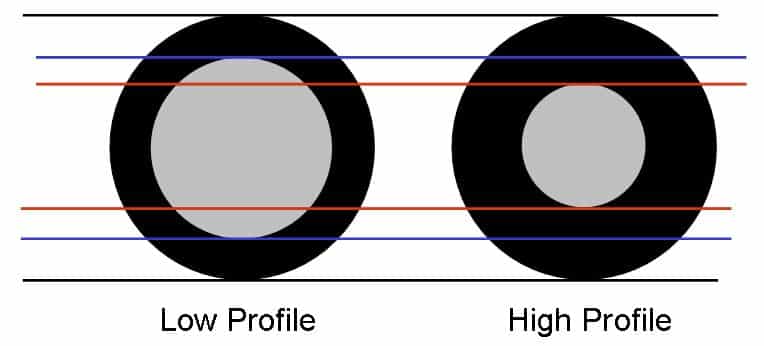
The profile, or aspect ratio, of the tyre refers to the sidewall height relative to the rim size. Remember from the sizing above that’s a percentage? This is what low and high profile tyres look like, and note the overall diameter is the same, just the rim size varies:
And this is what low and high-profile tyres look like:
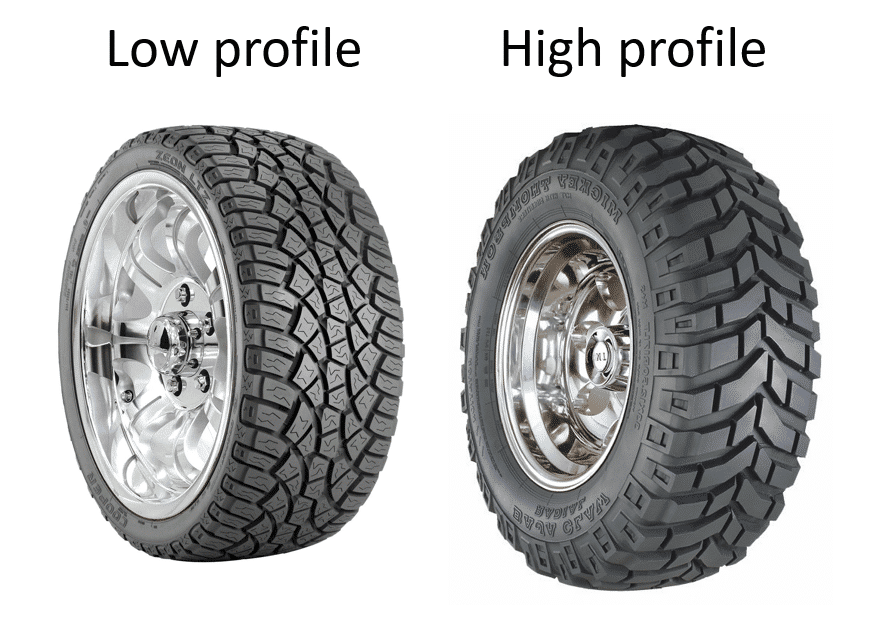
For offroading, you definitely don’t want low-profile tyres. There’s no clear definition of what a low-profile tyre is, exactly. But generally, you’d say 18″ rims or greater are low profiles on a tyre of about 31-32″, so say 60% profile or less.
So why not low-profiles? Because all else being equal, you can’t air them down as much as high-profile tyres, the rims are more likely to be damaged, the tyres are more expensive, and they are heavier.
Directional tyres
Most tyres are bidirectional, which means they’re designed to work as well forwards as in reverse. This also means you can swap them from left to right on the car, as well as carry one spare which can replace any tyre.
Directional tyres optimise grip in one direction only, so perform is better in that direction, but they lose all the bidirectional advantages. This is what the difference is; look at the tread patterns.
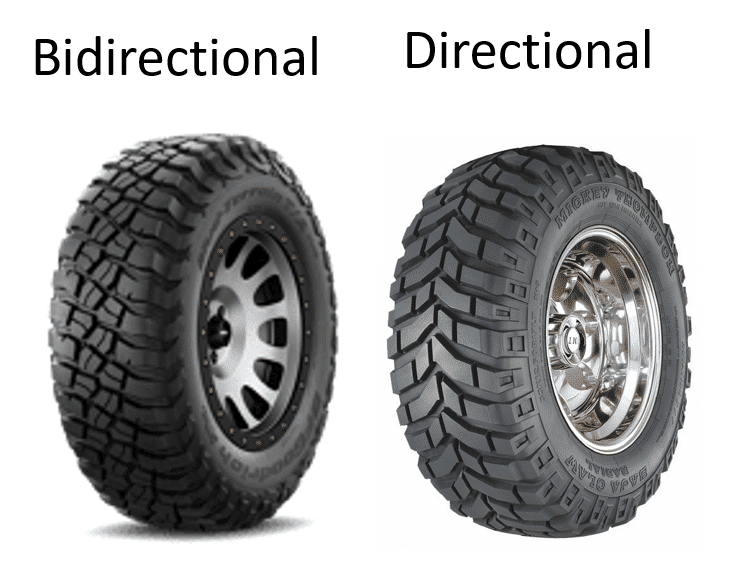
The only real need for directional tyres is specialist competition 4x4s. Everyone else can just run bidirectionals.
Tyre age
There is no fixed age when a tyre is too old, as it depends on the quality of the tyre and, more importantly, how it has been stored. However, any tyre older than five years is suspect, and you should definitely replace it by ten.
There’s an easy way to tell the age of a tyre and that is the DOT code tyre specification, which will be the letters DOT followed by a combination of numbers and letters. These are the manufacturing codes, then the age, which looks like this:
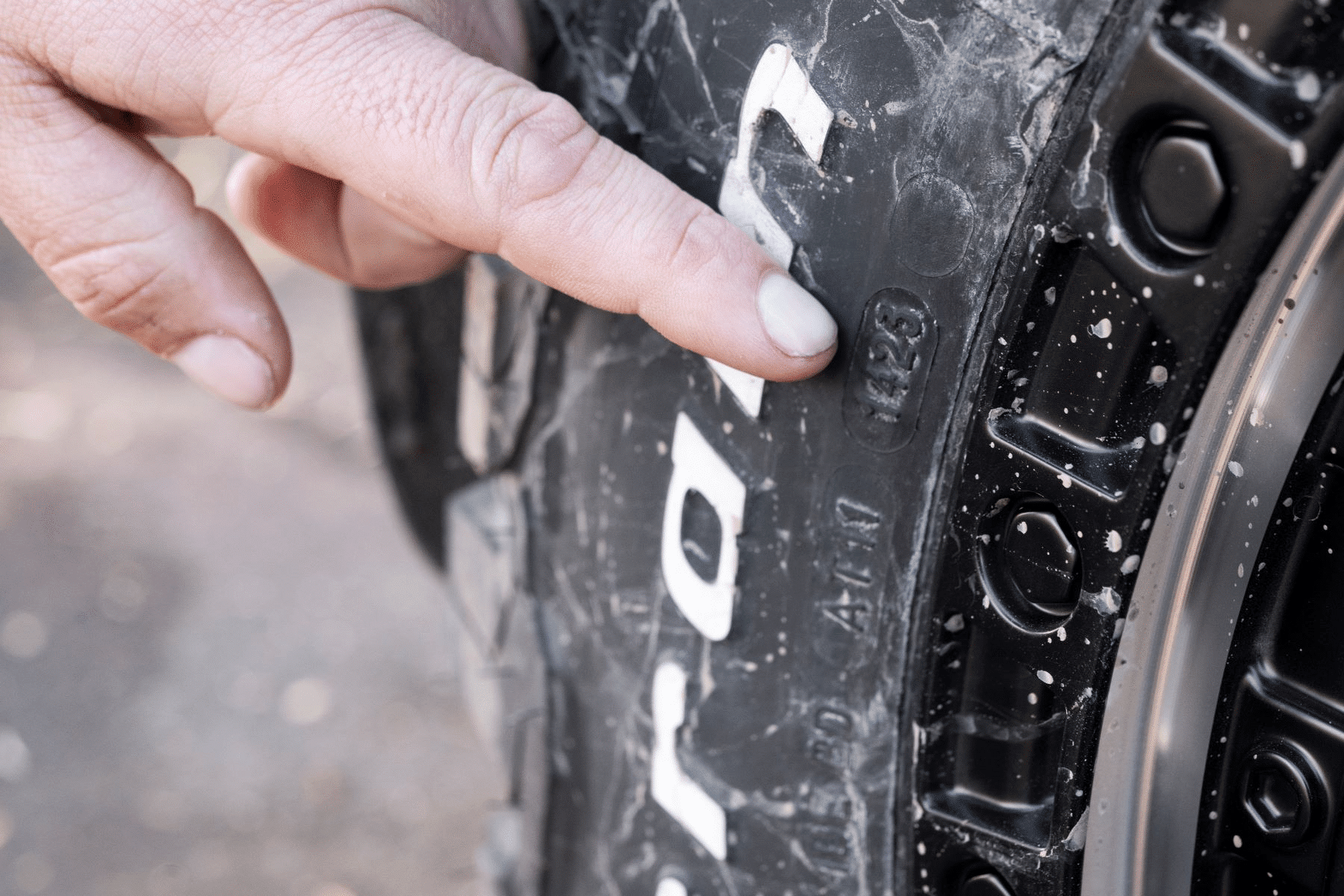
That’s four digits in an oval-rectangle, and in this case it’s 1423, which means the tyre was manufactured in the 14th week of 2023. Note that the age may be only embossed on one side of the tyre, but it’ll be there somewhere.
Max-inflate pressure
Please note that this tyre specification is a MAXIMUM inflation pressure for the MAXIMUM load the tyre will carry. It is NOT a recommended pressure! The tyre maker never provides a recommended pressure as they don’t know how their tyre will be used. You’ll find recommended pressures on the vehicle’s tyre placard near the driver’s door.
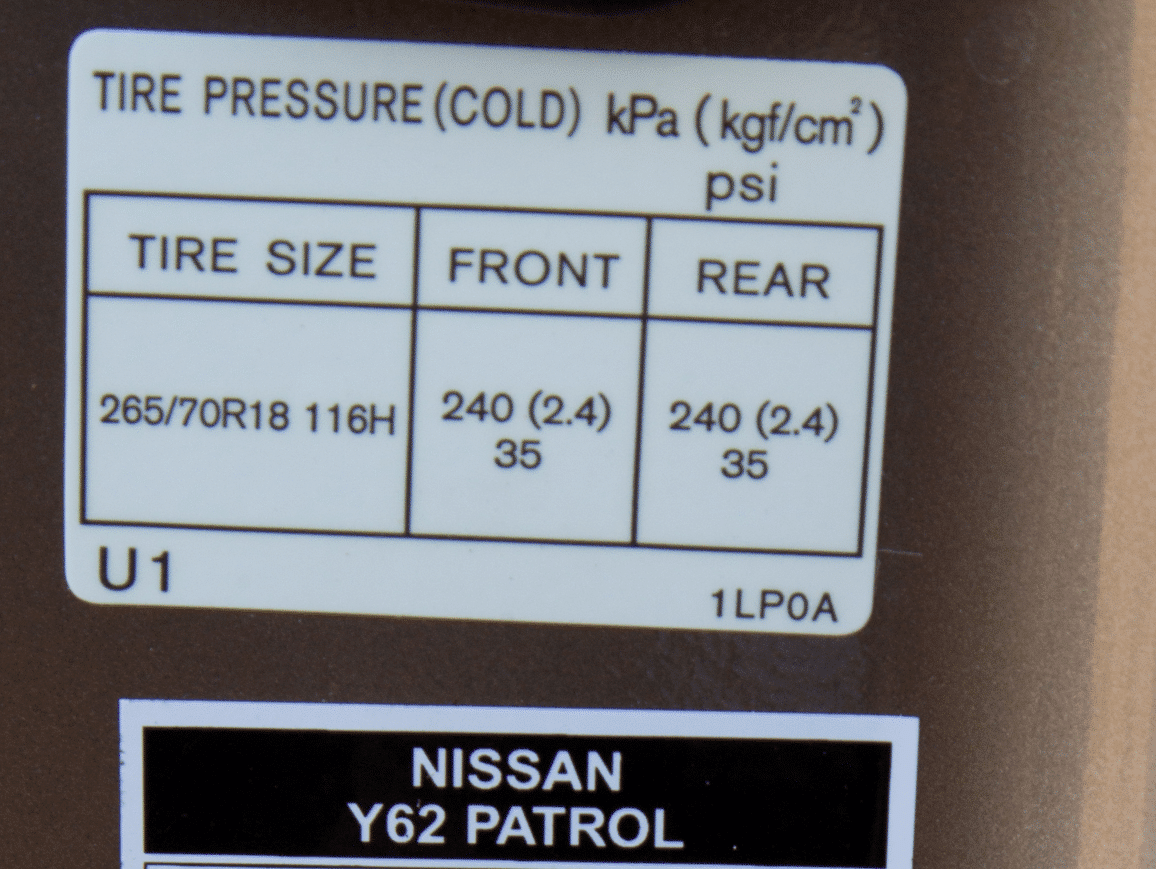
There are a few other tyre markings, but they’re not particularly important. What is important is the next article, which is on tyre pressures and driving techniques.
This article was the third instalment in our Unsealed Guide to 4×4 tyres series, where we talk about everything you need to know about tyres.
Read next:
Advertisement