Advertisement

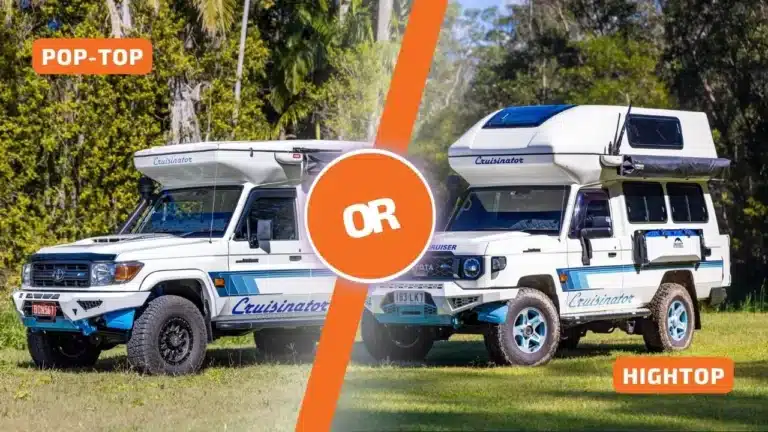
When a Swiss Master Mechanic turns his attention to the Australian bush, you get the Cruisinator, but the real question for Troopy owners is whether to stay low or go high.
Make no mistake about it, finding a camper conversion that can handle the corrugated brutality of the Outback without rattling itself to pieces is a tall order. We’ve seen plenty of conversions that look great on Instagram but fall apart faster than a wet tissue once they hit the corrugations.
Enter Bonetti Campers. If you haven’t heard the name, it’s time to pay attention. We’re taking a deep dive into their flagship Troopy conversions to help you decide what’s best for you: Pop-top or Hightop?
The man behind the machine
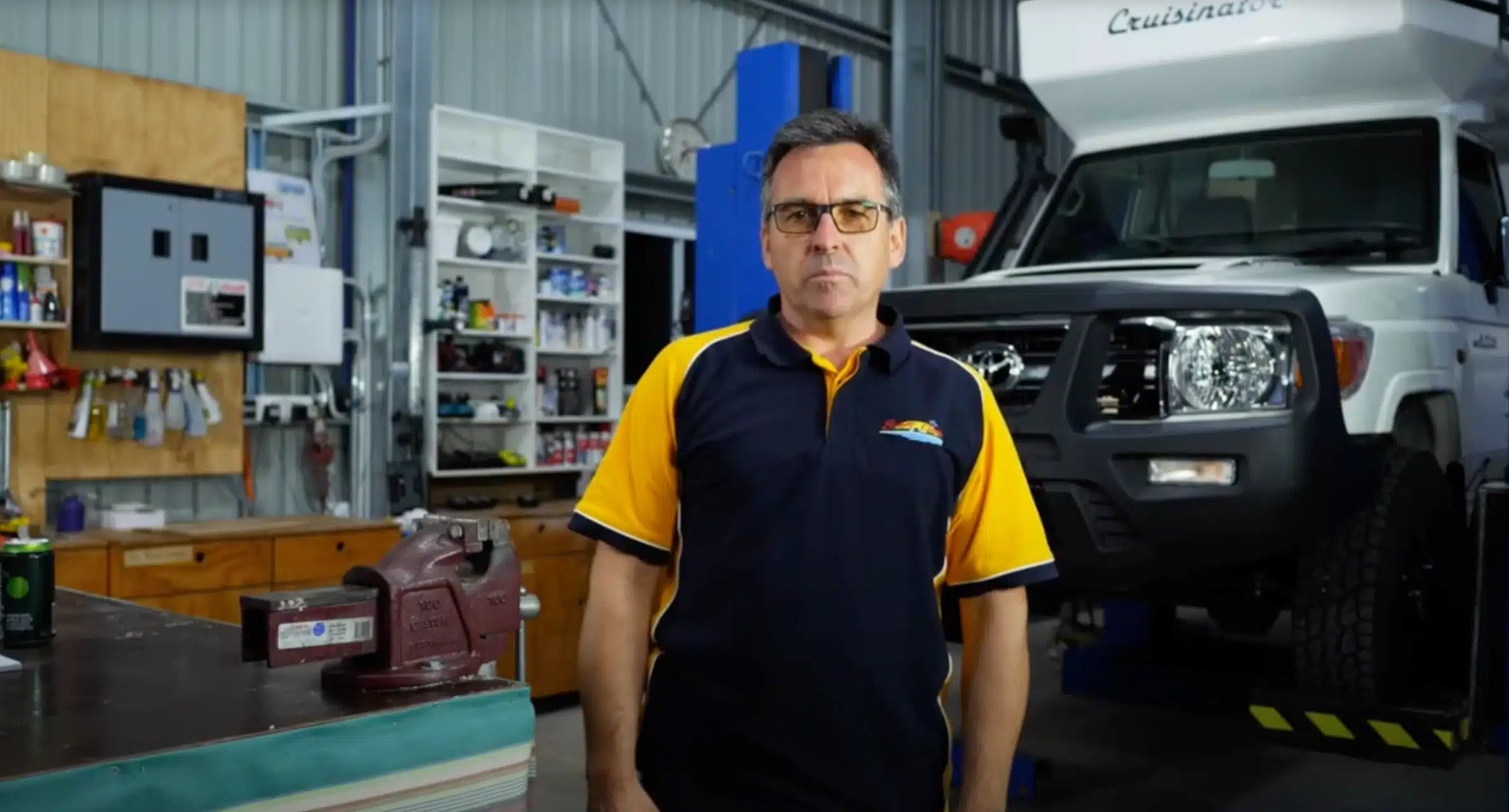
Before we get into the fibreglass and canvas, we need to talk about the bloke building these things. Stefano Bonetti isn’t just a guy with a jigsaw and a dream. He’s a bonafide Swiss Master Mechanic.
Stefano’s resume reads like an overlander’s bucket list. He started in Switzerland (where “good enough” isn’t in the vocabulary), moved to California to wrench on American RVs, and then headed to Australia to manage the KEA Campers fleet. If that wasn’t enough, he spent time in Namibia dealing with African off-road conditions – which, let’s be honest, makes some of our tracks look like highways.
He founded Bonetti Campers in Queensland back in 2012 with a simple mission: create the ultimate Troopy conversion. And you can tell. The fit and finish on these rigs is what you’d expect when Swiss precision meets Australian toughness.
The Troopy dilemma: pop or rigid?
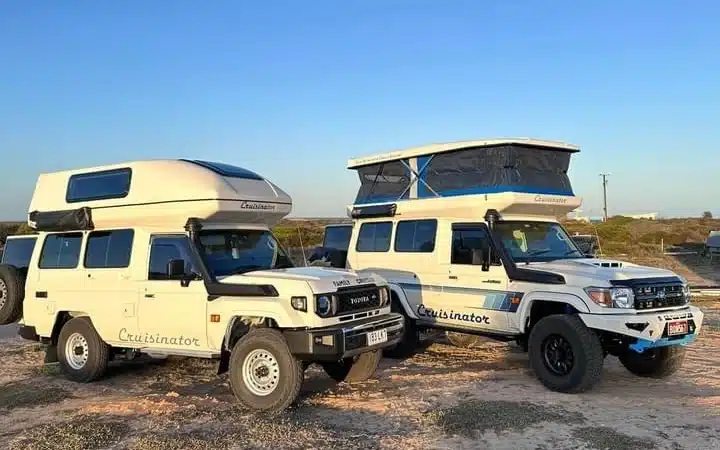
So, you’ve got yourself a Toyota Troop Carrier. It’s the legendary blank canvas of the 4WD world. But unless you enjoy sleeping in the foetal position, you need to modify the roof. This brings us to the age-old debate: Do you go for the permanent “Fortress” of a Hightop, or the sleek “Transformer” utility of a Pop-top?

Option A: The Cruisinator Hightop (The “Fortress”)
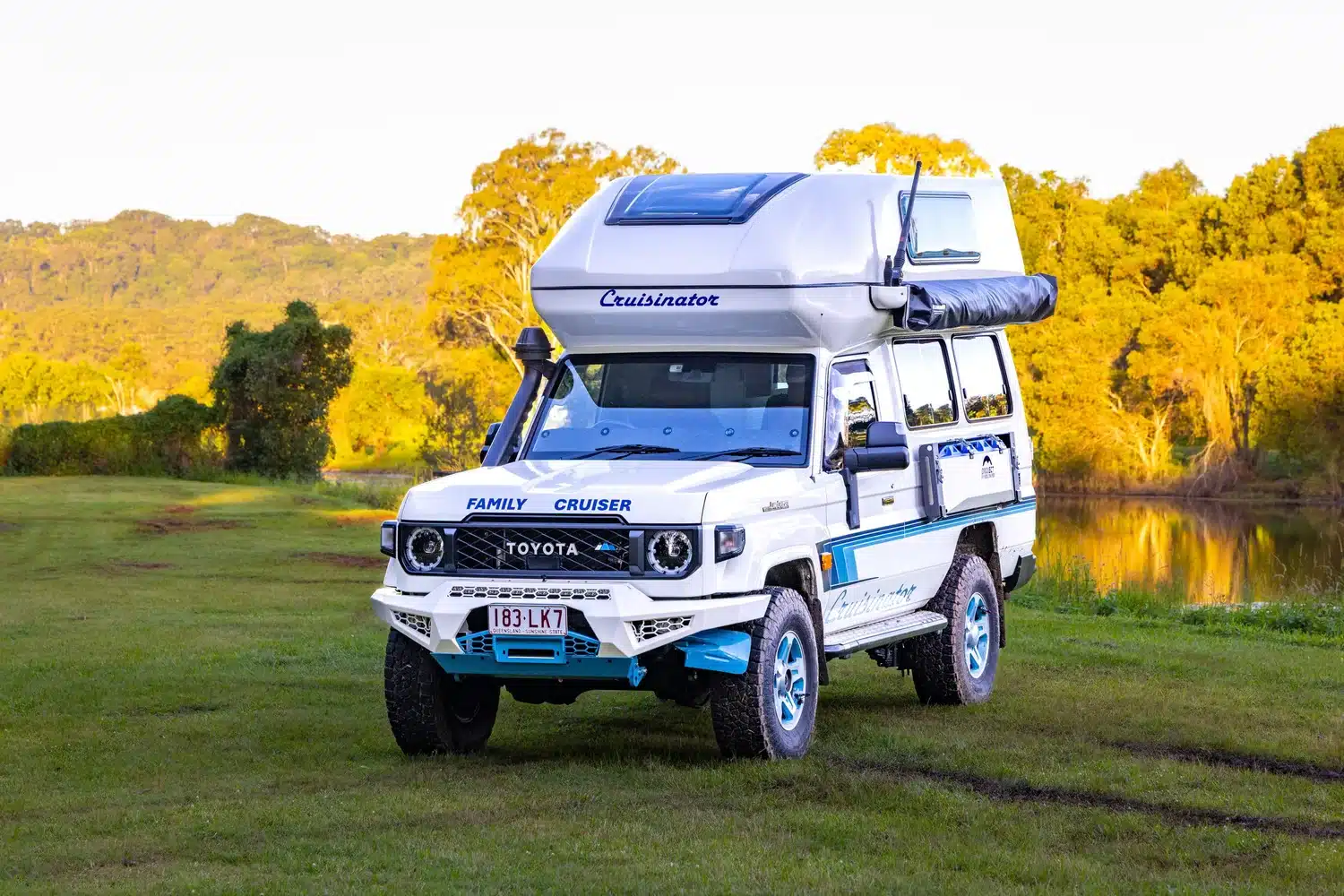
Let’s start with the big unit. The Cruisinator Hightop is for the traveller who wants a “home on wheels” feel without the hassle of setting up camp every night.
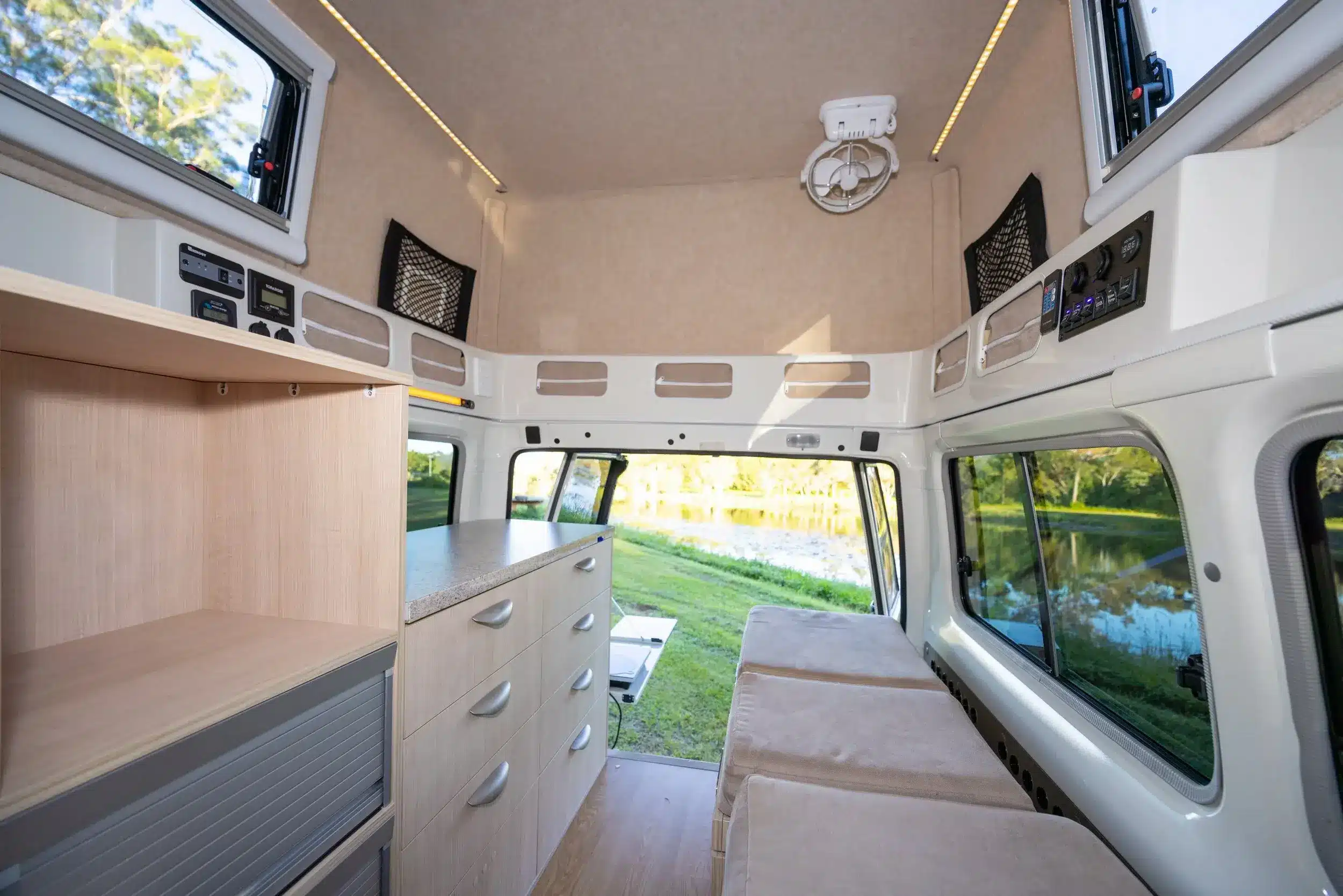
The headline figure here is the 185cm standing height. That’s permanent headroom, folks. No unlatching, no pushing, no fabric. You literally just walk from the driver’s seat into the back and stand up. For anyone who has tried to get changed in the back of a standard Troopy, you’ll know this is a game-changer (and yes, I actually mean it this time).
Because it’s a solid fibreglass shell, the insulation is superior. It keeps the heat out in the Top End and the warmth in down in Tassie. It also offers better security than canvas. If you’re planning on spending months on the road, parked up in towns or dodgy campsites, that solid wall feeling is hard to beat.
Option B: The Cruisinator Pop-top (The “Transformer”)
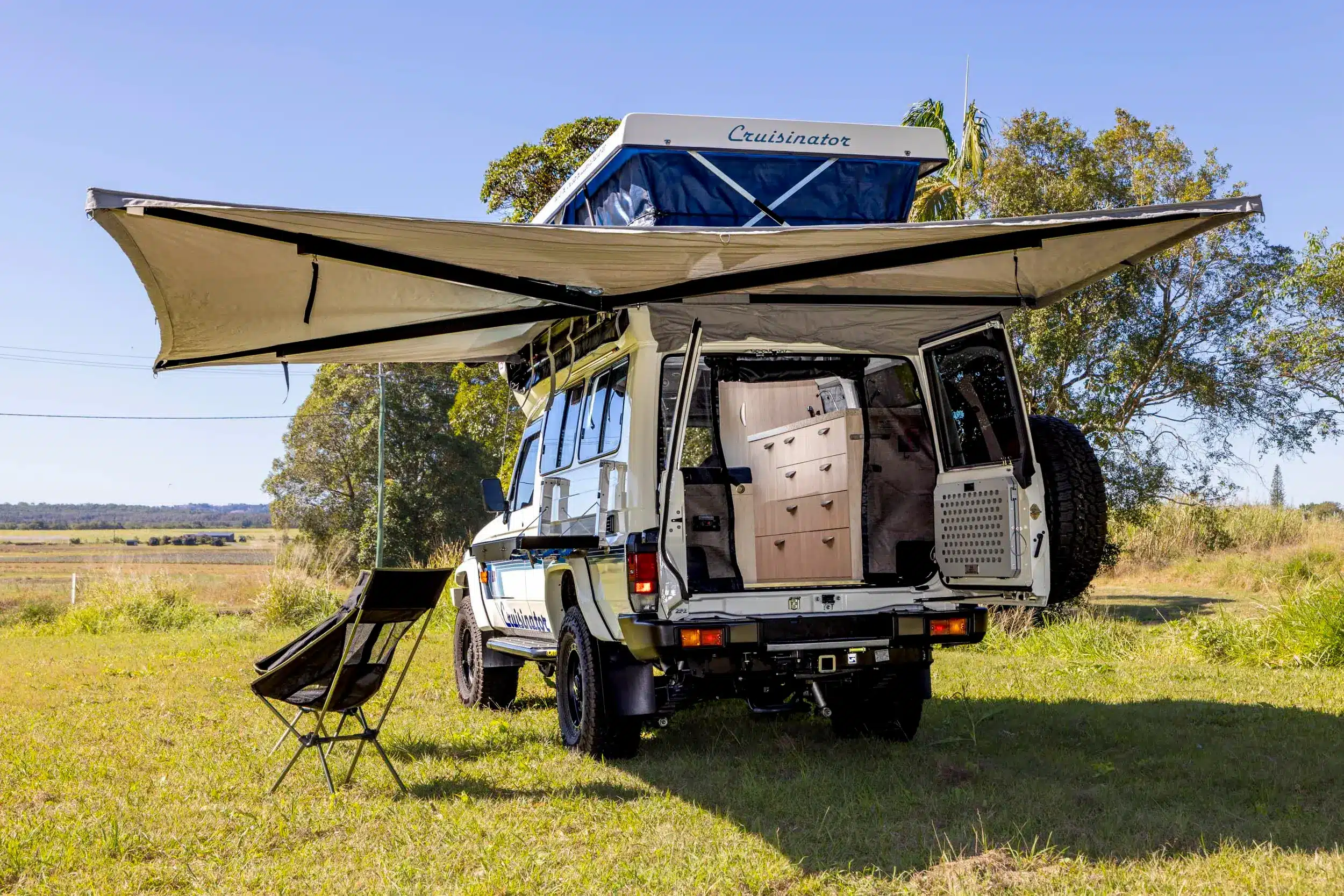
On the other side of the ring, we have the Cruisinator Pop-top. This is for the 4WD purist who refuses to compromise on centre of gravity or trail clearance.
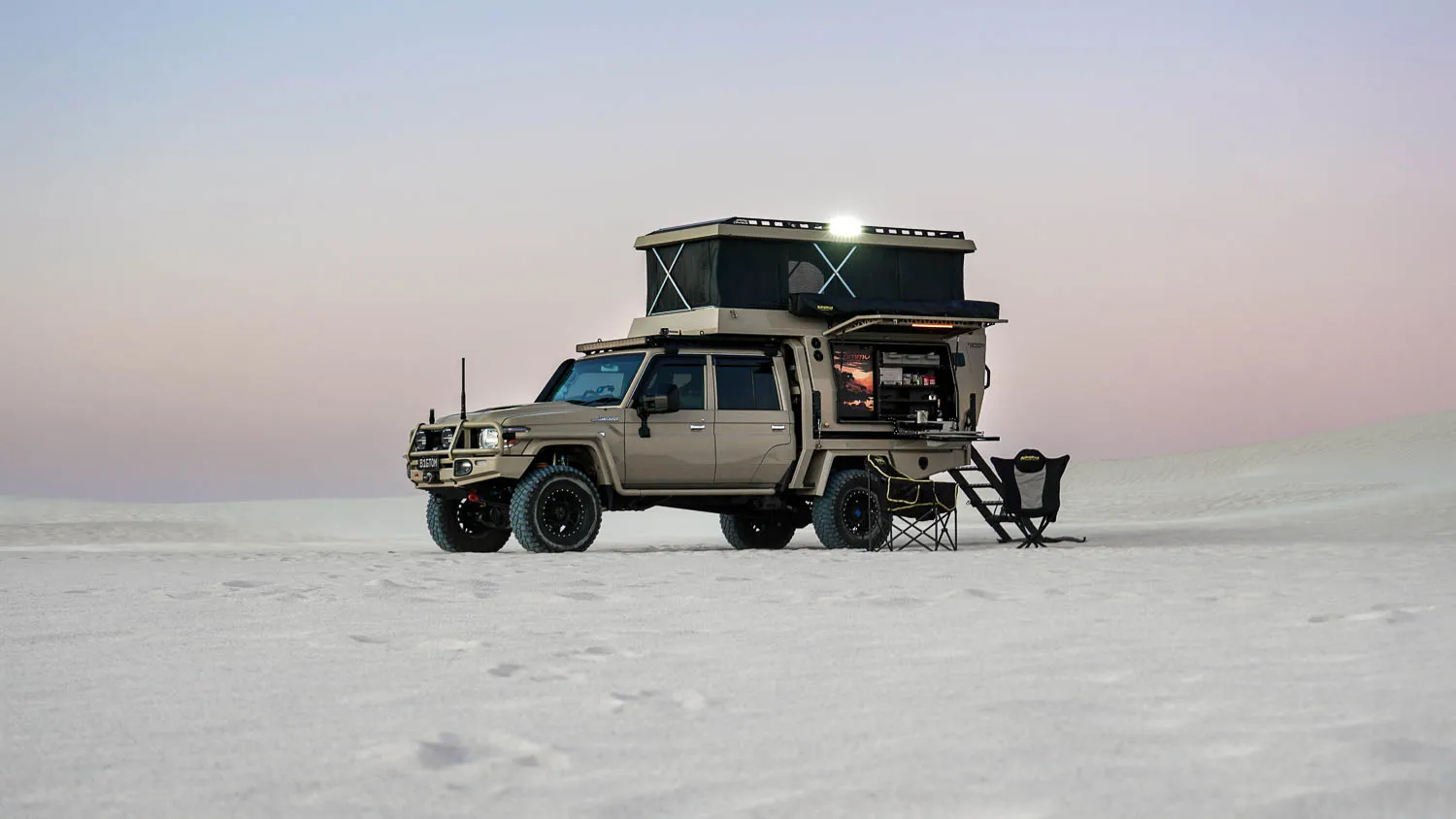
When closed, the Pop-top keeps the Troopy’s profile sleek. This means less wind resistance on the highway (saving you a few bucks on diesel) and less chance of snagging a low-hanging branch on a tight bush track. But press a button (yep, the 2025 update includes an optional airbag lift system), and the roof raises to reveal a massive, airy living space.
The killer feature here is ventilation. The canvas section features six huge zippered windows. In a hot Australian summer, being able to open everything up and catch a cross-breeze is absolute bliss. Plus, the roof is strong enough to carry up to two solar panels even when lifting.
The shared DNA
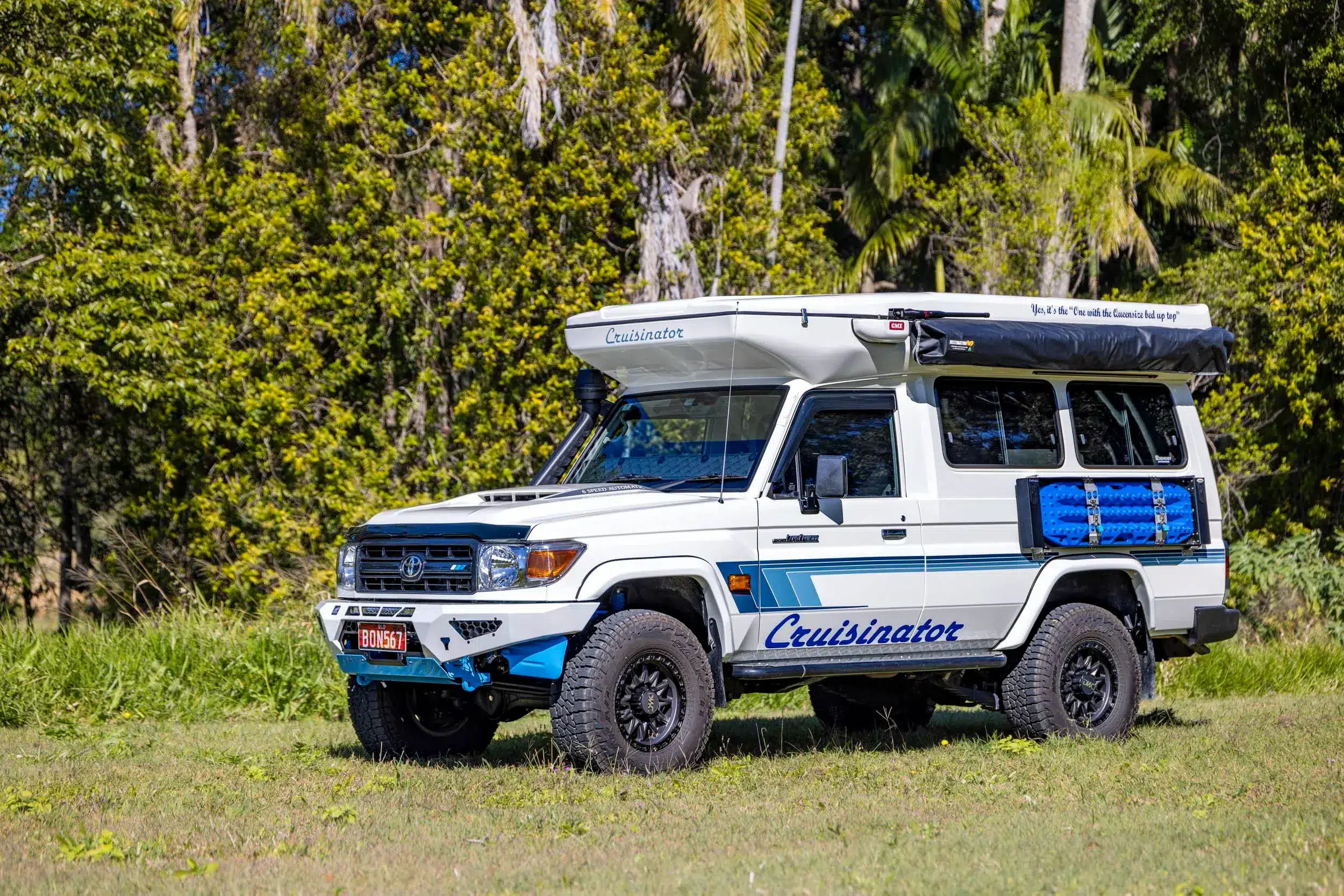
Regardless of which roof you choose, the Bonetti DNA remains the same. Both conversions are built right here in Maroochy River, QLD, and they both feature Stefano’s clever design touches.
We’re talking massive queen-sized beds in both models (measuring 2.10m x 1.45m with a 110mm thick mattress—luxury!), outdoor shower tents, and high-quality Foxwing awnings. Standard fit-out includes a proper 120-150Ah Lithium system, not the smaller AGM setups you might see elsewhere. There’s also 95-120L of fresh water on board and various hot water options (12V, 240V, or heat exchange) available so you can actually enjoy that outdoor shower.
Inside, the fit-out is pure class. Stefano uses Italian-made lightweight laminated poplar plywood for the cabinetry—it’s tough but keeps the weight down. But the real genius is in the roof collar. Instead of wasted space, you get seven shoebox-sized storage pouches for your gear. It’s a brilliant use of dead space that also hides all the cabling for lights and switches, keeping the interior clean and snag-free. Oh, and there’s a dedicated spot for a Porta Potti, because nobody likes a midnight dig.
For the DIY legends
Here’s a bit of a win for those of you handy on the tools. Stefano understands that 4WDers love a project. You don’t have to buy the “total camper” package.
Bonetti Campers offers a “roof only” conversion. This means you can get the hard engineering work done by the pros—the cutting, the sealing, and the roof install—and then do the internal fit-out yourself in your driveway. It’s a brilliant way to save some coin and build a rig that perfectly suits your specific needs.
What’s the damage?
Quality engineering doesn’t come cheap, but in this game, you buy once or you cry once. Pricing for the 2025 conversions starts at around $18,000 for the Pop-top and $20,000 for the Hightop (conversion only).
Considering the engineering involved and the resale value of a well-sorted Troopy, I reckon that’s pretty reasonable bang for buck.
The verdict
So, which one wins? Well, it’s horses for courses.
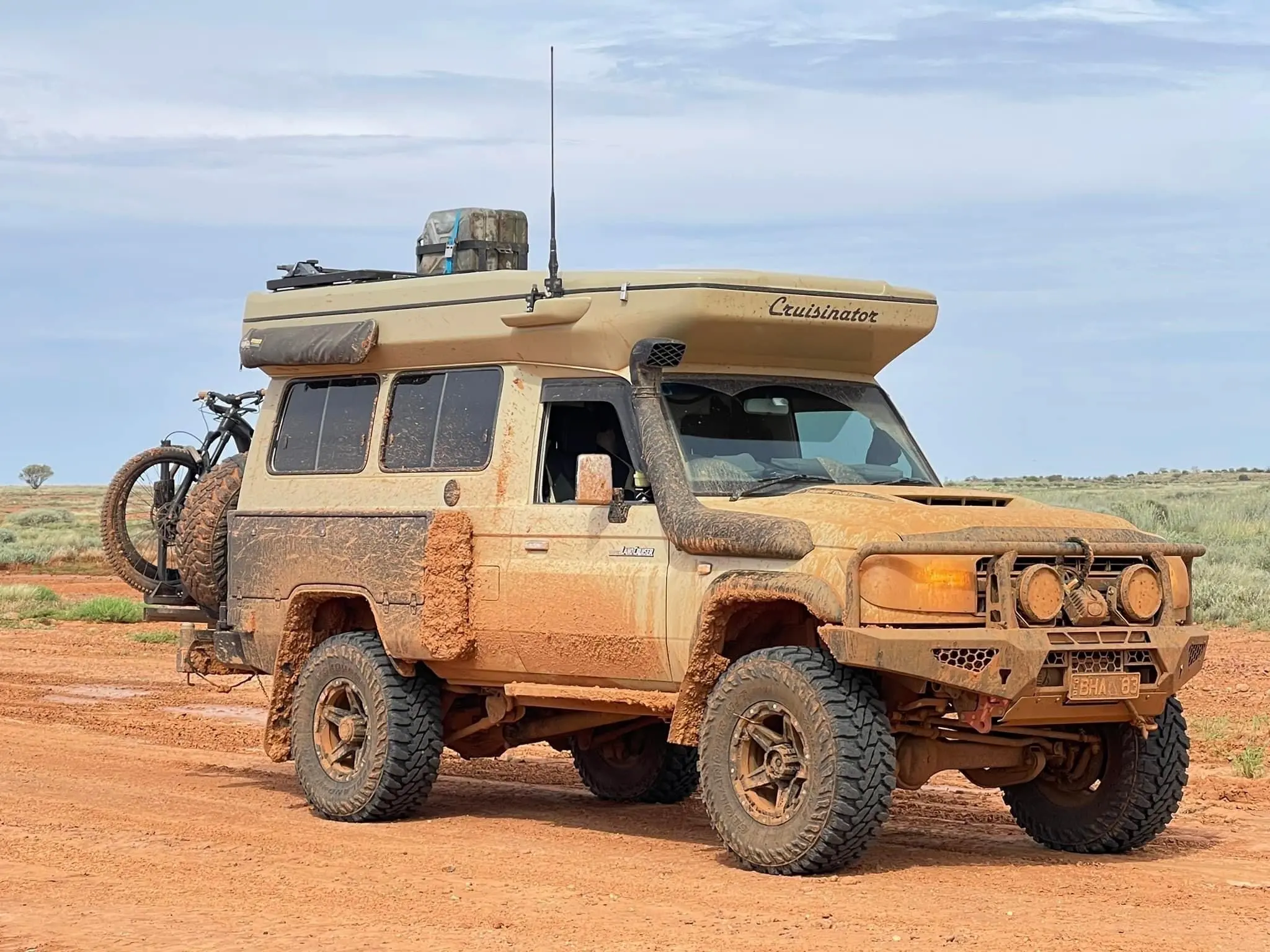
If you’re planning a Big Lap and want maximum weather protection, security, and the convenience of “park and sleep,” the Hightop is hard to beat. It feels more like a motorhome and less like a tent.
However, if you’re chasing gnarly tracks, worried about height restrictions, or just love the feeling of sleeping in the fresh air, the Pop-top is the way to go.
Either way, you’re getting a rig built by a master mechanic who knows exactly what it takes to survive the Aussie outback. If you’re serious about building a Troopy, you need to have a chat with Bonetti Campers.
Read More
The best 4×4 motorhomes and campervans for off-road adventures
The history of the Toyota LandCruiser in Australia
Advertisement