OPUS Expedition hybrid caravan range delivers serious off-grid touring value
OPUS launches the Expedition hybrid caravan range with Max and Pro models designed for off-grid touring and tough Australian conditions without the premium price tag.
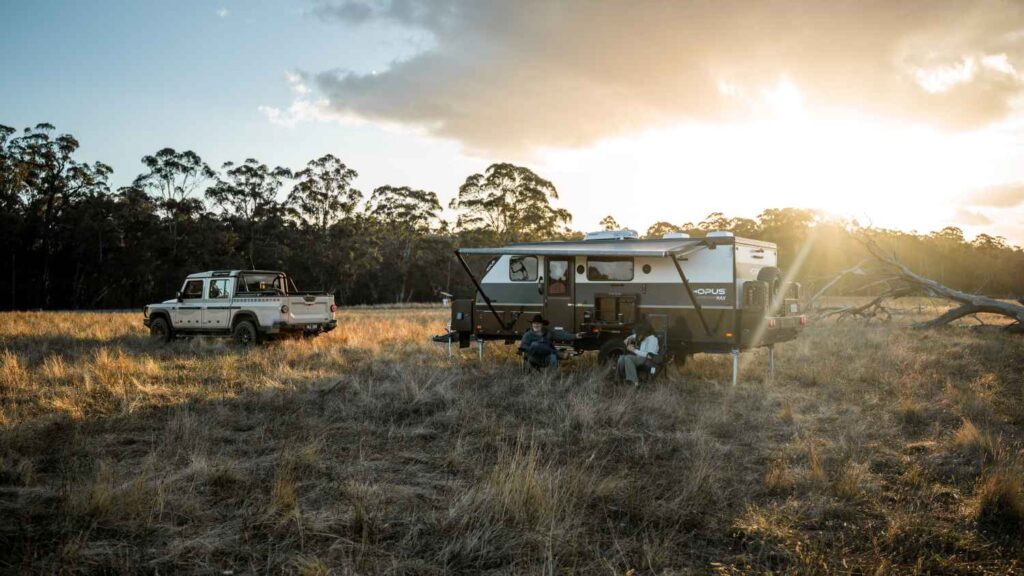
OPUS has unveiled its new Expedition hybrid caravan range, introducing two off-grid touring models designed for Aussie conditions and aimed at delivering serious capability without the premium price tag.
If your idea of a great weekend involves dust, corrugations and a remote campsite far from the nearest caravan park, OPUS has something new worth a look.
The company has just unveiled its OPUS Expedition hybrid caravan range – two new off-road touring rigs designed for travellers who want to camp off-grid without giving up the comforts of a proper caravan while still keeping the price within reach.
According to OPUS, the Expedition range has been engineered to deliver serious off-grid capability while maintaining the comfort and convenience many travellers now expect from a hybrid caravan.
Models: Expedition Max (family) and Expedition Pro (couples) Type: Off-road hybrid caravan Power system: 600Ah lithium batteries, 800W solar, 3000W inverter Chassis: Hot-dipped galvanised chassis with gooseneck drawbar Suspension: Independent coil spring with dual Pedders shock absorbers Hitch: DO35 3.5T articulated off-road hitch Water capacity: 240L fresh water, 70L grey water
Sleeping capacity:
• Expedition Max: up to 4–5 people • Expedition Pro: 2 people
Starting price:
From $67,500 + on-road costs
The new range includes the Expedition Max, designed for families, and the Expedition Pro, a more compact option aimed at couples who want to travel lighter while still heading off the beaten track.
Both vans promise the usual hybrid caravan appeal: the toughness to tackle rough Australian roads, combined with the convenience of a caravan-style setup once you arrive.
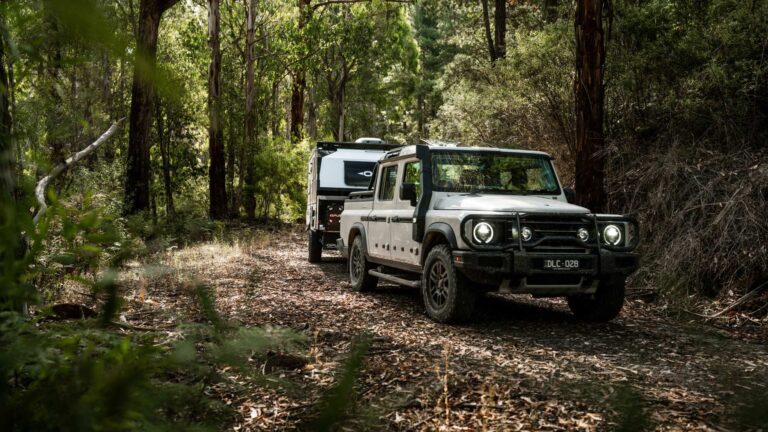
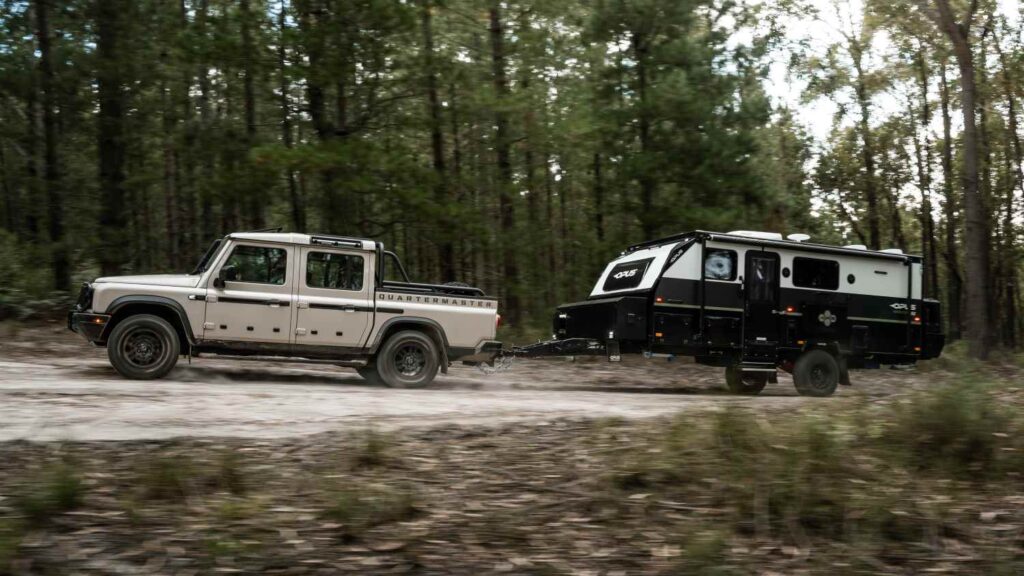
At the heart of the OPUS Expedition hybrid caravan range is a heavy-duty off-road platform designed for touring beyond the bitumen.
Both models feature a hot-dipped galvanised chassis with a drop-down gooseneck drawbar, along with independent suspension and dual Pedders shock absorbers to help smooth out corrugated tracks.
An articulating DO35 off-road hitch allows for better movement between the tow vehicle and van on uneven terrain, while off-road tyres and stone protection are designed to handle the kind of roads most caravans would rather avoid.
It’s a setup clearly aimed at campers who like their comfort, yet still want to wander a little further down the map.
Serious off-grid power
One of the standout features of the new Expedition range is the amount of onboard power. Setups of this size are typically found in much more expensive vans, making the Expedition range particularly interesting for buyers chasing strong off-grid capability without stretching the budget.
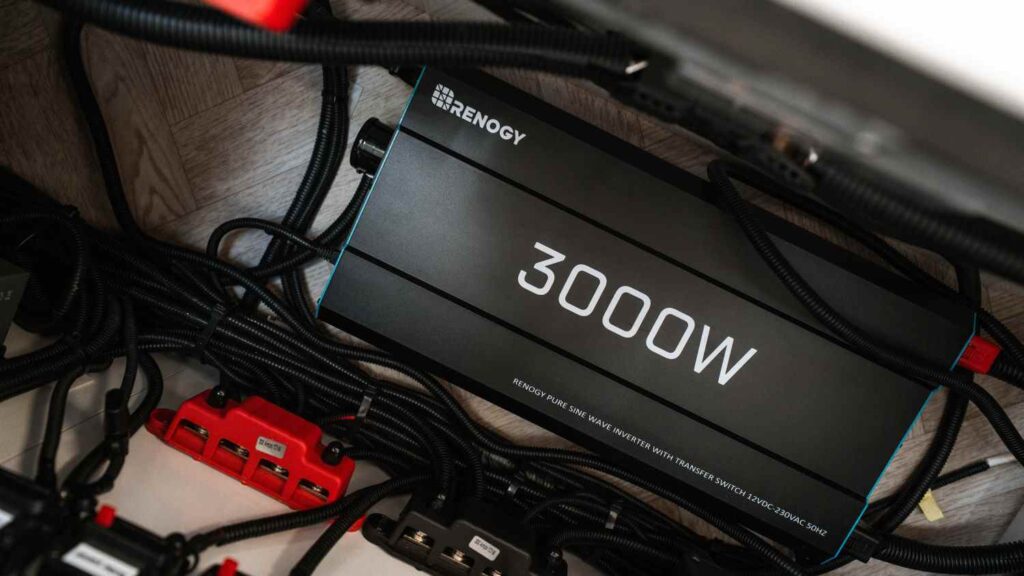
Both vans come standard with a 600Ah lithium battery setup, backed by 800W of roof-mounted solar and a 3000W inverter, giving travellers the ability to run appliances and stay powered up well away from mains electricity.
The system is built around a Renogy power management setup, including AC-DC and DC-DC charging and a battery management system designed to monitor everything from a single interface.
In practical terms, it means the Expedition vans are designed for extended off-grid camping rather than quick overnight stops.
While the chassis and suspension focus on off-road durability, the interior leans heavily toward comfort.
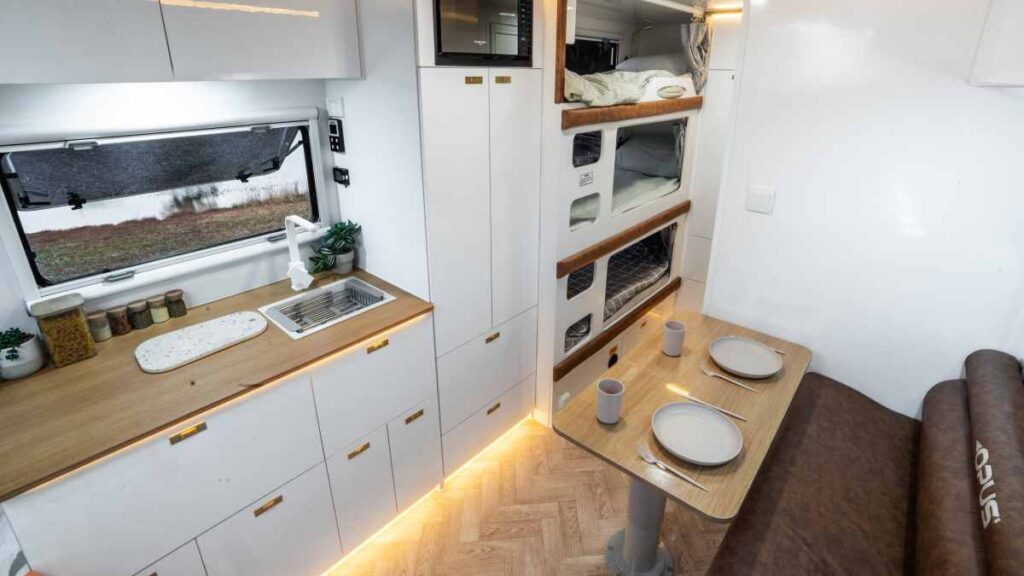
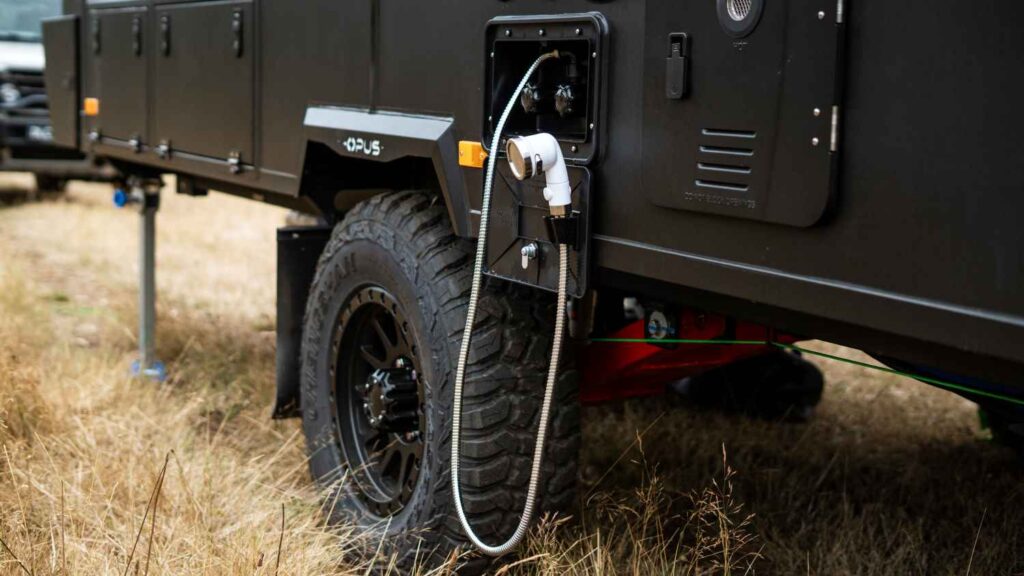
Both models include a queen-size bed with an innerspring mattress, an internal ensuite with shower and toilet, a 130-litre Dometic fridge/freezer, and Dometic air conditioning.
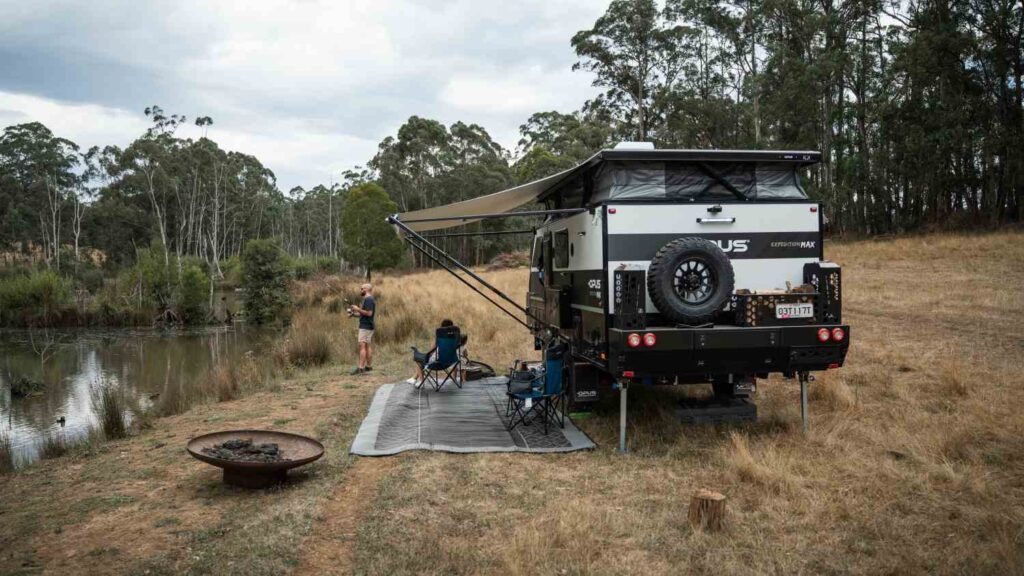
Cooking duties are handled by a slide-out external kitchen, which frees up interior space while keeping the cooking heat outside where it belongs on warmer trips.
Inside, you’ll also find modern cabinetry, skylights for natural light, and a surprisingly roomy lounge area, depending on the layout.
The Expedition Max is the family option in the range. At around 17 feet, it offers sleeping space for up to four or five people, thanks to a queen bed and optional bunk configuration.
It’s designed for families who want to venture further off the beaten track without giving up space or comfort.
Key highlights include:
Sleeps up to five
600Ah lithium battery system
800W solar setup
External slide-out kitchen
Internal shower and toilet
Available in pop-top or hard-roof versions
Prices start at$67,500 plus on-road costs.
At that price point, the Expedition range sits competitively within the hybrid caravan market, especially considering the large battery capacity, solar setup and off-road suspension included as standard.
Hybrid caravans like the OPUS Expedition range sit in an interesting middle ground in the off-road touring world. They’re bigger and more comfortable than a camper trailer, but not quite as go-anywhere capable when the tracks get extremely tight.
That said, they’re perfect for the kind of trips many 4WDers actually do – long runs into remote national parks, outback stations or coastal camps where the roads can be rough but still accessible with a van in tow.
For the really gnarly tracks, most campers will simply unhitch the van and explore with the 4WD, which is exactly how plenty of experienced tourers approach remote travel anyway.
In that sense, vans like the Expedition range are less about hardcore rock-crawling and more about comfortable off-grid touring with the freedom to reach spectacular campsites most caravans can’t access.
Hybrid caravans have been gaining traction in Australia for a while now, and the OPUS Expedition hybrid caravan range shows how the segment is evolving – particularly when it comes to packing serious off-grid capability into a more accessible price bracket.
With serious battery capacity, large solar setups and upgraded off-road suspension becoming standard, these rigs are increasingly designed for travellers who want to spend more time off-grid and less time chasing powered sites.
For families and couples looking to explore further without sacrificing too many comforts, the Expedition Max and Expedition Pro offer another option in the growing world of off-road touring rigs.