How to build a 12V 4WD power system setup that can run (almost) anything
Build a 12V 4WD power system setup for off-grid travel. Run fridges, lights and more with the right battery, inverter and solar.
Published on: 19 March 2026

Have you noticed how, over the last decade or so, more and more 4X4 accessorising is based around 12V gear? That’s partly because there’s more of it available than ever before, and partly because for most of us, packing for a weekender by loading up the work ute with a stinky old swag, a tarp and a bottle of cheap hooch and calling it good is behind us.
Besides, cheap hooch doesn’t seem to exist anymore.
If you’re looking to build a 12V 4WD power system setup for off-grid travel, the good news is you’ve got more options than ever before and more gear to power.
Nowadays, people love their electric blankets, LED lights everywhere, mini-ovens, sound systems and vibrating massage chairs. And you know what? There’s absolutely nothing wrong with that. You’re just going to need a battery setup in your rig that’ll handle whatever you’re planning on throwing at it. Which brings us to step one.
The wonderful thing about having more 12V gear available to us is that not only are we no longer relying on boat master switches to control our dual-battery set-ups, but we also get to pick and tailor the gadgetry we take with us to our specific needs.
Want some camp lighting, a fridge and maybe a `leccy blanket for those High Country trips in the dead of winter? No prob, Bob. Want to take your patchouli-scented diffuser and rechargeable shiatsu slippers? Can do, Captain. Want to sit in air-conditioned comfort while the Grey Poupon cools down in the second fridge and the chocolate fondue fountain is being warmed up on the induction stove. The world is yours, Mr Montana.
No matter what you’re looking to power the next time you’re at camp, you’re going to have to work out your current draw. There’s a bunch of online calculators for this, like this one for example, which should really be step one for working out which power system to purchase.
Once you know your needs, you need to work out which batteries are for you.

You know how the smartphone, or penicillin, or the digital SLR, or John Moses Browning came along and basically changed the way we do things? Not so long ago, AGM deep-cycle batteries were the go-to for off-grid living. Fast forward a short ten-ish years and lithium is the only way to party.
Now you could argue that ye olde schoole batteries still have their place from a budgetary standpoint, and you’d be 100% correct, but there’s literally no other reason to use them. Lithium batteries are simply better by every other metric, and the price point is not only arguable over the life of the battery but seems to be getting lower all the time.
Anyway, we’ve already covered lithium vs AGM, so I won’t bang on about it.
A DC-DC charger is the meat and potatoes of the charging world. They handle getting your lithium system topped up while driving and generally just make sure your power system is in as good a health as possible.
Certain models can do other stuff too, like control your solar power flow (when the charger is also equipped with an MPPT controller), boost voltage to overcome hurdles thrown up by smart alternators, and when used in conjunction with a smart isolator, can even enable you to jump your starter battery from your lithium set-up. In other words, they’re pretty nifty bits of gear.
They come in a range of amp ratings, usually around 30A to 50A. The higher the amp rating on the box, the faster they charge your battery.
There are also more comprehensive BMS options available, such as Redarc’s Manager 30 or Victron’s Lynx. They’re often marketed as a one-stop shop for battery management and incorporate everything from Bluetooth monitoring to accessory control to fuse condition. They’re pretty amazing.
Long story short-ish: You need a means of controlling the charging input of your battery. You need a DC-DC charger with the highest amperage you can afford. If you also want to have a high degree of say over the output as well, a BMS is calling your name.
What’s the gee-oh with inverters anyway?
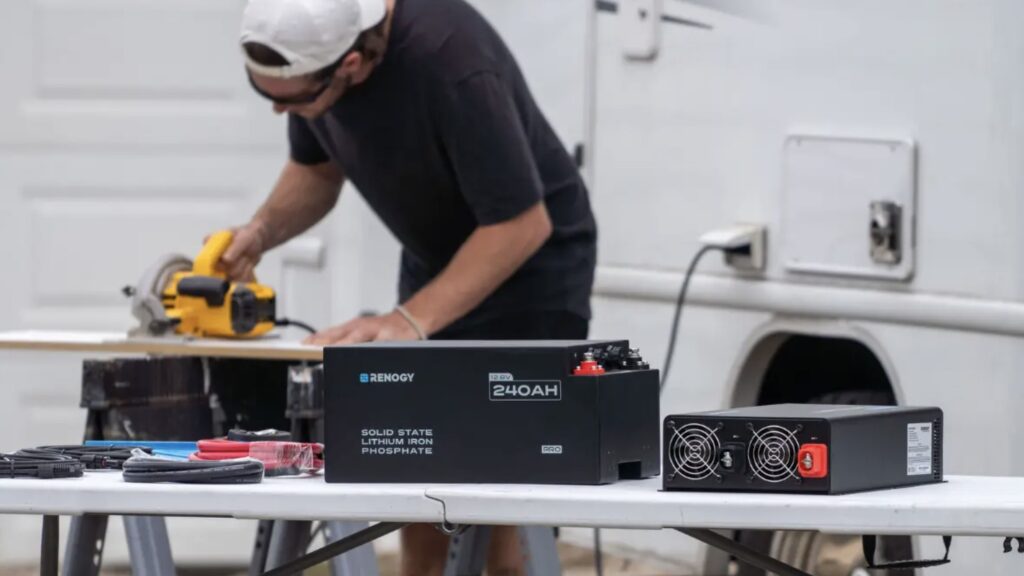
Put simply, inverters turn car electric power into household electric power. Or another way of explaining it, they take 12 volts and magically turn them into 240 volts. This allows you to run stuff from your 4X4 that would otherwise be incredibly tricky to power up. We’re talking about high-current draw items like induction cookers, microwaves, and hairdryers.
In a nutshell, you want one that can handle the current draw of your, say, induction cooker, plus a little extra on top. You have a 1000W cooker, you’d probably want a 1200W inverter. As a rule of thumb, to run the full 1200W of power, you’ll need a battery that’s roughly a tenth of the watts in Amp-hours, so a 1200W inverter will need a 120Ah battery to give it enough juice.
Keep in mind that when you start getting up there in inverter output, like over 2000W or so, you’ll have to start getting a bit more serious with everything from battery size to cabling in order to take the load. It can get real spendy real quick if you’re not careful.
Nah yeah or yeah nah to solar? Completely up to you, really. But nobody who has solar wishes they didn’t have it. It’s basically free power.
The short and curlies are that you want monocrystalline panels (not polycrystalline) and a multi-power point tracking (MPPT) controller. After that, it’s get as many watts as you can fit/afford and sit back and relax knowing you can set up for days/weeks at a time and let your panels keep your campsite humming along nicely.
(approximately 60-80A per day current draw)
With a 100Ah lithium battery, you could easily run this for a day or two. Throw in a little solar top-up or an hour’s drive with a 40A DC-DC charger and you could run this set-up until the day classic LandCruisers are considered uncool. Which, as we all know, is a day that will never come.
(approximately 100-200A per day current draw)
You’ve got all the same gear as in Stage 1, but you’re tired of the 2min noods and instant coffee that tastes like dirty bathwater. You want to get gourmet with the induction cooking and have your espresso machine on-call for morning caffeination duties.
You’re looking at around 200Ah of lithium, a 2000W inverter and around 400W of solar to keep things smooth. Something like this Renogy power kit would get the box ticked nicely.
(all of the amps per day)
You’re done living like a peasant. You want the finer things like dual fridges, a big screen to watch reruns of Schitt’s Creek and goddamit, those Top End nights are muggy! You’d better throw on some air-conditioning, too. And would it be the worst idea to have a MIG welder onboard in case things get spicy out in the middle of BFE? You’re going to need some serious voltage, watts, and amp-hours, amigo, but nothing that can’t be handled with some installation ingenuity and better-than-decent credit.
We’d want at least a 400Ah lithium set-up with a 3000W inverter, a minimum of 600W of solar, a pretty heavy-duty BMS and thick old cable to run it all safely. It’d be easy to spend north of $10K on such a system, but boy would it be worth it. Dr Frankenstein had to harness the power of lightning to bring his monster to life. You could just plug yours into your inverter and play God `til the cows come home.
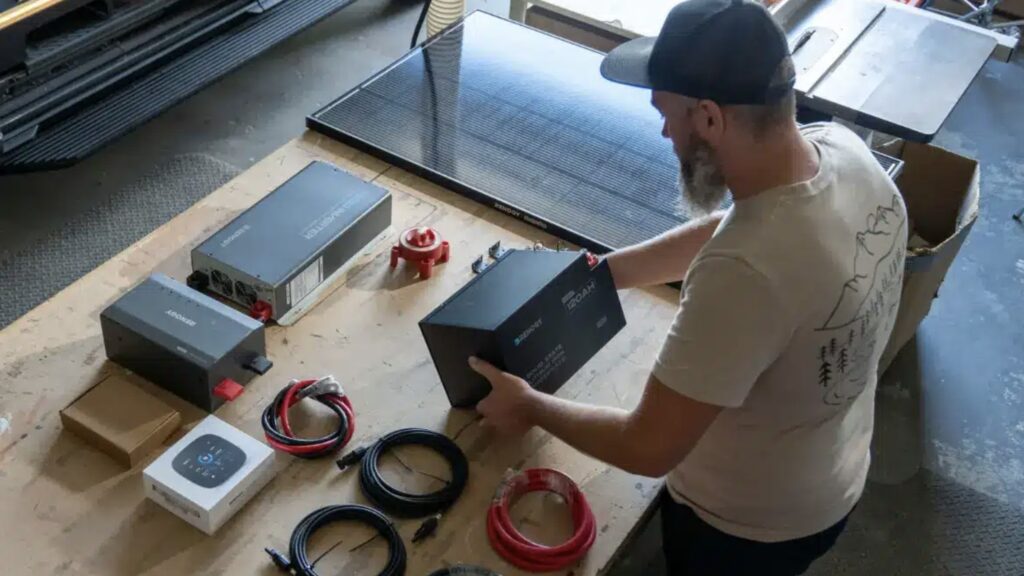
You may have noticed a lot of retailers offering turn-key lithium battery packages for sale and you can’t help but wonder if they’re actually worth it. To be honest, we can’t talk for all of them, but in general, the answer is usually yes. They’re an excellent way to get a comprehensive 12V auxiliary set-up in your rig, often for cheaper than it’d be to buy all the bits and pieces separately.
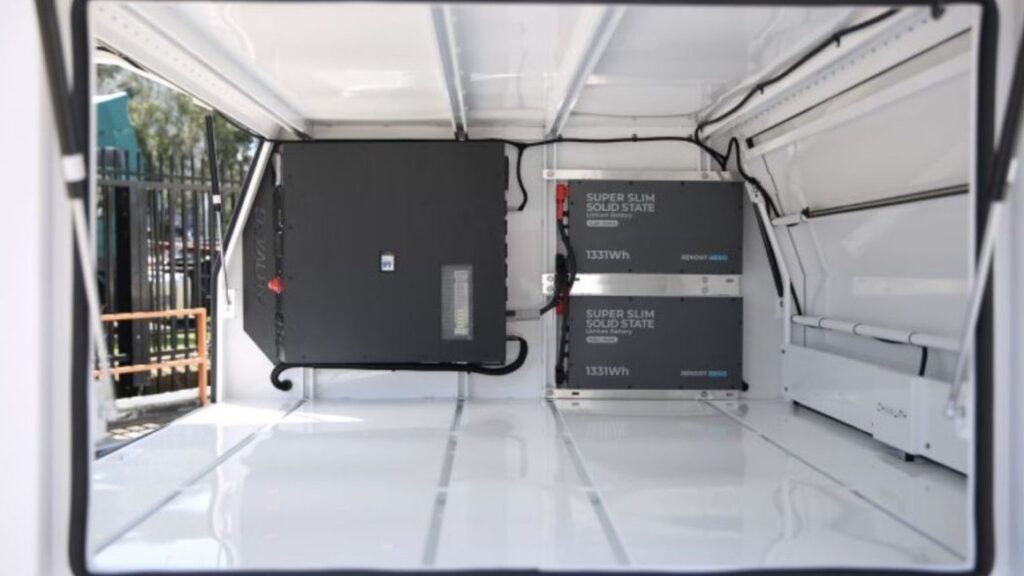
Brands like Renogy have leaned into this space with complete 12V power system kits designed specifically for 4WD touring, taking a lot of the guesswork out of building a setup from scratch.
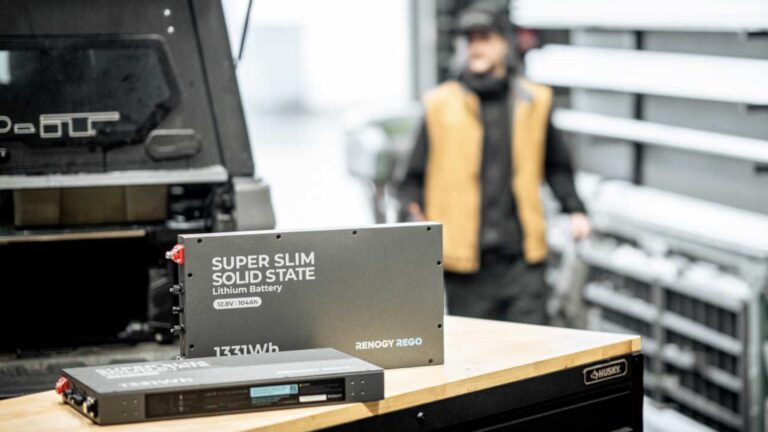
In fact, Blacktown Council in Sydney recently commissioned Renogy Australia in partnership with UTE Chivalry, to outfit their fleet with their Power Box kits and 104Ah Slimline Solid State Batteries, giving them a huge advantage in on-site power options.
So yeah, if you’re an off-the-shelf sort of person, a power package kit might be just the ticket.