Common Ford Ranger problems: Gearbox, engine & reliability fixes
Common Ford Ranger gearbox issues, 3.2 engine problems and transmission faults - plus simple fixes, causes and what to watch for.
Last Updated: 28 April 2026

The Ford Ranger 3.2 has been one of Australia’s most popular 4X4s, but it’s not without its problems. From Ford Ranger gearbox issues and transmission faults to 3.2 engine problems, injector trouble, EGR dramas and oil pump concerns, here are the common problems owners should know about – and what can be done to fix or prevent them.
The most common Ford Ranger problems include 6-speed automatic gearbox issues, transmission cooler failure, lead frame faults, oil pump concerns on the 3.2-litre engine, EGR cooler failure, injector damage from fuel contamination, split intercooler hoses and wiring harness rub-through. Many of these issues can be prevented or reduced with regular servicing, better cooling, quality filtration and early diagnosis.
You’ve gotta hand it to Ford. Ford and Holden were toe-to-toe for literal decades. Each time one would release a new model, the other would retaliate in kind. It resulted in unbelievable vehicles. Phase III GTHOs, Monaros and A9X Toranas. Who could forget the stunning XC Cobras? But right at the end, it seemed Holden had finally won.
The VE Commodore was a wild success, while Ford phoned it in with the FGX Falcon. Of course, ten years later, it’s obvious Ford made the right call. Holden is dead and buried and Ford is once again toe-to-toe for the pole position as Australia’s most successful car manufacturer. Their strategy to pivot to 4X4s has been wildly successful. It’s also a giant leap forward from the PJ/PK Rangers to the PX1/2/3 platform.
So, given how popular the Ranger is, we’ve taken a look at some common Ford Ranger problems and how to fix them.

There were a few different engine options available in the Ranger, depending on when and what you bought. A 2.2-litre four-cylinder single turbo, a 2.0-litre four-cylinder twin turbo and a 3.2-litre five-cylinder single turbo. For now, we’re focusing on the 3.2 just because of the sheer number of them sold, but we’ll circle back to the 2.0 in future articles.
Branded as either a Duratorq or Powerstroke, depending on the market, the 3.2 is part of the Puma family of engines. While the Puma family has been in production since 2000, the 3.2 wasn’t seen until 2006. You can find them in the Mazda BT50s between 2011-2020, Ford Rangers between 2011-2022, Ford Everests between 2015-2022, and even a few odd-ball offerings like the Troller T4 and the Vivarail diesel electric train. Yes, an actual train.
Let’s look at some common Ford Ranger engine problems.
Before we get into the expensive stuff, it’s worth saying this: clean air and clean fuel matter. If your Ranger spends time on dusty roads, a quality air filter and regular filter changes are cheap insurance compared with engine damage.
If you’ve ever wondered how modern vehicles manage to make so much more power while weighing so much more than their predecessors and still use less fuel, there’s a very simple reason why. Every single efficiency that can be exploited is. Twenty minor things here and there save 0.1L/100km, which is the difference between 14L/100km and 12L/100km, and that’s important when people are shopping for a new car.
One of the ways Ford saved a little fuel with the 3.2 Rangers was by using a variable-pressure oil pump. The crux of it is, it’ll spool up oil pressure quicker, then back off once the right pressure is reached and require less energy to drive. The downside is that this creates complications. A common Ford Ranger problem is the 10-minute oil change, but it also makes them more prone to catastrophic engine failure.
Don’t even muck around here. If you’re planning to keep your Ranger for any length of time, rip out the factory engine oil pump and replace it with an old-fashioned gear-driven oil pump. The biggest hassle is lifting the engine enough to get the sump off, but it’s a lot less hassle than rebuilding an engine.

Ever feel a little gutless sometimes? Like you’re just not your usual self? And plumes of black smoke are coming out of your back end while you go into limp mode? Alright, maybe not, but if you find yourself with this Ford Ranger problem, it’s exactly what your ride will experience.
Over time, the rubber upper and lower intercooler hoses can fatigue and even split. As they’re downwind of the turbo and airflow sensor, it’ll do two things. The first is that none of that spicy, boosted air will reach your engine, so no power. The second is that your air-fuel ratios will be all out of whack, hence the unburnt fuel coming out of the exhaust. Not ideal.
Like most of these Ford Ranger problems, the fix is easy and well-supported by the aftermarket. Buy and install a hard pipe kit. They’re solid alloy, so they won’t fail no matter how many corrugations you throw at them. If you’re excited, it’s a good time to throw an intercooler in, too. We haven’t used all brands, but can vouch for the Harrop offering.
Ever wanted to know why we fit snorkels to our 4X4s, but you’re too afraid to ask? The reason is simple. Water is non-compressible, and our engines work by compressing things. If the part that is supposed to compress is full of something that can’t compress, something is going bang. Typically, a piston connecting rod will turn into a pretzel. In case you didn’t guess, that means game over for your engine.
What’s this problem got to do with the Ford Ranger? Well, they run a thing called an Exhaust Gas Recirculator. Essentially, it pumps a little bit of your spent exhaust gases into your intake. It lowers combustion temperature and produces less smog. Notice how cities aren’t covered in smog these days? Neat hey.
The bad part of this process is a thing called an EGR cooler. It’s linked to your engine’s cooling system and designed to help further reduce these temperatures. When (not if) this part fails, water from your cooling system goes into your engine. It doesn’t compress, but your connecting rods sure do. Again, not ideal.
If you’re a fine upstanding citizen, you’ve got a few options here. The first is to fit a low coolant alarm from a company like Redarc. If the cooler fails with a dribble rather than a tidal wave, you may get lucky, and the coolant will turn to steam and give you a warning when your coolant gets low. The second option is to have your system pressure-tested, leak-tested, or any other testing you can find; pray to your gods; and replace it with a brand-new one just in case.
We can’t comment on this directly, but we have heard reports of some unscrupulous individuals removing the EGR completely. It makes sense. One less failure point to destroy your engine and less junk going through it. The side effect? More smog in the air and acid rain. However, in the interest of not being sued into the gutter, we strongly condemn this action.

If you’re here from one of the HiLux forums just for a laugh, don’t giggle too soon, as this Ford Ranger problem affects you, too. Modern common-rail fuel injection systems require insane pressures to achieve the efficiency (read power and economy) that they do.
Now, imagine a piece of sandpaper gently falling past your arm. Now imagine it grazing your arm, but it’s strapped to the front of a Boeing 747 at full tilt. That’s what happens to your fuel injectors when literally anything but diesel goes through them. Best case, you’ll be down on power and blowing smoke. Worst case, the injector will literally dribble fuel onto your piston, causing a hot spot, and eventually a hole in said piston and a rebuild in your future.
I feel like I’m repeating myself here, but again, this is a complex problem with an easy solution. This doesn’t happen if the injector doesn’t get gunk through it. Step one: Don’t put gunk in your fuel tank. That means no dusty Jerry cans and no dirty funnels. Also, if you’re driving past an outback truck stop that looks like its last lot of fuel was delivered by a Model T, then maybe drive to the next one if you’ve got the range.
The second solution is an inline fuel filter and water separator. This is where quality filtration really starts to matter. A good fuel filter and water separator setup can help catch contaminants before they ever reach your injectors, especially if you’re filling up in remote areas or carrying jerry cans.
Ryco offers fuel filtration solutions designed for Australian conditions, and while a fuel filter might not be the flashiest upgrade on a Ranger, it’s one of the simplest ways to help protect a modern common-rail diesel from expensive damage.
If Ford asked, we didn’t tell you to do this, as they can affect your warranty. However, if it’s between your main filter and your fuel tank, they won’t cause you any fuel pressure issues and could save your engine one day.
Have you ever read the old stories of people getting lobotomies because their family didn’t like that they were a little wild? Severing the connections between how we process the world and how we perceive the world does a serious number on us. It’s no surprise, then, that in modern, electronically controlled vehicles, when the data your engine’s brain receives doesn’t match reality, things start to go a little haywire.
The result of this common Ford Ranger problem can be unannounced limp modes, surging, inability to rev, and occasionally even inability to start.
Thankfully, with modern diagnostic tools, we can hone in pretty quickly and tell exactly which sensor is giving a goofy reading. They’re frequently only held in with a bolt or two. There are a couple of common sensors that tend to be a problem for Ford Ranger owners, and all of them are simple and affordable to fix.
Up front, early models were very susceptible to crank angle sensors failing, and they’ll do all of the above. This sensor lets the computer know where the engine is in its cycle. Not having an accurate reading here is a disaster. The other common sensor to cause grief is the exhaust gas temperature sensor hidden under the exhaust manifold.

Ford Ranger gearbox issues are one of the biggest things owners search for, especially with the 6-speed automatic. The good news is that many common problems are either preventable with servicing and cooling upgrades or reasonably easy to diagnose before they become expensive.
We’re going to focus on the 6-speed automatic transmission here for a couple of reasons. There’s bugger all that ever causes problems with the Ford Ranger manual. A few goofy bearings that should be replaced and a clutch that can cause grief. As the overwhelming majority of sold Rangers are automatics, we’re focusing on drilling down into the Ford 6R80 transmission.
Up to the plate first is slow, sluggish shifting. You know when you take off and it really feels like your transmission just isn’t interested in playing ball? A big, hard acceleration off the line, engine revving its guts out, revs finally drop, then continue staying dropped for an uncomfortably long time before you kick up a gear and start the whole process again.
It’s typically hard to diagnose this Ford Ranger problem because it sneaks up on you over literal years.
The reason is quite simple. The service intervals for this transmission are ridiculous. Most manufacturers running these transmissions call them a ‘fill for life’ (around 250,000km) and don’t even have an easily accessible dipstick as a result.
Meanwhile, the company that did the original design says they should be serviced every 80,000km at the most. None of these factors accounts for the additional wear and tear of towing, heavy loads, or rough off-road use. If you have an auto, service it every 50,000km. It’ll cost a few hundred and save you thousands.
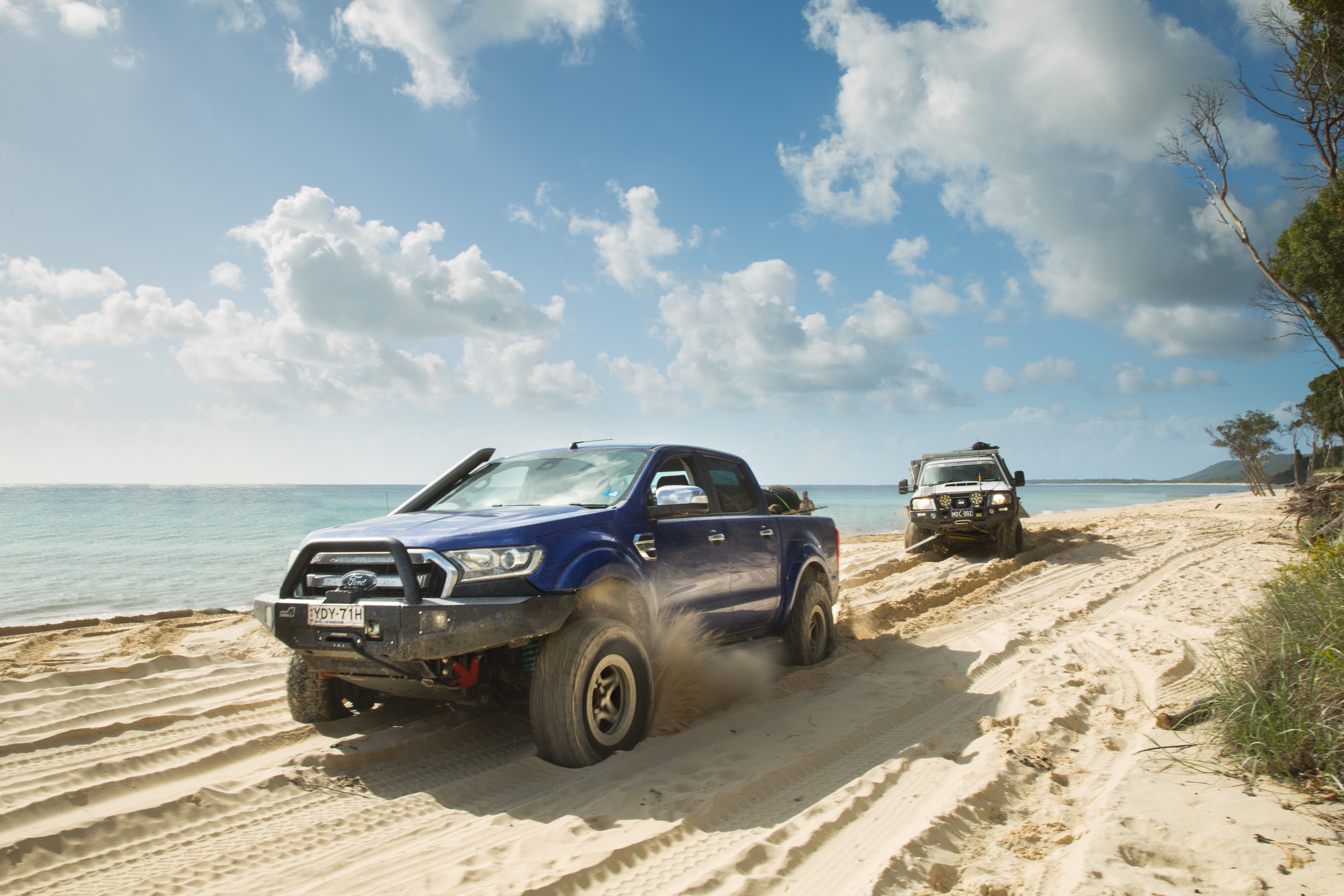
We’ve thrown this one up top, too, because the problem is catastrophic, and the solution is simple. The quintessential Ford Ranger problems you’ve come to expect.
Your transmission runs an external cooler. Transmission fluid is pumped out into a little box mounted next to it, coolant is pumped down from the radiator and through two separate sealed compartments, and heat is transferred away to keep your transmission operating efficiently.
Except that the little box fails. It then fills your radiator with transmission fluid, but more importantly, it fills your transmission with coolant instead of lubricating fluid. This kills the transmission.
You know that scene in Titanic where Jack sinks below the water and Rose, sad but accepting, watches him go? We need to do that to our transmission coolers because we’re better off without the factory offering in our lives.
Many aftermarket companies offer external stand-alone dual-row coolers that’ll not only keep your transmission cooler but also keep the fluid separate from your coolant, so there is zero chance of the two meeting.
This Ford Ranger gearbox problem is a little harder to describe as the symptoms can be so varied, but you know it when you’ve got it. It’s typically hard shifting, with big clunks, gears sticking, and ultimately limp mode. In short, your transmission doesn’t have a clue what’s going on and doesn’t know how to respond.
Are you doing 80km/h and it should be in 5th? Are you slowing down to a stop and it should shift from 2nd to 1st? It’s a mystery to it, so it’s just trying its best. The problem is a component inside called a Lead Frame. Essentially, it’s a moulded piece of plastic that contains a bunch of sensors and connections. When it plays up, your transmission’s brain is getting short-circuited.
There sort of is and isn’t a nice, easy solution here. There’s nothing inherently wrong with the lead frame’s design, so there’s no easy issue to solve. They’re just a fragile component in a harsh and hot environment. However, there are things we can do to make their lives easier to avoid failure. We need to keep them cool!
The external cooler you just fitted above will help massively, as will fitting a larger sump to increase your oil-carrying capacity. Finally, get a gauge to monitor your transmission’s temperature and know when to back off.
If you’re hauling up a long, steep hill in the middle of summer with a 20-tonne caravan on the back full of every camping accessory under the sun, it’s probably a smart idea to back off occasionally and give the internals of your transmission a fighting chance.

While a buggered lead frame may be a little costly to fix, the same Ford Ranger symptoms can often be caused by a far cheaper, simpler problem. Your Ranger doesn’t just hope for the best and assume what it’s doing is working; it knows every bit of information in every step of the process and can quickly identify (and freak out) when something is wrong.
A common Ford Ranger gearbox issue owners experience is missed shifts, hard shifting, and the dreaded Christmas tree full of lights on the dash. It’s all thanks to a $60 sensor you can change in about 30 seconds.
This Ford Ranger problem might be common, but the solution is simple. Grab a scan tool, check the code for an output speed sensor fault, spend $60 at Repco to buy a new one, replace the sensor, and go on living your life. As we said, most of these issues are easy to fix or prevent.
We said most, not all. These Ford Ranger problems are more serious but are FAR rarer, so don’t lose too much sleep over them. There are some occasions that transmission’s near cark it instantly. Torque converter, flywheel, and transmission oil pump failures are typically the culprits. There’s no point staying up at night worrying about them, but they are worth being aware of.
Again, since these aren’t super common problems, there are no easy solutions. Sure, you can get your transmission rebuilt with a new oil pump and an upgraded torque converter, but that’s ridiculous. Just treat your transmission with a little kindness, keep it full of fresh, clean fluid, and keep it cool with external coolers.
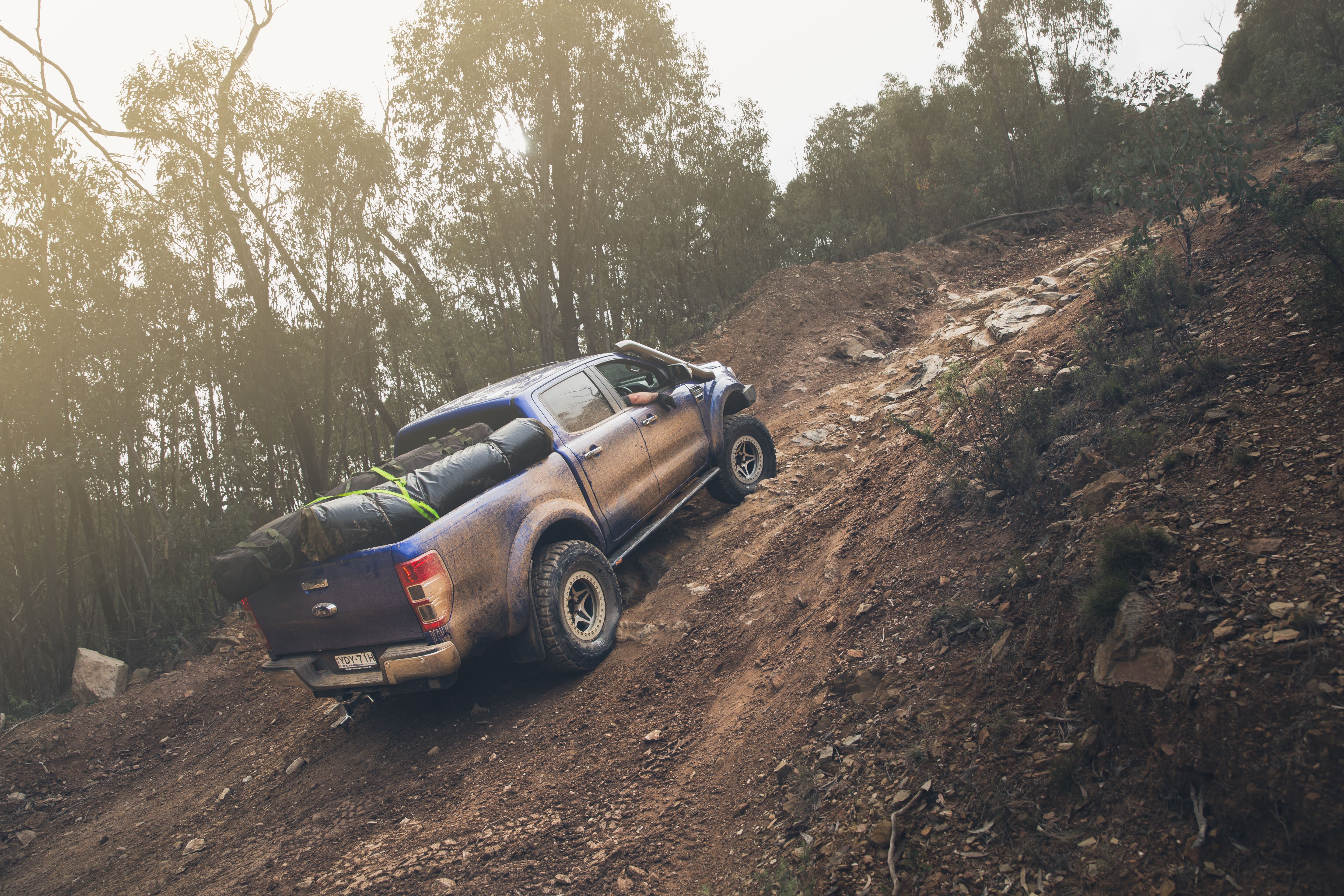
We don’t mean to alarm you, but your Ranger might burn to the ground one day. Alright, in all fairness, this isn’t a specific Ford Ranger problem; it’s basically any 4X4 with a hot exhaust that travels through long grass.
The difference is that Ford put their hand up and pointed out both the problem and the solution themselves. The issue in Rangers is the proximity of the diesel particulate filter (DPF) and the nearest crossmember. There’s just enough room there that, when travelling through long grass, it can accumulate, dry out, and ultimately combust when the superheated exhaust gases from the DPF turn the exhaust into a giant metal furnace.
Fit a bash plate. It’s as simple as that. Ford issued a recall for the issue, and all that was required to avoid it was a tiny steel bash plate, just big enough to deflect grass away and prevent it from accumulating above the cross member.
If your Ranger has a DPF, the recall should already have been completed. The plate fitted from the factory, or more likely a set of decent aftermarket bash plates, makes this whole thing a moot point.
This Ranger problem is on Ford, but it’s a relatively simple fix and will take about 2 minutes to check on your rig. There are around 7 million wires in a modern 4X4. Could be 8 million. The point is, there are heaps, and that’s a hell of a packaging issue.
The 3.2 Ranger’s engine harness sits directly on the engine at multiple points, but up front, it sits on the timing cover. Directly on a pressed sheet metal lip. If you’re unlucky, vibrations can wear through over time, causing the wires to short out, leaving the Ford Ranger dead in the water.
All you need to achieve here is to stop the wiring from rubbing through. Simple. There are a variety of solutions for this issue, and they all depend on where you land on the dodgy/neat scale. After using an inspection mirror to ensure you’ve got there before any damage is done, all you need to do is make sure the metal doesn’t touch the wires.
Some people have used a large P-clamp to space the wiring off the cover. Others have cut a length of heater hose, slipped it over, and cable-tied it in place. As long as your fix isn’t going to come loose and fall into the belt, you’re home free.

This is another Ford Ranger problem that’s not really a problem, but is well worth knowing as a potential owner. By the very nature of independent front suspension, there will always be a change in angles between the front wheels and the front diff. A couple of constant velocity (CV) joints on the front and left driveshafts help account for this.
The downside is that the bigger the angle they run on, the weaker and more prone to failure they are. By lifting a Ranger any more than 50mm, that angle starts becoming too great and causes constant CV failure, leaving you stranded with no drive to the wheels.
The solution is rather simple, depending on how excited you want to get. The easiest step is not putting a big lift in any 4X4 with independent suspension. By sticking to a typical 50mm lift, you won’t have any issues.
The second option, if you have to have a big lift, is fitting a diff drop. Lowering the diff centre has the same effect as not lifting the suspension resulting in less CV angle. The final solution, and the one people don’t want to hear, is that when you break a CV in a Ranger, it has to be replaced with a genuine offering. We’ve tested most of the aftermarket CV joints on the market, and not a single one has held up as well as a genuine one. Although at 4x the price, the factory ones should be better.
You’ve just installed your shiny new suspension lift kit. There’s miles of room for your bling new wheels and tyres, and you’re keen as beans to hit the tracks and find out if those trick new remote reservoir shock absorbers really do ride as well as the slick-haired salesman said.
The problem is, as soon as you back out onto the street, you notice a horrible vibration coming through the floorplan right into your seat. The faster you go, the worse it gets. This Ford Ranger problem is more often than not due to the centre bearing in the rear driveshaft.
The Rangers have the longest wheelbase in their class and, as a result, have a two-piece driveshaft. In the middle is a component known as a centre bearing. Put them on too big an angle, though, and they’ll vibrate all to hell.
We’re not sure whether it was intentional, but this might be the most common problem with the easiest fix. Picture the centre bearing like a doughnut. The driveshaft runs through the middle and has tabs on either side for mounting.
Now, those tabs are off-centre by around 20mm. Unbolt the two mounting bolts. Spin the centre 180 degrees, and the centre bearing will drop by around 40mm, putting the driveshaft at a significantly lower angle. There are kits you can buy with spacer plates and new bolts, but we’re not entirely sure why they exist when the fix is free.
PX3 Rangers are distinguishable from PX2 Rangers by their inclusion of daytime running lights, a relocated radar cruise control panel, and a revamped front grille without the dip down into the front bar. They’re also not sporting any bump stops in the front suspension.
As part of moving things in line with international models, the PX3 Ranger’s got a tweaked front suspension that removed the previous stand-alone rubber bump stop and beefy chassis brace. In their place, internal bump stops in the struts were added. The problem is that, on hard bottom outs, the full weight of the Ford Ranger no longer goes directly through the chassis; it goes through the strut, potentially bending it in the process.
The bad news is, unless you’re handy with a welder, there’s no ‘proper’ fix for this problem. The good news is you probably won’t need one. When installing a lift kit, ensure the strut is specifically designed for a PX3, not an adapted version from earlier PX1s and PX2s.
The shock-mounted bump stop isn’t ideal, but it’s not worth losing sleep over unless you’re planning to desert-race in a stock vehicle.
A lot of these common Ford Ranger problems don’t just come down to design – they’re often made worse by how the vehicle is used. Dust, heat, towing and poor fuel quality can all take their toll over time, especially if you’re travelling off-road or long distances.
Staying on top of your servicing is key, but a few simple preventative upgrades can also make a big difference. Keeping your fuel and air filtration in check helps protect your engine from dust and contaminated diesel, while regular fluid changes and proper cooling can extend the life of your gearbox and transmission.
Some owners also choose to run a catch can to reduce carbon build-up in the intake over time. It’s not a silver bullet, but combined with good maintenance habits, it can help keep things running cleaner for longer.
It’s not the most exciting part of owning a 4X4, but it’s often the difference between a reliable tourer and an expensive repair bill.
The most common Ford Ranger gearbox issues include slow or harsh shifting, lead frame faults, transmission cooler failure, torque converter problems and issues caused by old or overheated transmission fluid.
The Ford Ranger 3.2 engine can be reliable if properly maintained, but known issues include oil pump concerns, EGR cooler failure, injector damage from contaminated fuel, split intercooler hoses and sensor faults.
Ford Ranger injector problems are often caused by contaminated fuel, water in the diesel system or poor filtration. Using clean fuel, avoiding dirty jerry cans and running quality fuel filtration can help reduce the risk.
Problems can vary by use, maintenance and model year, but PX Rangers with the 3.2-litre engine are commonly reported to have issues with the oil pump, EGR cooler, injectors, transmission and driveline. Always judge a used Ranger by service history, condition and how it has been used.