How to service a 4WD at home (DIY guide for off-roaders)
Want to service your 4WD at home? Here’s a DIY guide to keeping your rig running strong for your next adventure.
Published on: 20 March 2026
Advertisement

Ask any mechanic what their number one killer of engines is and they’ll tell you: “lack of fresh fluids and filters,” aka regular servicing. If you’ve ever wondered how to service a 4WD at home, the good news is it’s not as complicated as you might think and it can save you a heap of cash in the long run.
Don’t believe me? Pull the heads off a high km engine that’s never been serviced, and you’ll find thick, black, gross sludge gumming everything up. Pull the head off the same km engine that’s been serviced on schedule, and it’ll look nearly new. It really is the best thing you can do for your 4WD this side of actually taking it off-road.
With the price of just about everything getting spendier, we thought it’d be a good idea to show you how to service your out-of-warranty 4WD in your driveway. Just on that note: it works on newer rigs too, but make sure it won’t void your warranty first. If there’s one thing every manufacturer shares, it’s a reluctance to honour warranties.
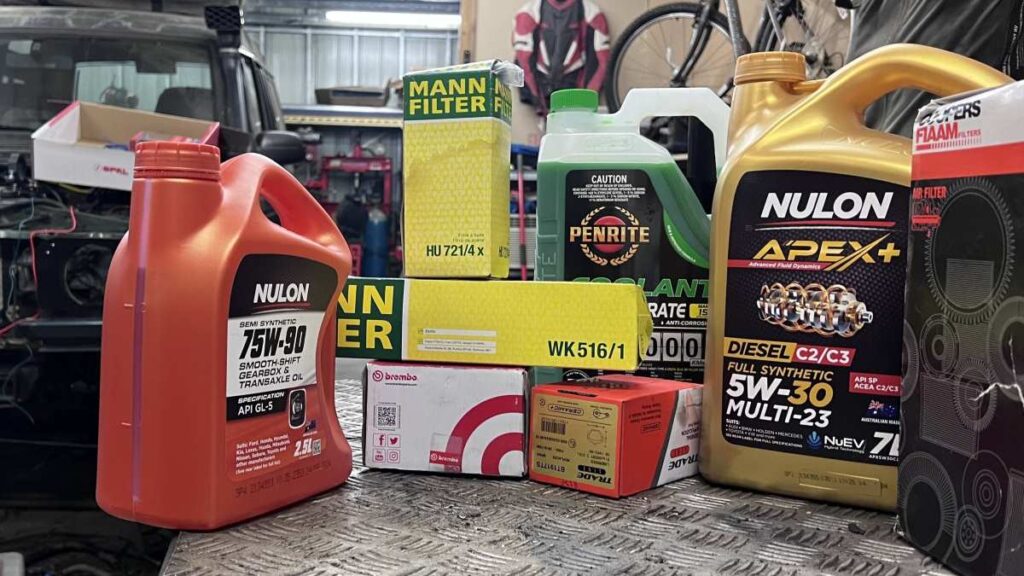
You’re going to need to source the fluids and filters required. If this is your first time servicing a 4WD at home, the rule of thumb is to do them all. That way, you’ll know when they were all last changed out. If it’s fairly modern, and you bought it with a full service history, you can consult the service book to see when things are due. But yeah, just do ’em all.
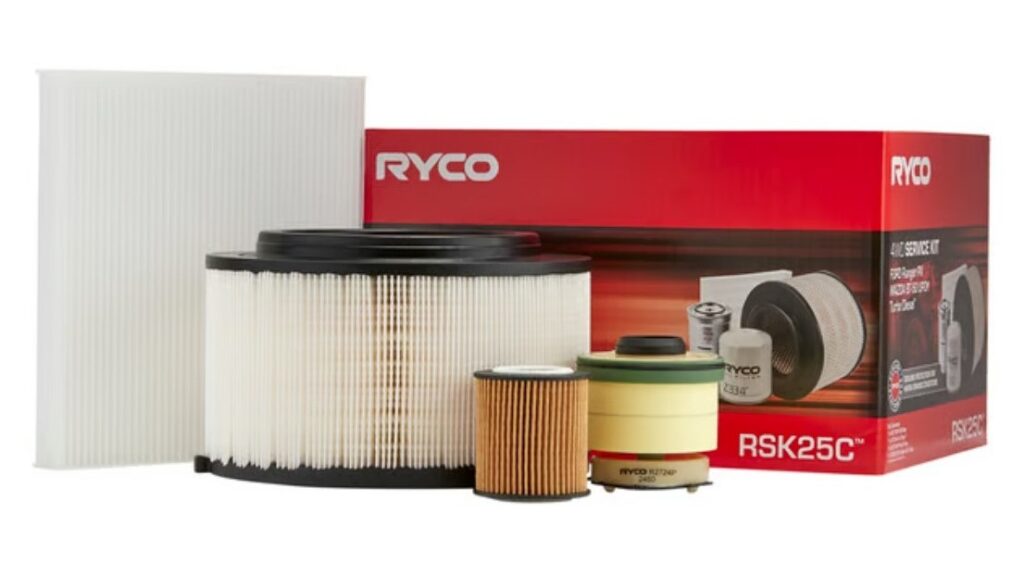
Luckily, Ryco has this beaut tool that’ll find your filters for you. From there, find out the oil viscosity and oil capacity of your engine (both readily available with an online search), and hit up the parts store. Might also be worth grabbing some new wipers, windscreen washer fluid, a drain pan, a funnel and a bag of rags if you don’t already have them on hand.
Before you start servicing your 4WD at home, make sure you’ve got a safe, flat workspace. Ideally, you want a nice flat piece of concrete that’s out of the sun and is clean enough to lie down on. Jack your car up and set it on jack stands that are rated to support each corner of your rig. Under the diff housing for solid axles or the lower control arms for IFS rigs is usually the go.
With the engine still warm (not hot) and your bonnet open, go around and locate your oil filter housing (for cartridge-type filters, leave the screw-on filter alone for now) and undo it. Also, remove your oil fill cap and leave it somewhere you can easily spot it.
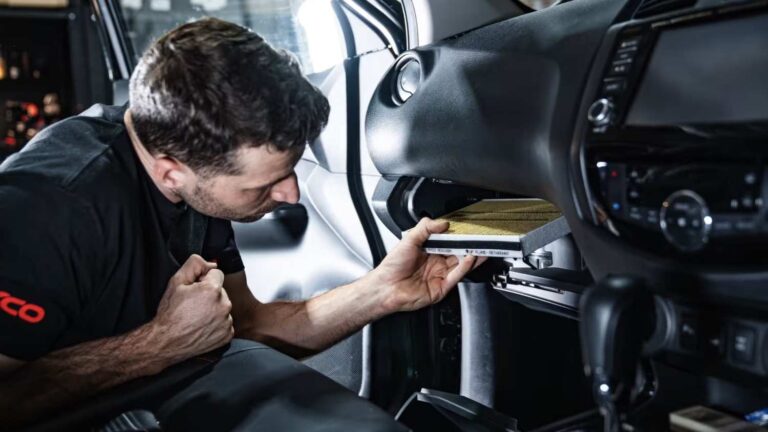
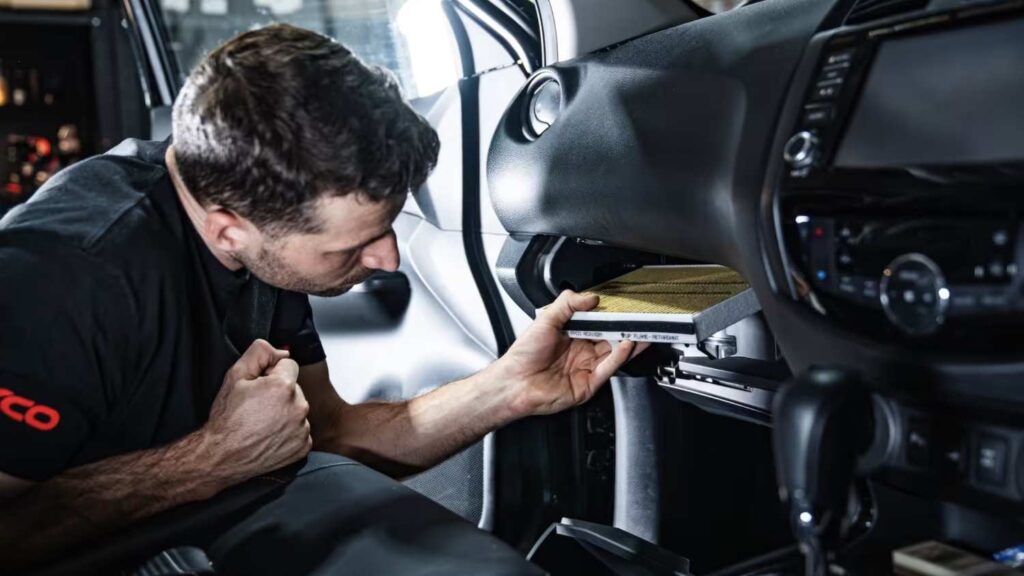
Now you have to locate the cabin filter. It’s usually up under the glovebox on the passenger side of the vehicle, or sometimes in your engine bay at the firewall. Again, a little Duck Duck Going beforehand can save a lot of time here.
Whip the cabin filter cover off, which may involve removing an interior panel or two, and slide the filter out. There’s a bunch of different types available, so take your pick, but for 4WD use, we like the Ryco N99 range of cabin filters. We’ve taken them through bulldust, sand and about a billion dirt roads with the cabin staying fresh as a daisy. Slap the new one in, reverse the process of getting to it and let’s move on.
Cabin filters last around the 10,000km to 15,000km mark, but that can be reduced with heavy off-road use, so checking them as part of every service is a great idea.
Okay, let’s get grimy. You’ve already got your cartridge housing loose and your cap off, so climb under the vehicle and locate the sump plug. Chances are you’ll have to remove plastic splash guards or metal bash plates to get to the sump. It sucks, but it is what it is.
Crack the plug, then get your drain pan in position before fully undoing it. Yep, you’re going to get oil all over your hand, probably up to the elbow, and you’ll probably have put the drain pan in the wrong spot and you’ll dump oil over your driveway too. It’s all part of the learning process.
Pro tip: kitty litter works great for oil spills.
I like to stay under the car until the oil is drained. I usually check things like the brakes, rack, swaybar, shock, and engine mount bushes while I’m hanging out. Once the oil has finished draining, refit the plug. Now, I always chuck on a new sump plug washer while I’m there. An expensive one is like $3 and it beats the sh*t out of trying to fix an oil drip.
Jump back up to the engine bay, throw in a new oil filter cartridge or undo your screw-on filter (a filter wrench for your 1/2in drive ratchet is so worth the investment) along with any rubber O-rings on the housing, then tighten back up. You don’t have to go HAM with the tensioning here; most engines have about 25Nm or so ratings for their filters, that’s hand-tight, and it’ll make it easy to get off next time.
Then top up your oil until it’s measuring correctly on the dip stick. After the first drive, check the oil again and top up if required.
Wipe all the oil you’ve spilled everywhere off both you and the vehicle, then let’s keep it moving.
Every service, without fail. Change both the filter and the oil. Many modern CRD engines will advise 15,000km intervals, but for those of us who actually go off-road, 10,000km changes are probably the go.
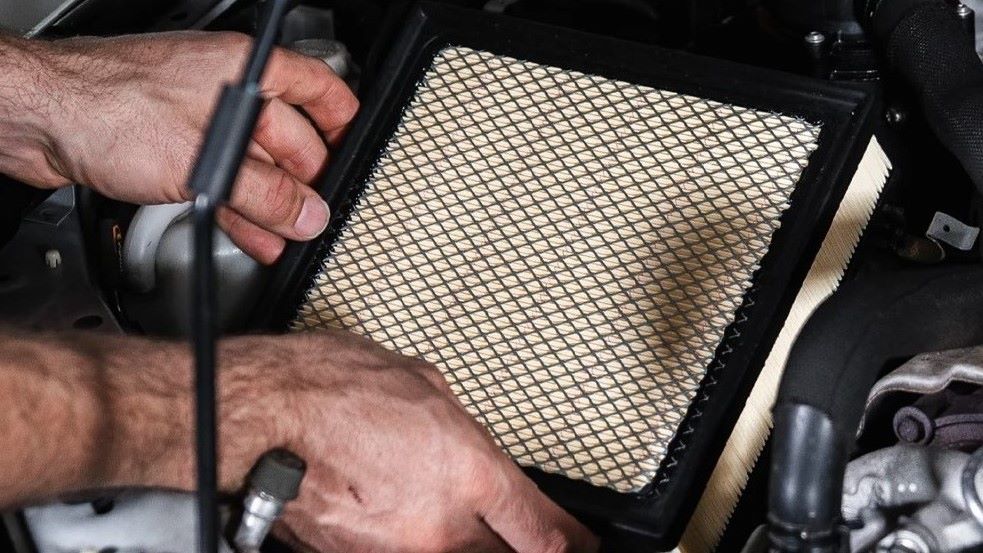
This one is straightforward and not too difficult. Locate your airbox, remove the lid screws or clips, remove the old filter, clean out the leaves, dust and dead insects in the lower half of the box, throw in a new filter, making sure the rubber edges aren’t being pinched and replace the box.
You may need to remove the intake hose from the top of the box to get it off, but there’s not much to it. Also, “performance” filters suck for 4WDs. Stick to paper ones.
Much like a cabin filter, air filters will last as long as the conditions they’re being used in allow. As part of usual servicing, they may only need changing every second service, or even less if you mainly stick to the bitumen. If in doubt, swap it out.
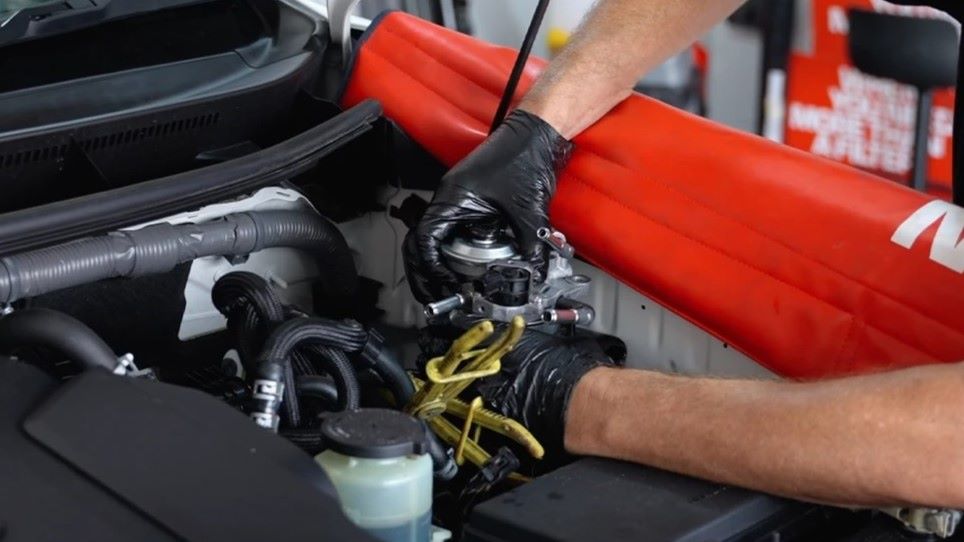
This one can be both messy and tricky, depending on your vehicle. Have your drain pan ready because you’re going to lose some fuel. The difficulty rating comes down to how the hoses are attached to the filter. Sometimes they’re super easy to undo and the job takes thirty seconds. Sometimes, they may as well be welded on there, and the plastic release clips refuse to do their job.
Either way, remove the hoses, release the filter housing from any attachment points and reverse the process with your new one. Then spend the next three weeks trying to get the smell of diesel out of your clothes, your skin and your hair.
Most factory fuel filter changes are scheduled for around the 60,000km mark, and it’s generally okay to stick to this. If there’s a chance you’ve picked up some dirty fuel or copped a batch of watered-down diesel, then obviously you might want to change it earlier. But sticking to the service manual’s recommendation is fine most of the time.
This one is a bit trickier and can be quite expensive to knock over. Some autos require manufacturer-specific fluid (ZF, we’re looking at you), which can cost you several hundred bucks in fluid alone. Nevertheless, the rule of thumb is that a happy auto is a cool auto, and fresh fluids and filters can help with that.
The process is to drain the ATF from the trans pan, remove the pan, remove the filter, replace it with a fresh one, replace the pan, and then replace the fluid. This last one is a bit tricky, and the amount needed will depend on whether there’s still old fluid in the torque converter (spoiler alert: there is) and whether you have an aftermarket transmission cooler fitted (if you tow regularly, you should).
First, with the engine off, use your fluid transfer tool to fill the pan with ATF until it starts dribbling out. Replace the fill plug, then turn the vehicle’s engine on. Remove the plug and start the refilling process. This may take a while, depending on the transmission/cooler capacity, but it will eventually start draining out again.
Jump in the driver’s seat and shift into every available gear (in auto mode, not manual mode), including reverse. Jump back under and check the fluid level through the fill plug. If it’s still coming out, great; if it needs a little more, throw it in. Ideally, you’ll have accomplished this before the engine comes up to full operating temperature.
This comes down to how often you tow heavy, what the manufacturer says and what the fluid smells like. There’s a school of thought that says you should never change your transmission fluid, and many autos will say they’re sealed for life, but given that heat kills them, I’d be changing mine every 100,000km at a minimum, or every 50K or 60K if I towed heavy on the reg. You do you, though.
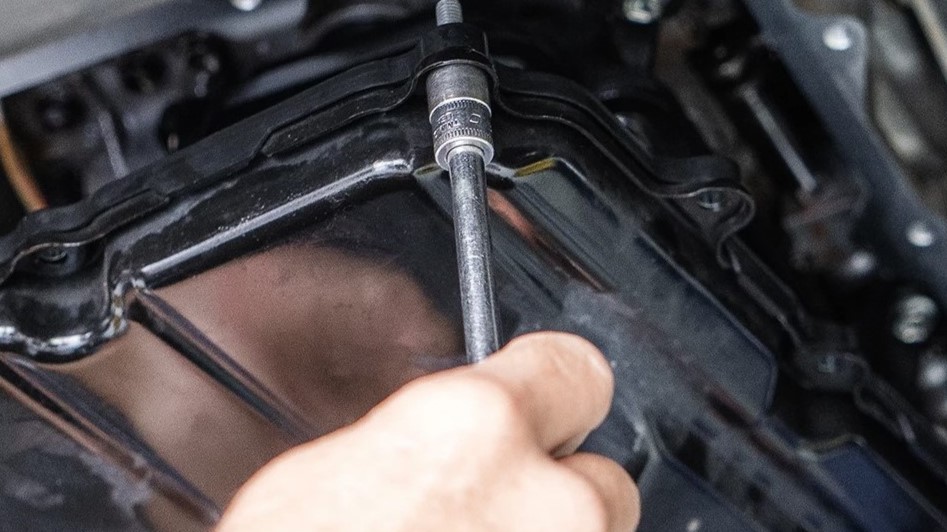
One of the advantages of servicing your own rig, is the fact that it gets you down and looking at it from underneath. How much thickness is left on the brake pads? Is there a lip grooved into the rotors? There’s been a soft clunk coming from the steering last time you drove it, are the rack bushes and ball joints all in good nick? Is that patch of rust new, and is that a weeping rear diff that’ll need monitoring?
Basically, giving your 4WD a good eyeballing every couple of months can save you some pretty huge headaches and repair bills. You only need to catch one outdated suspension joint or one faulty headlight to save yourself several hundred (or thousand) bucks or a fine from the road pirates that’s about as welcome as a punt to the nethers from Lionel Messi.
Servicing your own rig isn’t just about saving money, it’s about knowing your vehicle inside and out before you point it at the bush. With the right tools, a bit of patience and quality parts (yep, filters included), learning how to service a 4WD at home is one of the best skills you can have as a 4WDer.
Your car will thank you too. And if it keeps your engine alive longer and your trips stress-free, that’s a win.