Best 4WD Roof Racks in Australia (Buyers Guide)
Compare the best 4WD roof racks in Australia, including prices, weight, mounting options and accessories, to find the right rack for your rig.
Published on: 10 October 2026

Finding the best 4WD roof racks for your rig involves more than picking something that looks good with an awning bolted to it. The rack’s weight, how it mounts and whether it suits your gear are all important things to consider.
A roof rack can free up valuable space inside your vehicle but pick the wrong one and you could end up with a heavy platform that eats into your roof load allowance, makes it hard for you to tie things on or is simply more rack that you’ll ever use.
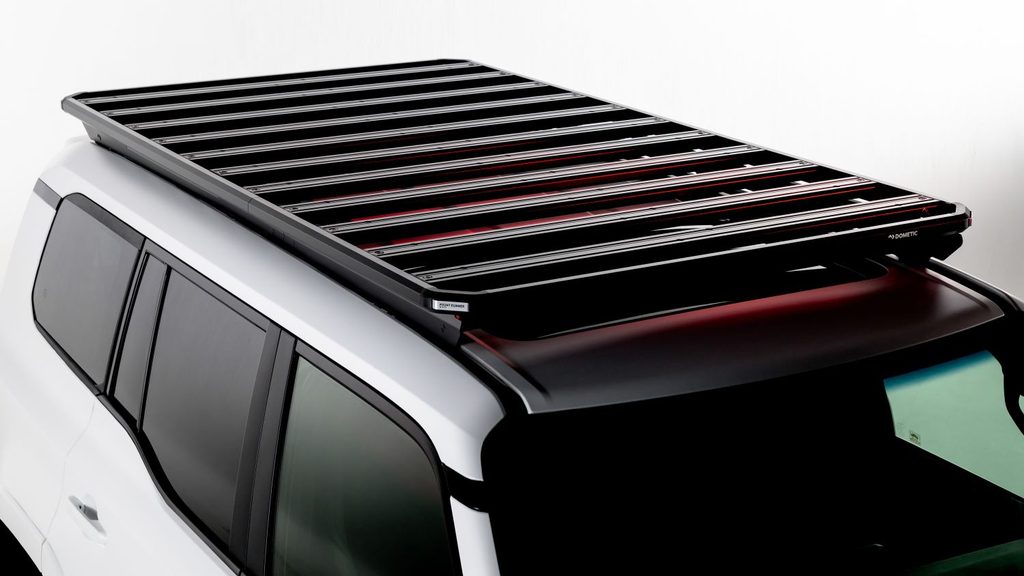
In this buyers guide, we compare some of the best 4WD roof racks available in Australia, looking at their features, strengths and compromises to help you narrow down the options. From the new Dometic Front Runner Slimline 3 to familiar touring favourites, here’s what deserves a spot on your shortlist.
A quick note on terminology: We’re using “roof racks” as a broad term in this guide, covering both flat roof platforms and traditional basket-style racks. They have different designs, but serve the same basic purpose: carrying gear on your roof. We’re not covering roof bars right now as they deserve their own comparison.
| Roof rack / platform | Listed price | Listed weight | Main strengths | Things to consider |
|---|---|---|---|---|
| Dometic Front Runner Slimline 3 | $1,579-$2,889 | 22-43kg | Adjustable slats, dual T-slots, concealed wiring and corner tie-downs | Currently limited vehicle fitments; check availability for your model |
| ARB BASE Rack | $952-$2,085 | 12-23kg | Dovetail accessory mounting, welded aluminium construction and optional rails | Vehicle mounting system costs extra; existing accessories may need adapters |
| ARB Deluxe Cage Roof Rack | $995-$1,468 | 26-53kg | Mesh floor, raised perimeter rails and welded steel construction | Weight can consume a sizeable roof allowance; rails can restrict some loads |
| Ironman 4X4 Raid Roof Rack | Vehicle-specific; $1,899 for the cited Everest Sport fitment | 24-39kg | Modular crossbeams, concealed mounts and lighting provisions | Vehicle-shaped design requires exact fitment |
| Rhino-Rack Pioneer 6 | $1,199-$1,499 | 14-34kg | Broad accessory range, multiple mounting channels and integrated wiring | Legs, Backbone or other mounting hardware can add substantially to the price |
| Rola MKIII Titan Tray | $899-$1,249 | 20-36kg | Adjustable planks, multiple channels and compatibility with suitable existing roof bars | Check bar compatibility; advertised tray capacity isn’t your vehicle’s roof limit |
| Thule Caprock | $1,499-$2,199 | 22-33kg | Multiple mounting options, integrated tracks and optional basket conversion | Mounting components and optional railings cost extra |
| Tracklander P-Series | $1,120-$1,350 | 16-22kg | Welded platform, multiple accessory channels and concealed wiring | Allow for mounting bars and legs; check aerial clearance |
| Wedgetail Adventure | $1,860-$5,125 | 22-58kg | Australian manufacture, top and bottom channels, standard wind deflector and ten-year warranty | Check whether mounts are included; some fitments require drilling |
| Yakima LockNLoad Platform (2026) | $1,250-$1,750 | 20-32kg | Supplied assembled, upper and underside accessory slots, cable management and wind deflector | Check mounting requirements and that the listing is for the 2026 range |
A note on pricing: Many roof racks/platforms require vehicle-specific mounting brackets, legs or support systems purchased separately. These can add substantially to the advertised price, so check what’s included before buying.
Price: From $1,579 – $2,889 depending on your specific vehicle.
Weight: 22kg – 43kg.
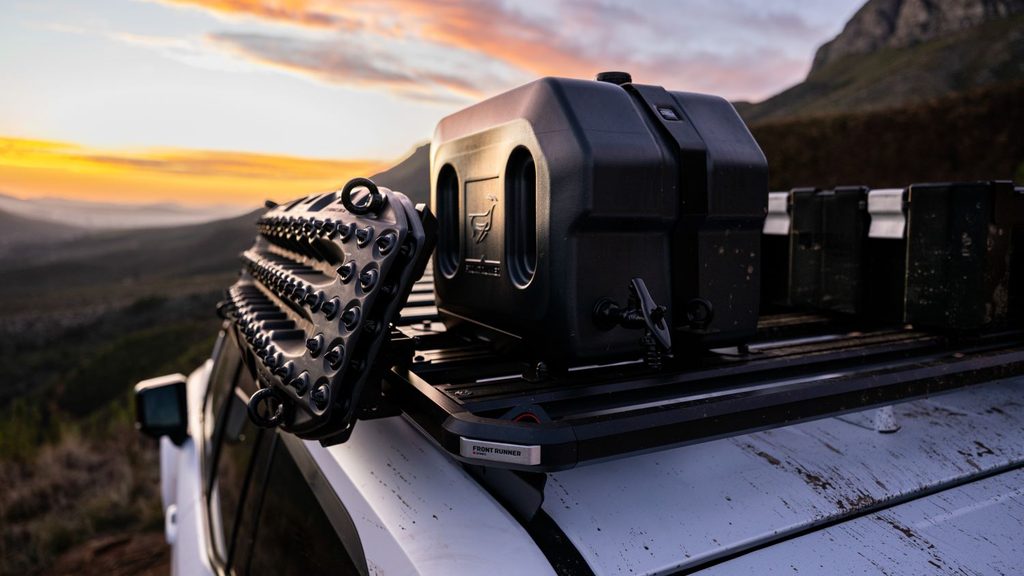
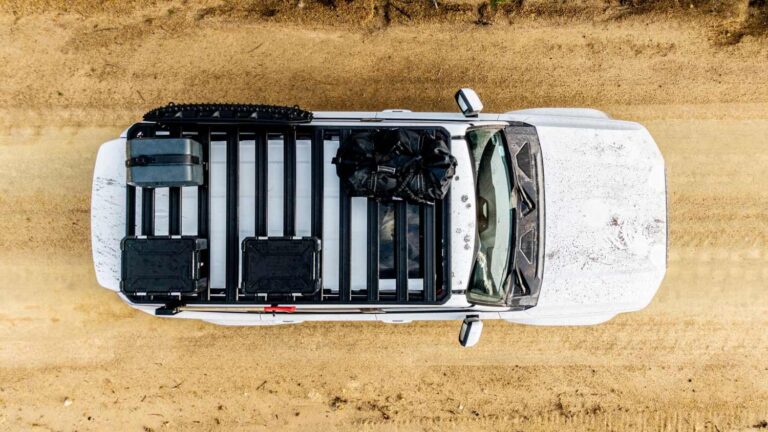
If your roof load changes from trip to trip, the new Dometic Front Runner Slimline 3 deserves a look. Its adjustable slats can be added, removed or repositioned without dismantling the entire rack, giving you flexibility to arrange the platform around your gear.
Each slat has dual top T-slot channels with staggered insertion points, making it easier to position accessories where you want them. Dedicated wiring channels within the side profiles help keep cables tucked away, while integrated corner tie-down points provide extra options for securing lightweight loads.
The tray itself has a 40mm profile and construction combines heat-treated aluminium with 3CR12 stainless steel and a black powder-coated finish.
Hits
Things to consider
Who it suits: Tourers who regularly change their roof setup and want plenty of scope to customise it.
Price: $952 – $2,085 depending on which size you go for.
Weight: From 12kg – 23kg.
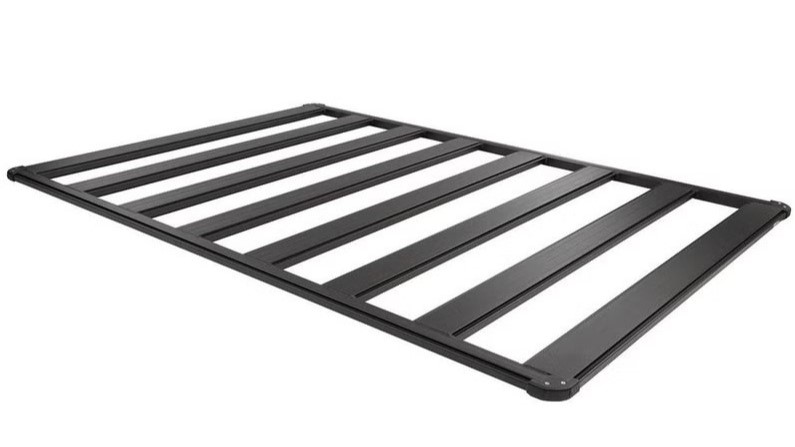
The BASE Rack takes a different approach to accessory mounting. Instead of conventional T-slot channels, it uses dovetail edges around the perimeter and along its crossbeams. Compatible clamps attach directly to those edges, so you can reposition accessories without sliding them along a channel past everything else.
The linked platform uses fully welded, extruded aluminium construction. Its crossbeams run across the vehicle, and optional rails let you turn the flat platform into a more enclosed touring or trade setup. Removable corner caps also provide access for routing electrical cables through the beams.
Hits
Things to consider
Who it suits: Buyers who like ARB’s accessory system and want a flat touring platform they can configure over time.
Price: $995 – $1,468 depending on size.
Weight: 26kg- 53kg.
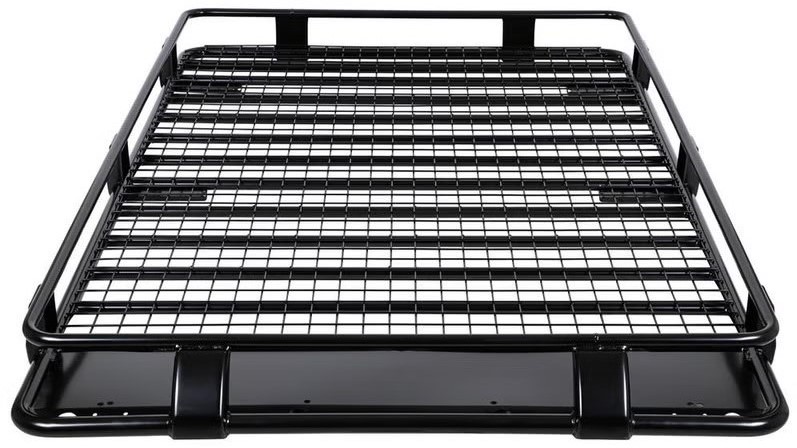
Not everyone wants a flat platform. ARB’s Deluxe Cage Roof Rack sticks with the traditional basket layout, combining raised perimeter rails with a fully welded mesh floor.
Its steel construction uses 25mm and 35mm tubing, finished in black powder coat. The mesh provides numerous places to attach tie-downs, while the surrounding rails give bulky camping gear a defined loading area. You still need to strap everything down properly – the cage isn’t a substitute for securing your load.
Hits
Things to consider
Who it suits: Buyers who prefer a traditional basket for carrying camping gear.
Price: Varies depending on vehicle but as an example, a Ford Everest Next Gen 2022 (sport) is advertised at $1,899. Use the ‘fit my vehicle’ function on the Ironman4x4 website.
Weight: 24kg – 39kg.
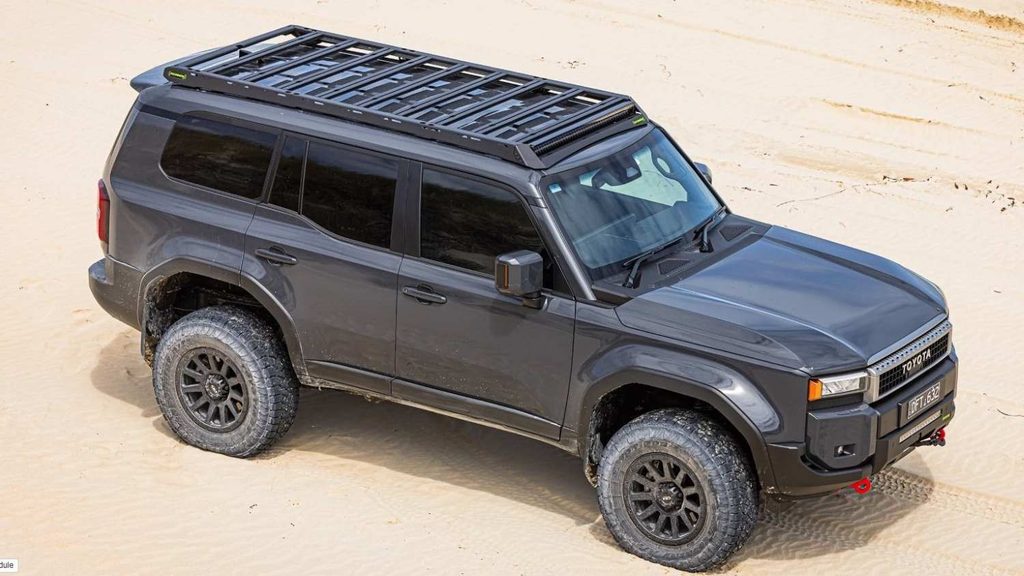
The Raid Roof Rack combines an aluminium platform with vehicle-shaped side blades that conceal its mounts and crossbeam fasteners. The result is a more integrated appearance than a tray sitting on exposed legs.
Its modular crossbeams can be configured to suit your load, with top T-slots, side mounting provisions and drainage paths. The side blades are pre-drilled for accessories, while the front wind deflector incorporates a removable panel designed to accommodate a 42-inch light bar.
Hits
Things to consider
Who it suits: Owners who want a touring rack with neatly concealed mounts and an integrated lighting option.
Price: $1,199 – $1,499 depending on size.
Weight: 14kg – 34kg.
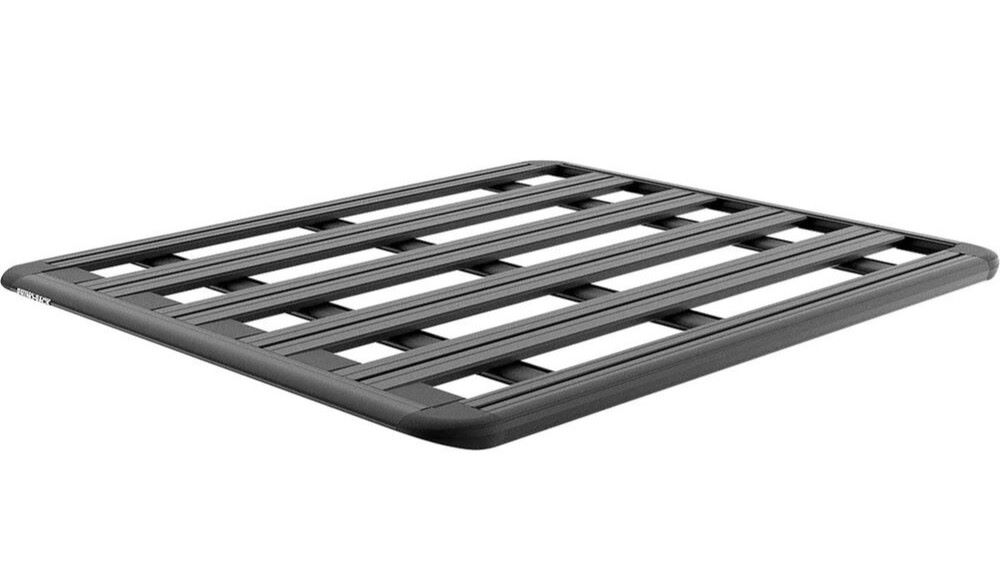
The Pioneer 6 combines a flat loading surface with mounting channels and integrated wiring provisions. Additional east–west channels expand the accessory mounting options, while wiring can run within the extrusions.
Rhino-Rack also offers an extensive range of mounts for camping gear, sporting equipment and touring accessories.
Hits
Things to consider
Who it suits: Buyers who want plenty of accessory choices and a platform they can build into a touring setup.
Price: $899 – $1,249 depending on size.
Weight: 20kg – 36kg.
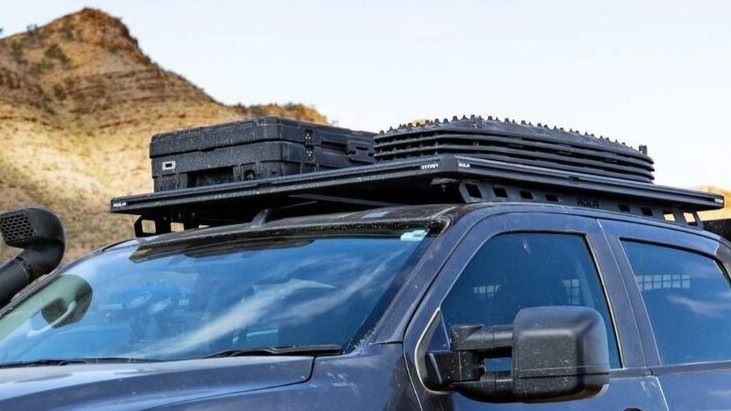
The MKIII Titan Tray offers several ways to mount and secure gear. Its adjustable planks have dual top channels, while channels around the outer edges provide further accessory positions. Entry points at the corners and sides help with inserting mounting hardware.
There are also attachment provisions underneath the planks for compatible S- and J-hooks. The aluminium tray has a textured powder-coated finish, and the supplied fitting hardware is intended for mounting it to compatible existing roof bars.
Hits
Things to consider
Who it suits: Buyers wanting a configurable platform, particularly those with a suitable roof-bar setup already fitted.
Price: $1,499 – $2,199 depending on size.
Weight: 22kg – 33kg
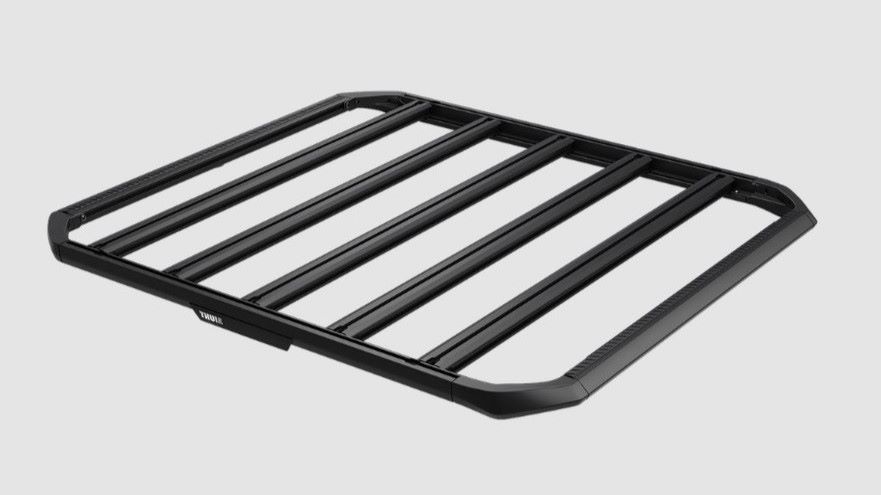
The Caprock is worth considering if you already use Thule carrying equipment. Its integrated T-slots accommodate compatible accessories, while adjustable base crossbars allow the fit to be configured for different mounting arrangements.
It can mount directly to compatible Thule Evo foot packs or use a separately purchased crossbar kit for suitable factory and third-party bars. Optional perimeter railings convert the platform into a basket.
Hits
Things to consider
Who it suits: Buyers combining camping storage with bikes, kayaks or other compatible Thule accessories.
Prices: $1,120 – $1,350 depending on size.
Weight: 16kg – 22kg.
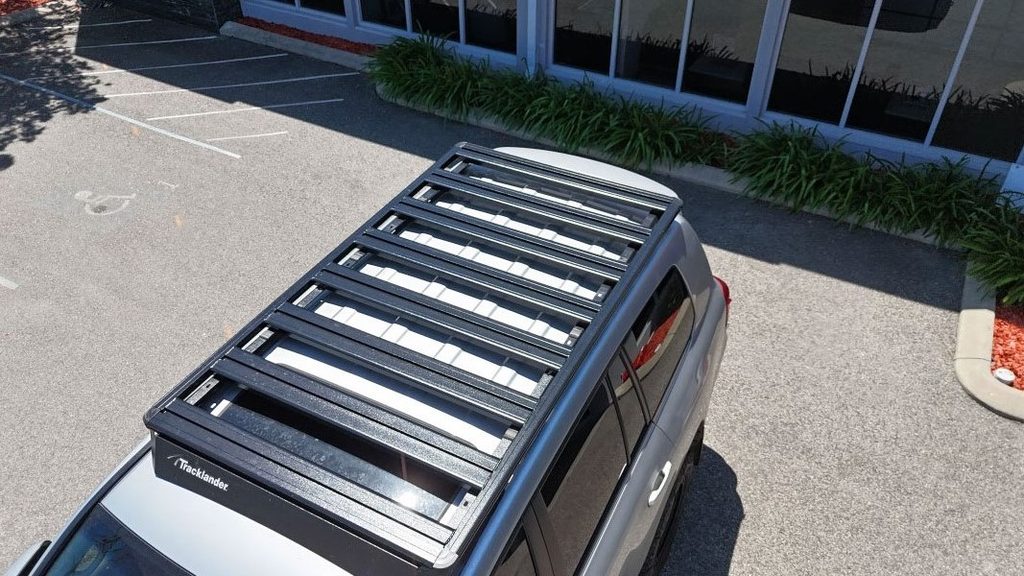
The P-Series is Tracklander’s plank-style platform, with fully welded construction and accessory channels on the top, bottom and sides. Removable end caps provide access to concealed wiring channels, and a rear cut-out accommodates shark-fin aerials on compatible vehicles.
It uses Tracklander’s Tough Bar and leg-kit mounting systems. Tracklander states that the platforms retain their dynamic ratings off-road, although your vehicle and mounting limits still determine what you can actually carry.
Hits
Things to consider
Who it suits: Tourers wanting a welded platform with channel-based accessory mounting.
Price: $1,860 – $5,125 depending on size and vehicle mounting system.
Weight: 22kg – 58kg.
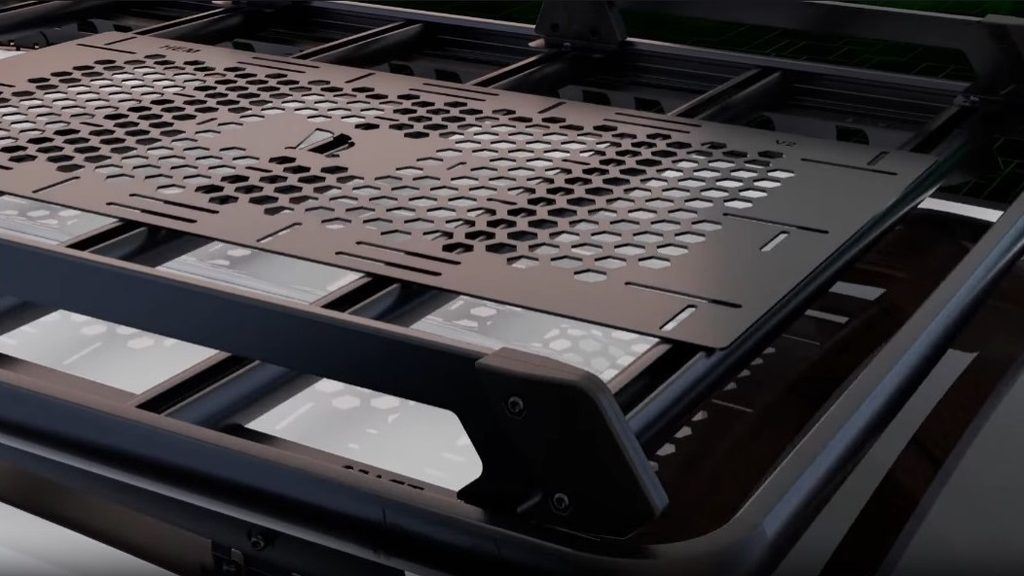
The Wedgetail Adventure combines Australian-extruded aluminium frame components and crossbars with vehicle-specific mounting rails. Its crossbars have top and bottom accessory channels, and a wind deflector is included as standard.
The modular design allows the platform to be configured around your requirements. Wedgetail positions Adventure as its premium touring range, with Australian manufacture and a ten-year warranty.
Hits
Things to consider
Who it suits: Buyers who prioritise Australian manufacture and a dedicated touring setup.
Price: $1,250 – $1,750 depending on size.
Weight: 20kg – 32kg.
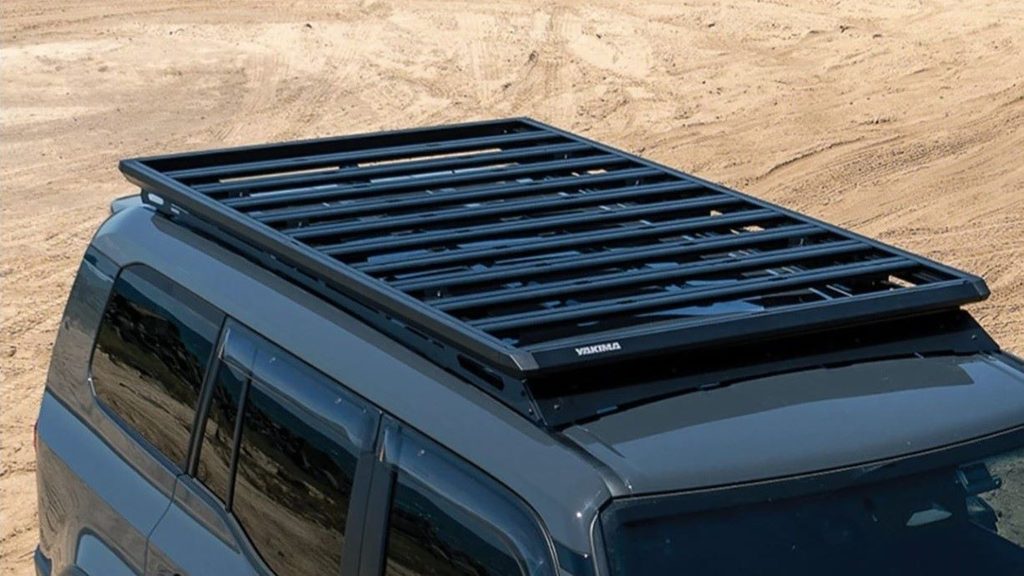
The new 2026 LockNLoad adds underside accessory slots and integrated perimeter cable routing to Yakima’s platform design. It arrives assembled, with an integrated wind deflector and aluminium construction.
Top accessory slots and additional underside mounting positions give you options for arranging gear without filling the entire loading surface.
Hits
Things to consider
Who it suits: Buyers wanting an assembled platform with plenty of accessory mounting positions.
A rack rated to carry 150kg doesn’t mean your vehicle’s roof can handle that much. You’re vehicle’s roof has a weight limit as well and more often than not, it is less than what your new rack is actually rated for. The weight of your roof rack, load bars and any attached hardware contributes to your roof’s allowable load limit before you even strap your gear on. You’ll find your roof loading limit in your owners manual.
For e.g. If you’re getting around in a Suzuki Jimny, there’s a good chance your roof load limit is only 30kg. If you were to go ahead and put a 25kg roof rack on, you wouldn’t be able to strap too much to it.
You’ll also come across the terms dynamic and static load ratings. Dynamic refers to the load permitted while driving; static applies when parked, which matters if you’re fitting a rooftop tent and adding the weight of its occupants. Our guide to roof storage and load ratings explains the difference, while our roof rack overloading article takes a closer look at carrying limits.
Then there’s GVM (gross vehicle mass), which is the maximum your loaded vehicle is safely and legally allowed to weigh. Your rack and everything on it also eat into your vehicle’s payload, alongside passengers, fuel and the rest of your gear. Being under your roof limit doesn’t automatically mean you’re under GVM. Read our guide to GVM and payload for the full rundown.
Start with your exact vehicle model, year and roof configuration. A rack that fits one variant won’t necessarily suit another, particularly where factory rails or sunroofs are involved.
Check how it attaches, too. Some systems use gutters, existing rails or factory mounting points; others require tracks or brackets to be installed.
The rack itself takes a bite out of your roof load allowance before you’ve loaded a single swag. Include the weight of mounting hardware, accessory brackets and anything permanently attached when working out what’s left for your gear.
A lighter platform can leave more carrying capacity available, but compare the complete fitted systems. A platform-only weight won’t tell you what the installation weighs once legs, bars and brackets are added.
Buy a rack that suits what you carry rather than automatically choosing the biggest one available. Extra platform space is handy, but it can also mean unnecessary weight.
Check clearance around aerials, sunroofs and the rear hatch, along with the spacing needed to support your intended loads. Measure your vehicle’s total height once the rack and permanent accessories are fitted – you’ll want that figure before approaching the garage or a shopping centre car park.
Think about the accessories you want before choosing the platform. Awning brackets, rooftop tent mounts, recovery-board holders and kayak carriers aren’t universally interchangeable.
Channel dimensions, dovetail systems and mounting positions vary between brands. Check whether your existing accessories will fit and what brackets or adapters you’ll need.
Your rack will probably spend more time on the highway than parked beside a remote campsite. Consider its profile, wind deflector and how easy it is to remove if you only need it occasionally.
Noise also depends on the vehicle, mounting position and accessories attached. A streamlined platform can still become noisy once you add an awning, exposed brackets or bulky loads.
Check whether the advertised price covers a bare platform or a vehicle-specific kit. Mounting legs, support systems, accessory brackets and professional fitting may be additional.
You don’t need to price every possible accessory upfront, but get a quote for the rack fitted to your vehicle with the essentials you already know you’ll need.
If you mainly carry a kayak, bikes or another load with a dedicated carrier, suitable roof bars may be all you need. They can also support rooftop tents in many cases. There’s little point adding a full platform if it doesn’t serve a purpose.
A flat platform makes more sense when you want to carry several items or mount touring accessories around the roof. Its open edges accommodate longer loads, while accessory channels or a mesh floor provide different ways to mount and secure gear.
A basket suits buyers who prefer a defined loading area with raised perimeter rails, particularly for bulky bags and camping equipment. Those rails can get in the way of some loads and accessories, though, and everything still needs to be properly secured.
For a broader look at the options, including enclosed roof boxes, see our 4WD Roof Storage Guide.
The listings in this guide range from $899 for a Rola MKIII Titan Tray to $5,125 for some Wedgetail Adventure configurations, but they don’t all include the same components. A complete setup may require additional mounting hardware and fitting. Ask for a vehicle-specific quote so you know what’s included.
No. Confirm that the vehicle, rack, mounting system and tent attachment method are compatible and approved for the intended use. The setup must accommodate the tent and other roof gear while driving, plus the occupants and bedding when parked. A high advertised rack capacity alone doesn’t establish suitability.
They can be. Some manufacturers specify a reduced carrying capacity off-road, while others retain their rack rating. Check the guidance for your vehicle, rack and mounts, and follow the lowest applicable limit. A rack retaining its rating doesn’t override a vehicle’s lower off-road roof limit.
Some systems are suitable for DIY installation, particularly those using existing mounting points or compatible roof bars. Others involve drilling, sealing holes or accessing beneath the roof lining. Follow the manufacturer’s instructions and use a qualified installer if the work is beyond your experience.
Sometimes. The platform may transfer, but you’ll often need different vehicle-specific mounts. Its dimensions, mounting arrangement and load requirements must also suit the replacement vehicle. Check with the manufacturer before assuming your existing rack will fit.