Anker SOLIX S2000 first impressions: Compact power with some big promises
We unpack the Anker SOLIX S2000 for a first look at its size, handling and setup before putting this 2kWh power station to work at camp.
Published on: 20 October 2026

A tidy shape, straightforward setup and 2,000Wh of battery capacity. The Anker SOLIX S2000 has arrived for testing, and there’s already plenty we’re keen to put through its paces.
Portable power stations have become a regular part of our camping setup. Between keeping the fridge cold, charging everyone’s devices and powering the bits and pieces we drag along, they earn their space in the vehicle.
We’ve been living and camping with the EcoFlow Delta 2 and Bluetti Elite 200 V2 for some time now. So when Anker SOLIX supplied its new S2000 for review, I was keen to see where it would fit into the mix.
The longer camping test is still ahead. For now, here’s what stood out getting it out of the box and up and running.
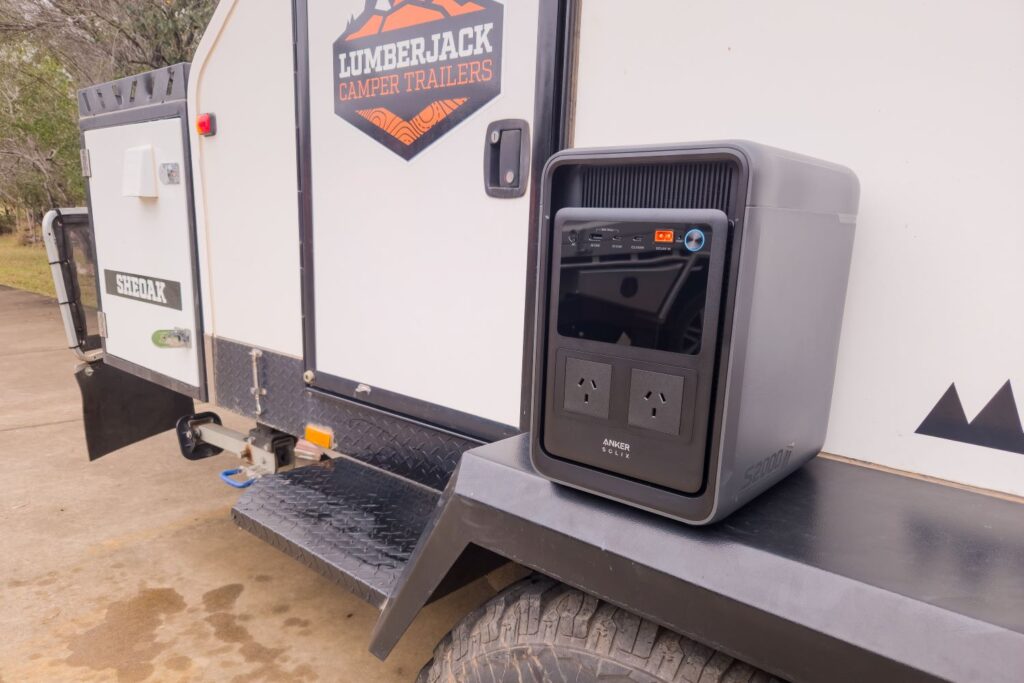
First up, the packaging. The S2000 arrived snugly secured, with sturdy protection and no room for it to bounce around inside the box.
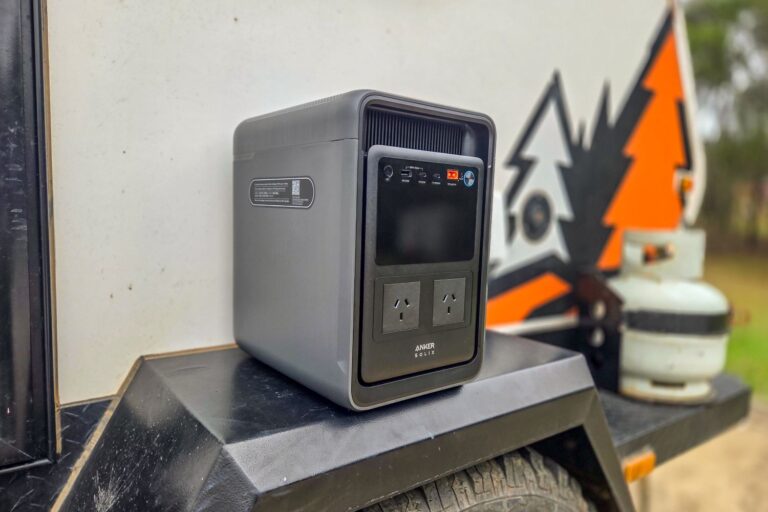
Once unpacked, its compact rectangular shape immediately appealed to me. Packing a vehicle is much easier when your gear has sensible shapes, and this looks like something you can work other camping gear around without wasting pockets of space.
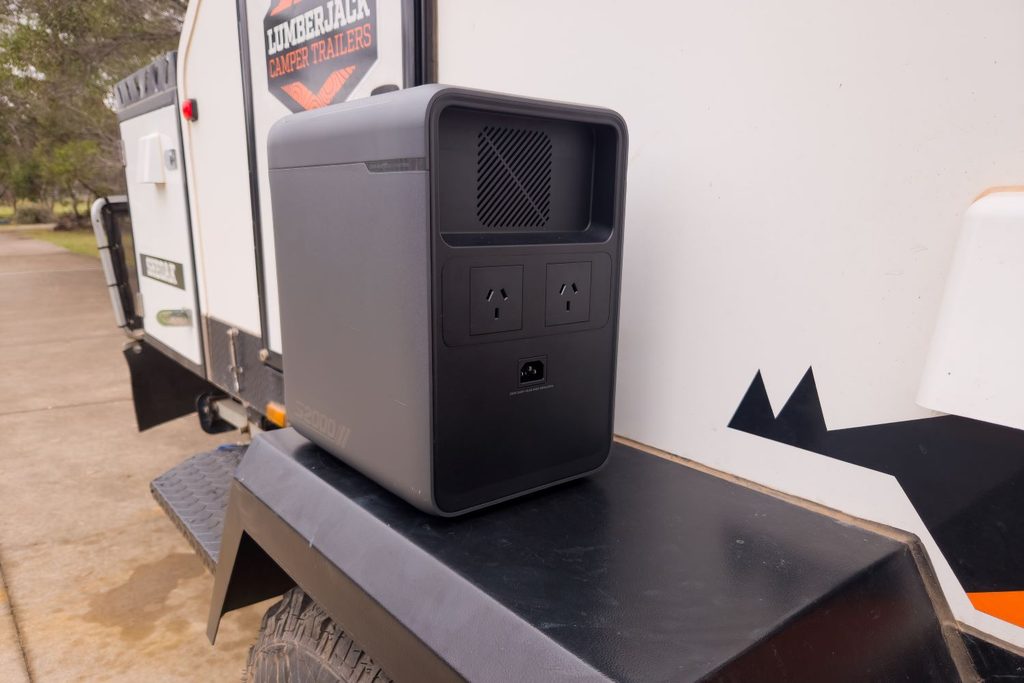
The relatively flat top also looks handy from a packing perspective but acess to the outlets and ventilation will still need to be considered wherever it ends up travelling.
Anker lists dimensions of 208 × 282 × 323.3mm and a weight of 16.2kg, billing it as the smallest and lightest 2kWh portable power station. Although that’s a claim we haven’t independently verified.
What I can say already is that its shape looks practical for the back of a 4WD or a camper.
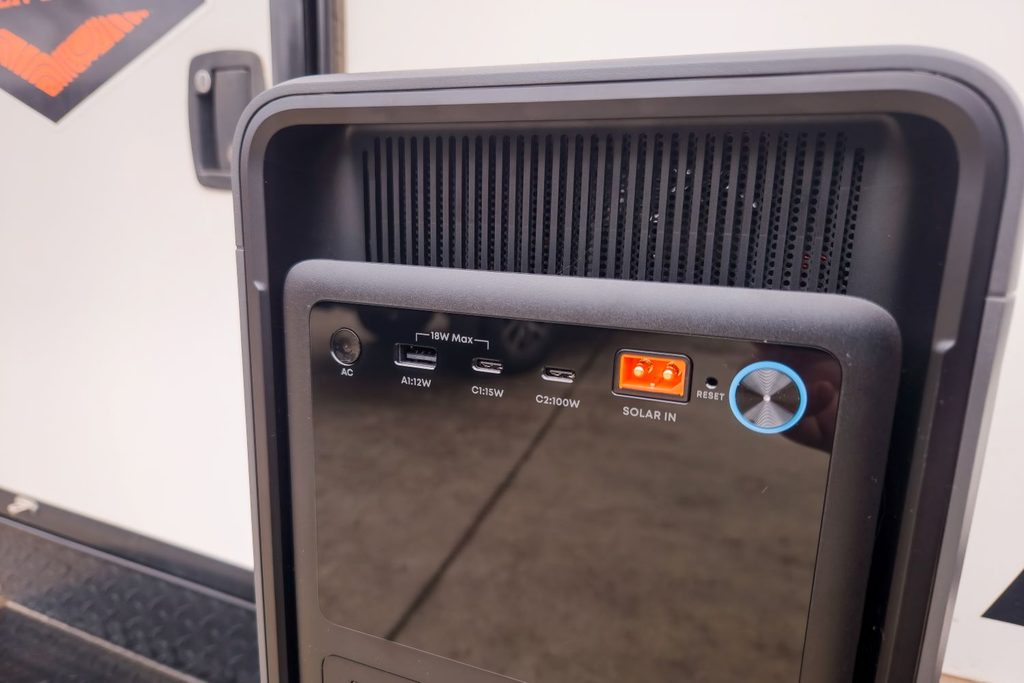
My first thought looking at it was… where are the handles?
There aren’t obvious handles sticking out of the body. Instead, there are recessed handholds beneath the top lip at the front and rear. Once I found them, lifting it with two hands was straightforward. Although personally, I would prefer a handle with a cutout so I could carry it one-handed.
At 16.2kg, it’s still something you’ll notice when lifting it. However, my initial impression is that it sits in a comfortable middle ground between our EcoFlow (12kg) and Bluetti (24kg) in terms of weight.
Whether those recessed grips remain comfortable after repeatedly moving it between the vehicle, campsite and home is something I’ll come back to in the full review.
Some gear requires caffeine and a decent read of the instructions before you get anywhere. This wasn’t one of those experiences. The basic operation was easy to work out straight out of the box, without having to consult the instructions to get started.
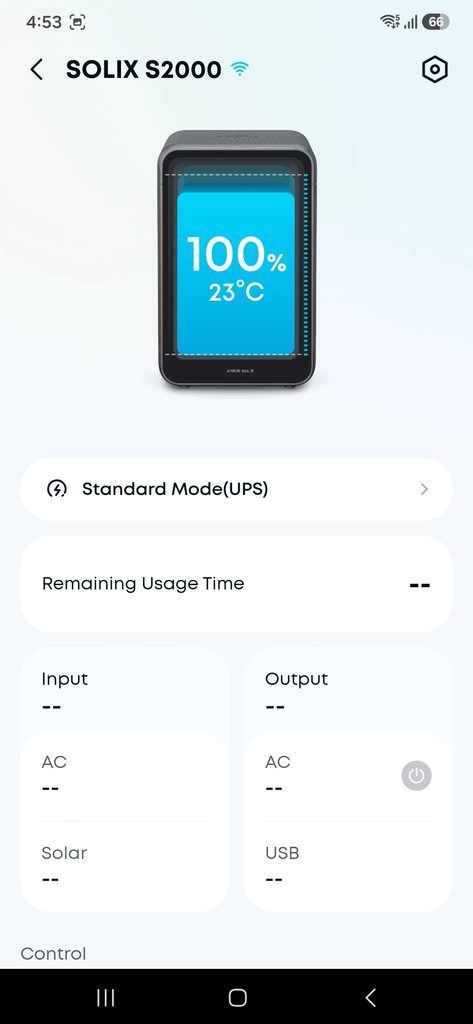
The Anker app was found via a QR code sticker on the power station, and once downloaded, connected on the first attempt. Its interface was easy to navigate, and getting connected didn’t turn into a troubleshooting exercise.
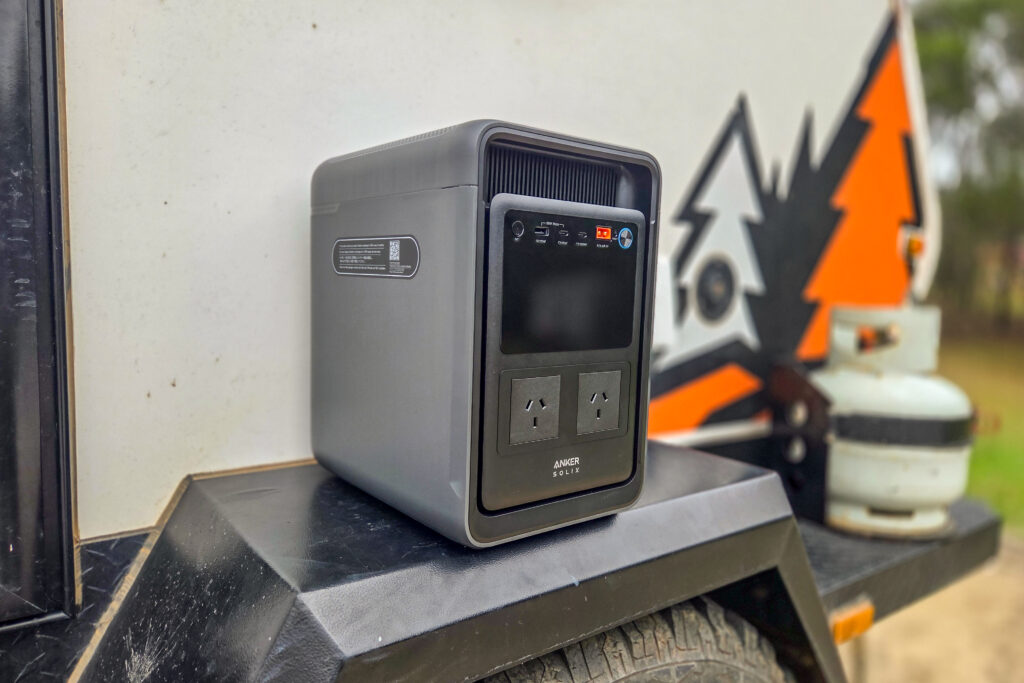
You can check how much juice you have left, how much is going in and out and from where from the front display, but sometimes its nice not to get up when you’re comfortable and warm in your camper. You can also adjust the settings from the app.

Manufacturer-supplied Australian specifications.
| Specification | Specification |
|---|---|
| Battery capacity | 2,000Wh |
| Battery chemistry | Lithium iron phosphate (LFP) |
| Rated AC output | 1,500W |
| Peak output | 3,000W |
| Weight | 16.2kg |
| Dimensions | 208 × 282 × 323.3mm |
| Total outlets | 4 x AC, 2 x USB-C, 1 x USB-A (specs supplied state 8 outlets but I can only find these 7) |
| USB connections | 100W USB-C, 15W USB-C and 12W USB-A; the latter two share an 18W maximum |
| Standard AC charging input | 1,150W |
| UltraFast AC charging input | Up to 1,500W |
| Solar input | Up to 400W |
| Car socket charging input | Up to 120W |
| Compatible alternator charger input | Up to 400W |
| Claimed idle draw with AC on | 10W |
| Claimed standby draw with outputs off | 2W |
| Claimed battery cycle life | 6,000 cycles to 80% capacity; 10,000 cycles to 60% |
| Warranty | Five years |
| Announced Australian price | $1,399 |
The S2000’s main pitch is about making its stored energy last longer.
Anker calls its approach OptiSave, which combines changes to the internal power electronics and control systems to reduce energy losses. The supplied figures include more than 90% efficiency at a 100W load and 10W idle consumption with the AC outlets switched on.
For campers, that matters because a fridge cycles on and off, while lights and electronics can spend hours drawing relatively little power. The power station itself still consumes energy while keeping those AC outlets ready.
Anker’s headline runtime claim is up to 10 days powering its own 58L EverFrost fridge, cycling at a 4°C setting under specified test conditions.
That’s a manufacturer’s test result, rather than something we’ve replicated. It also shouldn’t be read as a promise that any camping fridge will run for 10 days as this particular camping fridge has it’s own battery pack. Ambient temperature, connection method, fridge settings and how often someone opens it looking for a snack will also affect the result.
The other distinction worth understanding is battery capacity versus output. The S2000 has 2,000Wh of stored energy and a rated AC output of 1,500W. The first figure helps determine how long it can run your gear; the second limits how much it can power at once.
That makes appliance selection important. A kettle or induction cooktop drawing more than 1,500W is outside its rated continuous output, regardless of how much charge remains. The quoted 3,000W peak figure isn’t a continuous operating allowance, either.
For our testing, I’m more interested in how it handles the equipment we actually take camping than how many appliances we can gather around it for a photo.
The first checks will be fridge runtime, usable battery capacity and how easily we can replenish that power between stops. Solar charging and charging from the vehicle will be particularly relevant. A big battery is useful, but so is being able to put enough energy back into it to keep up with daily use.
I’ll also be paying attention to fan noise, outlet access once it’s packed among our gear, and whether the app remains useful beyond that painless first connection.
The battery lifespan claims deserve context, too. Anker quotes up to 15 years, with 6,000 cycles to 80% remaining capacity and 10,000 cycles to 60%. Those are manufacturer ratings, while the product warranty is five years.
So far, the S2000 has made a good first impression through the simple things. Sensible packaging, a shape that looks easy to pack, recessed grips and a setup process that didn’t require any head-scratching.
Its combination of 2,000Wh capacity and 16.2kg weight is appealing, and the efficiency claims give us something worthwhile to investigate.
The bigger question is how those specs translate into days at camp alongside the portable power stations we already use. That’s next. We’ll put the S2000 to work and report back with a full review once we’ve spent more time living with it.
Disclosure: Anker SOLIX supplied the S2000 for review. This article covers our initial setup and handling impressions; longer-term performance testing is still to come.