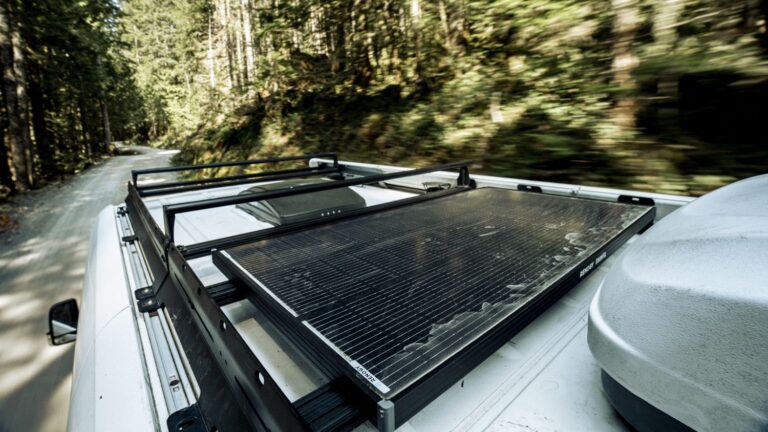
First impressions: Renogy ShadowFlux 200W solar panel
First impressions of the Renogy ShadowFlux 200W solar panel, how it works and how we plan to test it off-grid.
Published on: 17 June 2026

The older I get, the less interested I am in chasing giant power numbers while camping.
Maybe it’s because I’ve spent enough nights off-grid to know what I actually use, or maybe it’s because most of my camping these days involves juggling work, kids, camera gear, laptops and whatever device my tween and teen have forgotten to charge before leaving home.
Either way, my approach to power is pretty simple these days. I want enough solar to keep everything topped up and running without having to think about it.
That’s why I was interested when Renogy offered to send over a pair of its new ShadowFlux 200W solar panels.
Rather than fitting both panels to the same setup, I’ve decided to split duties. One panel is going on my off-road teardrop camper to help keep the lithium battery topped up while we’re parked. The second is being mounted to my Jeep and paired with a portable power station, giving me a separate power source for day trips, remote camps and situations where taking the camper simply isn’t practical.
It’s early days yet, but after unpacking, handling and installing one of the panels, I’ve got some initial thoughts.

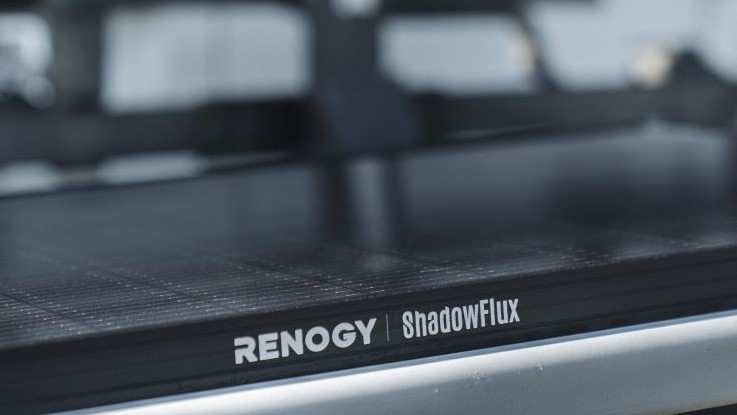
The big selling point of the Renogy ShadowFlux range is its anti-shading technology.
Anyone who has spent time around solar knows that partial shade can absolutely hammer performance. A roof rack crossbar, antenna, Starlink mount or even a branch can reduce output far more than you’d expect.
Renogy claims its ShadowFlux technology can bypass shaded cells individually, allowing the panel to continue producing power even when part of the panel is blocked. We spoke more about how this works in our previous article on why shade is the real problem, so it’s worth going back and reading this to understand it more in-depth.
Whether that works as advertised is something I’ll be testing properly later this year.
The panel also uses newer N-Type solar cells, which Renogy says deliver higher efficiency and improved long-term performance compared to older panel designs.
On paper, the numbers look solid:
The first thing that stood out was the packaging.
Solar panels and freight companies don’t always make the best combination, so seeing plenty of protection around the panels was reassuring. I live in rural Queensland, so by the time any parcel arrives at my doorstep, it’s been through a number of depos and has been rough-handled numerous times. Despite this, both arrived in perfect condition with no damage to the corners, frame or glass.
The second thing I noticed was the weight.
At just over 10kg, they’re certainly not featherweights, but they’re noticeably lighter and easier to manoeuvre than some rigid panels I’ve handled previously. Given one is destined for my camper roof and the other for the Jeep, that’s a welcome bonus.
The slim profile also immediately appealed to me.
Roof space is valuable real estate, particularly once you start adding roof racks, recovery gear, awnings, antennas and everything else that seems to accumulate on touring vehicles. The ShadowFlux panels have a fairly tidy footprint for a 200W panel, which should make installation easier than some bulkier alternatives.
At this stage, both panels seem well built. The aluminium frame feels sturdy, the finish looks neat, and the supplied MC4 connectors and cabling appear to be good quality.
My camping power requirements aren’t huge.
I don’t run air-conditioning and I cook on gas. My camper uses a 40L Engel 12V fridge, water pump, camp lighting and the usual collection of devices that need charging. We sometimes all pile in and watch a movie on the small TV in there.
The challenge is that I also work while travelling. That means charging laptops, phones, cameras and occasionally Starlink when mobile coverage disappears.
The expectation is that we normally arrive at camp with everything already fully charged, either from alternator charging while driving or from mains power before leaving home. For me, solar is about maintaining battery levels once we’re parked up.
The camper-mounted panel will handle the day-to-day camping duties.
The Jeep-mounted panel is a little more interesting. Connected to a portable power station, it gives me a completely separate power source for day trips away from camp, beach missions, or overnight stops where towing the camper simply doesn’t make sense.
The portable power station also acts as a backup should anything in the camper fail.
Having two independent systems should also give me a good opportunity to see how the panels perform in different environments.
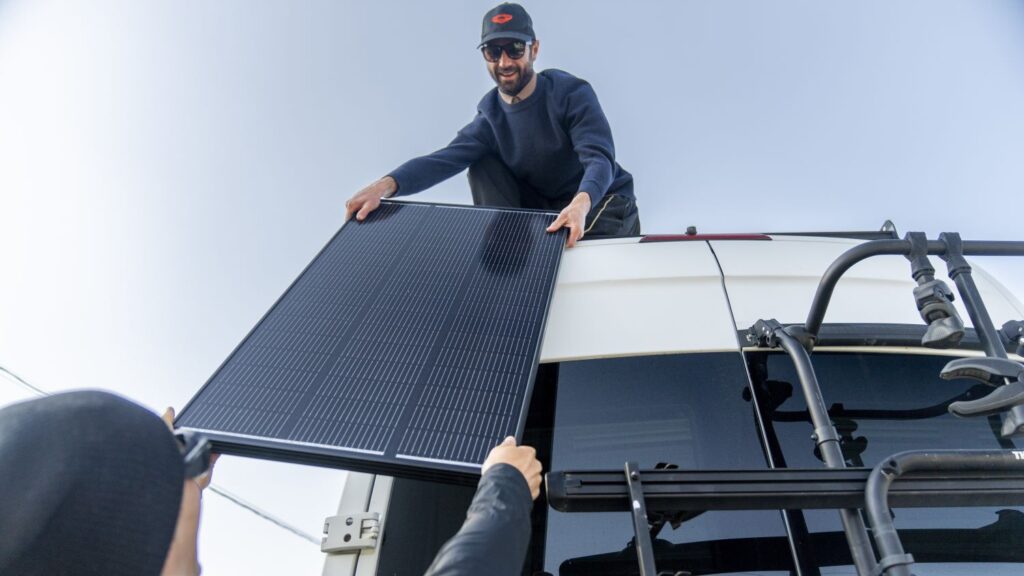
At this point, I’ve only installed one of the panels, and since then, it has rained nonstop. So, this is very much a first-impressions review rather than a full test. The real evaluation will come later this year when we spend extended periods off-grid.
A trip to the Mundi Mundi Bash is a possibility, while a return visit to Byfield on Queensland’s Capricorn Coast is also high on the shortlist.
Both destinations should provide good opportunities to test the ShadowFlux panels in real-world conditions, particularly around partial shading, varying weather conditions and the general realities of camping life.
I’m especially interested in seeing how much difference the anti-shading technology actually makes compared to traditional solar panels. Because let’s be honest, very few campers spend their lives parked in perfect sunshine.
So far, so good.
The Renogy ShadowFlux 200W solar panels arrived well packaged, feel well built and strike a nice balance between output, weight and physical size.
The anti-shading technology is obviously the headline feature, but that’s also the part that still needs proving.
For now, first impressions are positive. They’re lightweight enough to work well on both my camper and Jeep, appear to be built to handle life on the road, and should (theoretically) provide plenty of charging capacity for the way my family camps.
The real test starts once the kilometres begin adding up. We’ll report back after a few weeks of off-grid travel and see whether the ShadowFlux panels live up to the promise.