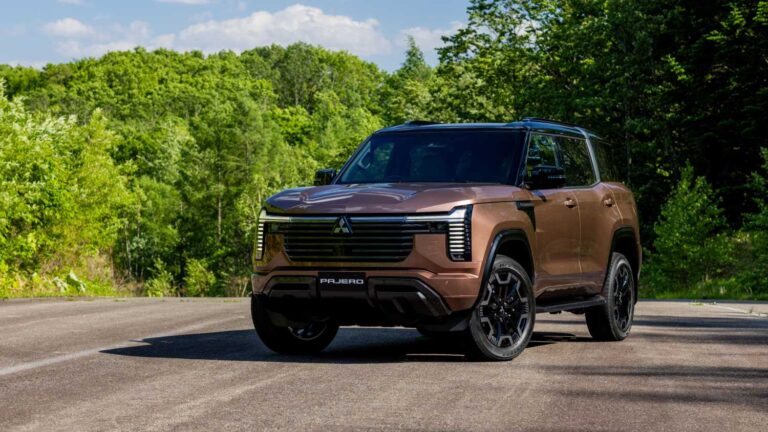
It’s official. The Mitsubishi Pajero is returning to Australia, complete with low-range 4WD, a rear diff lock, 3.5-tonne towing capacity and a starting price of $68,490 before on-road costs.
There are certain names in the Australian 4WD world that need very little introduction, and Pajero is one of them.
Now, Mitsubishi has confirmed the iconic nameplate is coming back to Australia, with the all-new Mitsubishi Pajero due to arrive in local showrooms in December. And this isn’t just a familiar badge slapped onto a soft-roader.
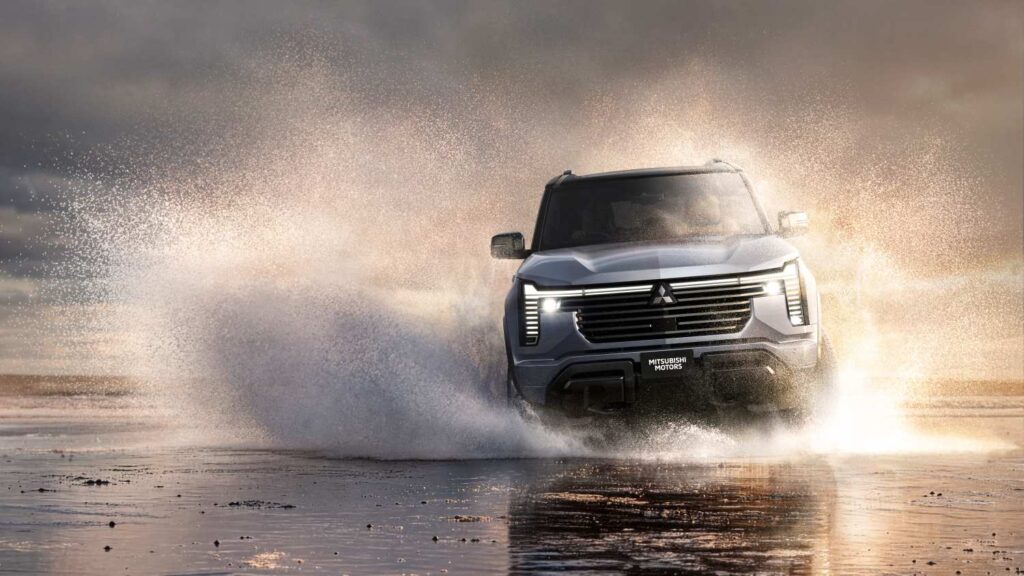
The new Pajero will arrive with Mitsubishi’s Super Select II 4WD system, low-range gearing, a rear differential lock across the range and seven selectable drive modes. Under the bonnet sits a 2.4-litre turbo-diesel producing 150kW and 480Nm, paired with an eight-speed automatic transmission.
Prices will start at $68,490 before on-road costs for the five-seat GLS, climbing to $84,990 for the flagship GSR. Apparently Australians are pretty keen to see the Pajero name return, too. Mitsubishi says it has already received more than 3000 pre-registrations.
New Mitsubishi Pajero Australian pricing
Four variants will be available from launch, including five and seven-seat versions of the entry-level GLS.
Model
Price before on-road costs
Pajero GLS 5-seat
$68,490
Pajero GLS 7-seat
$69,990
Pajero EXCEED
$79,990
Pajero GSR
$84,990
The GLS arguably presents the most interesting proposition for 4WD buyers, particularly given much of the important off-road hardware is standard across the range. Every Pajero receives Super Select II 4WD, a rear differential lock and seven drive modes, rather than reserving the serious off-road gear for more expensive variants.
A new diesel engine and eight-speed auto
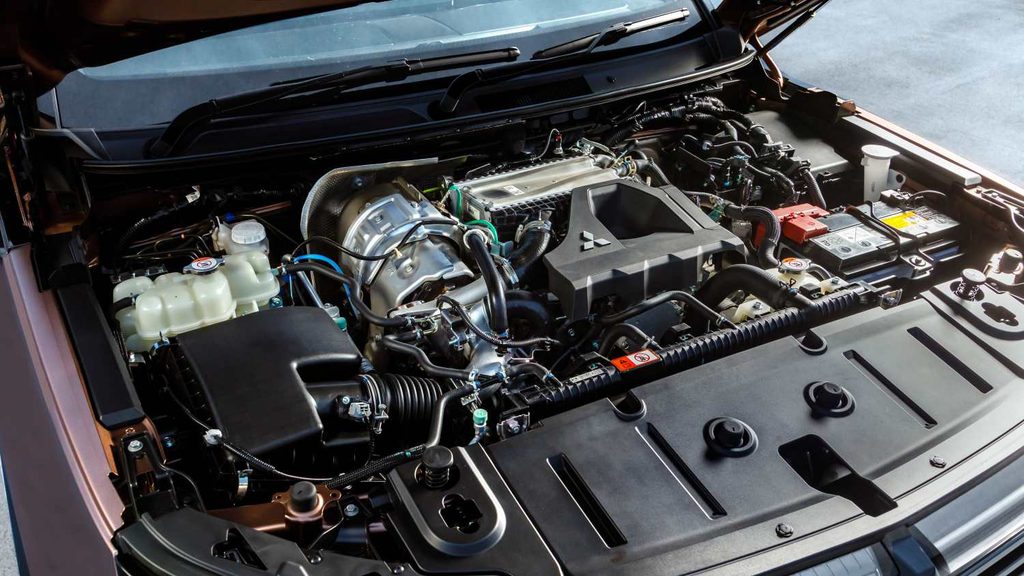
Power comes from Mitsubishi’s latest-generation 4N16 2.4-litre four-cylinder turbo-diesel. It’s related to the engine found in the current Triton, but Mitsubishi says it has been further developed for the Pajero. It produces 150kW and 480Nm, an increase of 10Nm in peak torque.
The engine uses a variable-geometry turbocharger, water-cooled intercooler and dual-loop EGR system. It also uses AdBlue and meets Euro 6d emissions standards.
It’s paired with a new eight-speed automatic transmission featuring a wider spread of ratios. Mitsubishi says the gearbox has been calibrated for smoother shifting and improved efficiency, with engine blipping on downshifts.
Fuel capacity is 80 litres, while the AdBlue tank holds 17 litres.
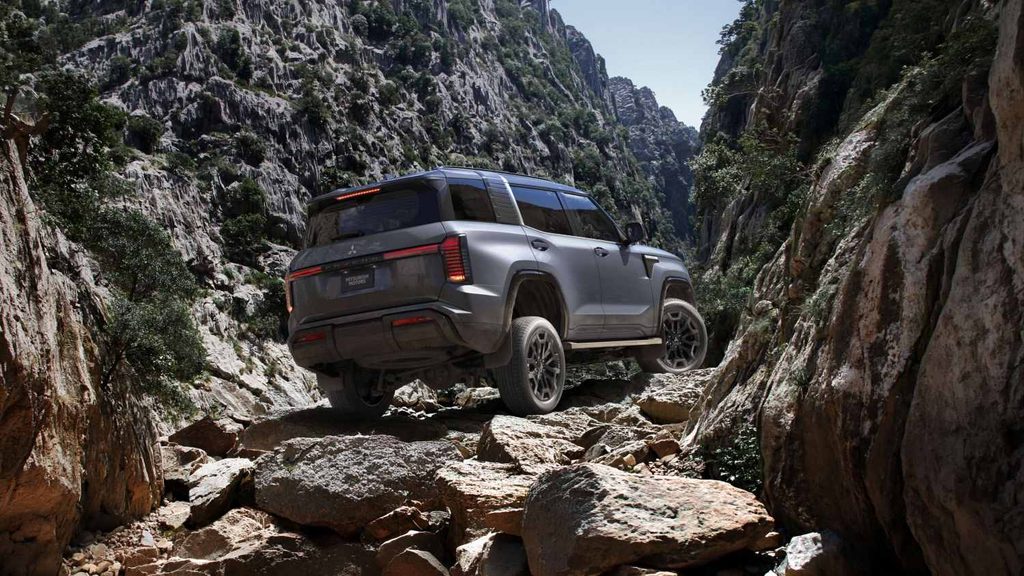
The Pajero is still a proper 4WD
Perhaps the most important news for readers is what’s underneath it. The new Pajero retains Mitsubishi’s Super Select II 4WD system, giving drivers four drivetrain settings.
In 2H, the Pajero operates in rear-wheel drive for normal road use. Selecting 4H brings four-wheel drive into play for variable road conditions, while 4HLc locks the centre differential for off-road driving. For the tougher stuff, 4LLc combines four-wheel drive, a locked centre differential and low-range gearing.
Super Select II works alongside Mitsubishi’s Super-All Wheel Control system and Active Yaw Control, with seven drive modes covering Normal, Eco, Gravel, Snow, Mud, Sand and Rock conditions. A rear differential lock is also standard on every grade.
That gives the returning Pajero some genuine off-road cred straight out of the showroom, rather than relying solely on electronic traction aids.
There’s also a Multi Around View Monitor and what Mitsubishi calls a ‘Bonnet see-through’ camera, designed to give the driver a digital view of the terrain immediately in front of the vehicle. The instrument display can even show an altimeter, compass and pitch and roll angles when you’re off-road.
New frame and long-travel suspension
Underpinning the new Pajero is an enhanced frame, which Mitsubishi says is considerably stiffer than the Pajero Sport’s. The suspension consists of a wishbone and coil-spring arrangement at the front and a five-link setup at the rear.
Mitsubishi has also fitted long-travel suspension, wider tracks, high-response shock absorbers and stabiliser bars, with electric power steering replacing a traditional hydraulic system.
We’ll need to get it off the blacktop before making any calls about how well that combination works in the real world, but on paper Mitsubishi certainly hasn’t forgotten what people expect from something wearing a Pajero badge.
3.5-tonne towing capacity confirmed
The new Pajero will have a 3500kg braked towing capacity, putting it squarely in the sights of buyers looking to tow caravans, boats and camper trailers. Trailer Load Assist can intervene if trailer sway is detected, adjusting engine power and braking individual wheels to help stabilise the combination.
Mitsubishi has also confirmed a 100kg dynamic roof-load capacity and a substantial 300kg static capacity. Australian accessory development has been part of the program, although Mitsubishi says the full range of Pajero accessories will be revealed closer to launch.
Five or seven seats
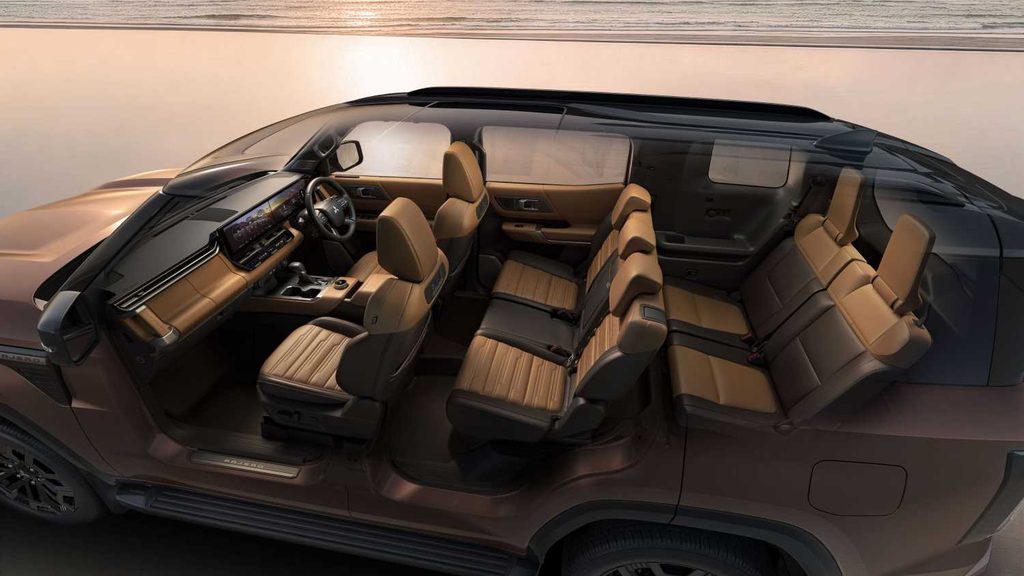
The Pajero GLS will be available with either five or seven seats, while EXCEED and GSR variants will be seven-seaters. The second row can slide through 150mm, allowing passengers to juggle legroom between the second and third rows.
With the third row folded, Mitsubishi quotes 519 litres of VDA luggage capacity, plus another 10 litres in a storage compartment beneath the cargo floor. Even the base GLS gets waterproof fabric seats, which might actually make it the pick of the bunch for buyers expecting to regularly bring a bit of the bush, beach or campsite home with them.
Up front are twin 12.3-inch displays covering the instrument cluster and infotainment system. EXCEED and GSR models step up to twin 14.3-inch displays. Wireless Apple CarPlay and Android Auto are standard, as are USB-C charging, wireless phone charging and Mitsubishi Connect.
What do you get with EXCEED and GSR?
Moving from GLS to EXCEED brings a more luxurious specification, including leather upholstery, electrically adjustable front seats, heated front and rear seats, 20-inch wheels, a refrigerated centre console and the larger 14.3-inch displays. It also gets Mitsubishi’s 12-speaker Dynamic Sound Yamaha Ultimate audio system.
At the top of the tree, the $84,990 GSR takes a sportier approach with black 20-inch wheels, black exterior detailing and a black panoramic roof with sunroof. Inside are two-tone camel and black leather seats, with heating and ventilation up front, seat memory, black headlining and additional trim upgrades.
Despite those luxury equipment differences, the fundamental drivetrain and 4WD hardware remain consistent across the range.
What does the new Pajero look like?
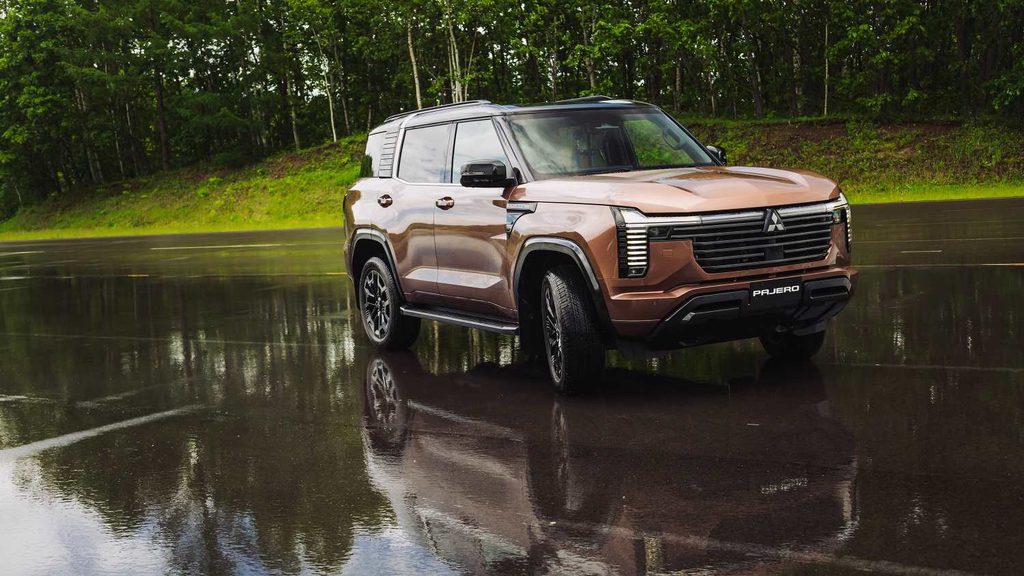
Mitsubishi calls the design theme ‘Grand Charisma’, but there are a few deliberate references to Pajeros of old hidden underneath the thoroughly modern exterior. Most notable is the C-pillar, which takes inspiration from the roll-bar shape of the first-generation Pajero.
At the front, there’s a T-shaped LED lighting signature, while GSR models add animated lighting and additional dark exterior details. Two new prestige colours will also debut with the Pajero: Armour Copper and Phantom Blue.
Plenty of safety tech
Mitsubishi has loaded all Pajero grades with the same core safety package.
It includes adaptive cruise control with Lane Keep Assist, Forward Collision Mitigation with pedestrian and cyclist detection, rear autonomous emergency braking, Blind Spot Warning, Emergency Lane Assist, Front and Rear Cross Traffic Alert and a Driver Monitor System.
There’s also Child Presence Detection, parking sensors, the Multi Around View Monitor and the bonnet see-through camera. Seven-seat models receive curtain airbags covering the third row.
When does the new Mitsubishi Pajero arrive in Australia?
The new Mitsubishi Pajero is scheduled to reach Australian dealerships in December 2026. Mitsubishi says more than 3000 pre-registrations have already been received, suggesting there is still plenty of affection for the Pajero name despite its absence from Australian showrooms.
And there’s a lot riding on its return. Pajero isn’t just another model name for Mitsubishi. Four generations helped establish the company’s reputation for building capable, comfortable 4WDs, and the badge carries decades of history in Australia.
On paper, Mitsubishi appears to understand that heritage matters. The new Pajero has low range. It has a rear diff lock. It can tow 3.5 tonnes. There’s a diesel under the bonnet and proper off-road drive modes at the driver’s fingertips. But it’s also arriving in a very different 4WD market to the one its predecessor left behind.
At $68,490 before on-road costs, the entry-level GLS offers appealing value. Whether the new Pajero can turn all that heritage into a genuinely competitive modern touring 4WD is something we’re very keen to find out.