4WD water crossings: How to get through without drowning your rig
From checking depth and choosing your line to maintaining a bow wave, here’s how to tackle 4WD water crossings without drowning your rig.
Published on: 10 September 2026

When it comes to 4WD water crossings, few wheeling obstacles have the potential to do quite as much damage to your vehicle. Specifically, your engine.
One misjudged line or a simple depth miscalculation and all of a sudden, the body of water you’re crossing immediately gets renamed to ‘shit creek’ and you’re stuck in the middle of it without a paddle. Next minute, you’re wondering what your excess is and whether you’re better off stumping up for a new engine or just writing the rig off and starting over.
However, with a little planning and a bit of knowledge, 4WD water crossings can be tackled with confidence and a good sense that, no matter how bad it might go, you can deal with it. Let’s jump into how to cross water in a 4WD properly.
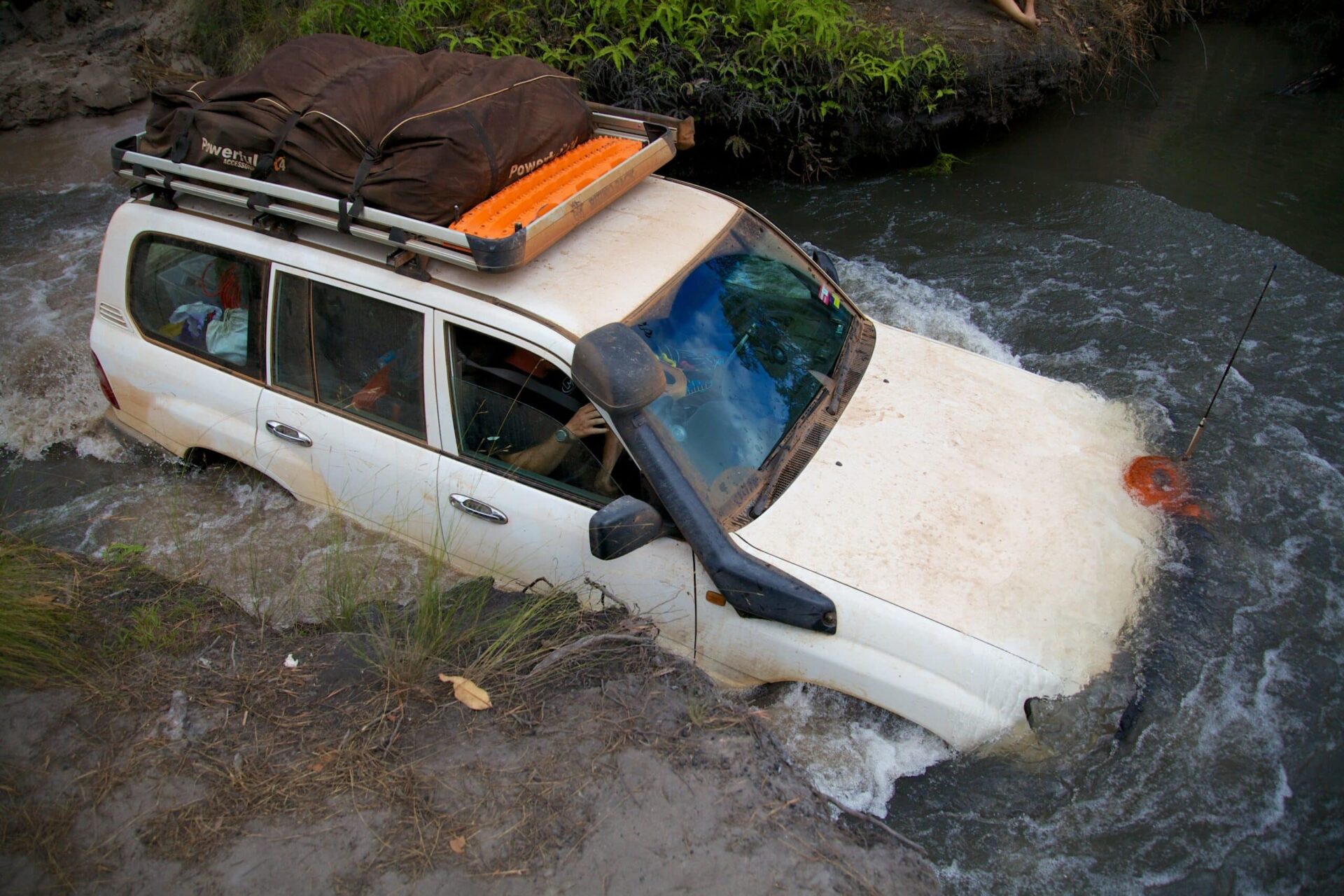
If you’ve ever done the outback or driven up the beach you’ll know that red dirt and sand find their way everywhere in, under and on your rig. Same goes for water, but worse. It’s getting up into your chassis rails, your diffs, your transmission, your cabin. Basically, anywhere that has an opening, water is coming in.
There are a few mods to prevent it from playing havoc with your mechanicals and electrics that are worth considering if you’re touring a destination where water crossings are happening. Which is most places in Australia if we’re being realistic.
First off is a snorkel. Get that air intake up nice and high. Keep in mind that just because you have a “raised air intake” from the factory, doesn’t mean your intake is watertight. Toyota, for example, are known for having leaky two-piece snorkels on the 70 Series that aren’t much chop in deep 4WD water crossings.
Read next >> A snorkel won’t save your starter motor – OEX thinks this will
Read next >> Should you fit a snorkel sock to your 4×4
Second one is diff and transmission breathers. Water, oil and gearsets get along as well as a vegan trying to convince a grizzly bear to change its diet. Breathers are cheap insurance.
Then you need to be familiar with your vehicle before attempting a 4WD water crossing. Know your 4WD’s wading depth, know where any ECUs or electrical sensors that may be damaged by water are located, and know that just because your mate made it through in his old mechanically-injected diesel doesn’t mean you’re going to have the same success in your Cybertruck.
Lastly, having your winch rope unspooled ahead of the crossing, or a snatch strap already connected and looped safely around your front or rear bar can save precious seconds if a mid-crossing recovery is required. Oh, and if you have an engine-driven fan then a water blind may also be a good idea unless you like the idea of turning the fan into a propellor and lunching your radiator.
This is where a lot of people come unstuck. Reading the water is probably the most important step in conducting a remote crossing. First thing is to assess the depth. Ideally, you’d walk it first, but that’s not always practical (which we’ll get to in a sec).
Walking it does allow you to assess the depth, the current and any submerged obstacles that aren’t visible from the surface but are just waiting to stand ten toes in against your diff pumpkin. It also allows you to test the terrain under the surface. Soft sand, sticky mud or, hopefully, a nice firm rocky base.
The current and flow are also worth paying attention to. 4WD water crossings usually position your vehicle side-on to the flow, so if you’re unsteady walking it on your feet, your rig will be struggling too.
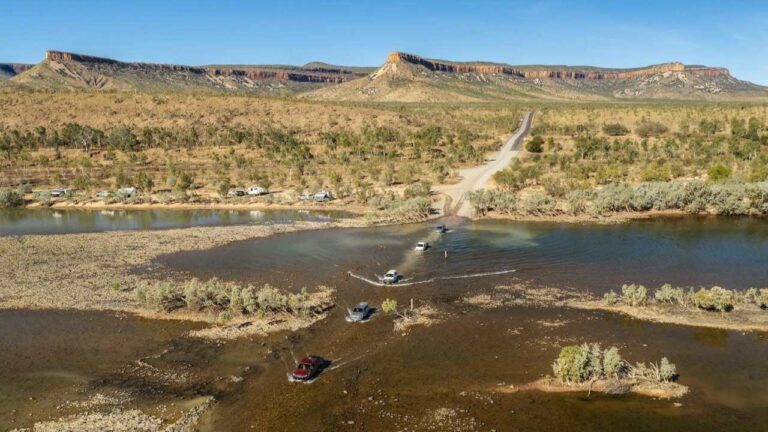
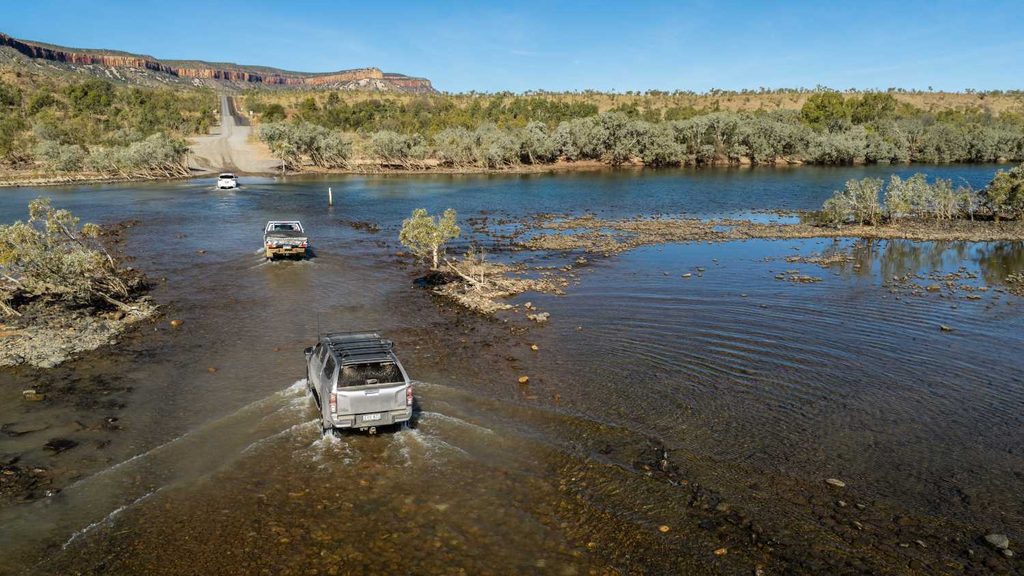
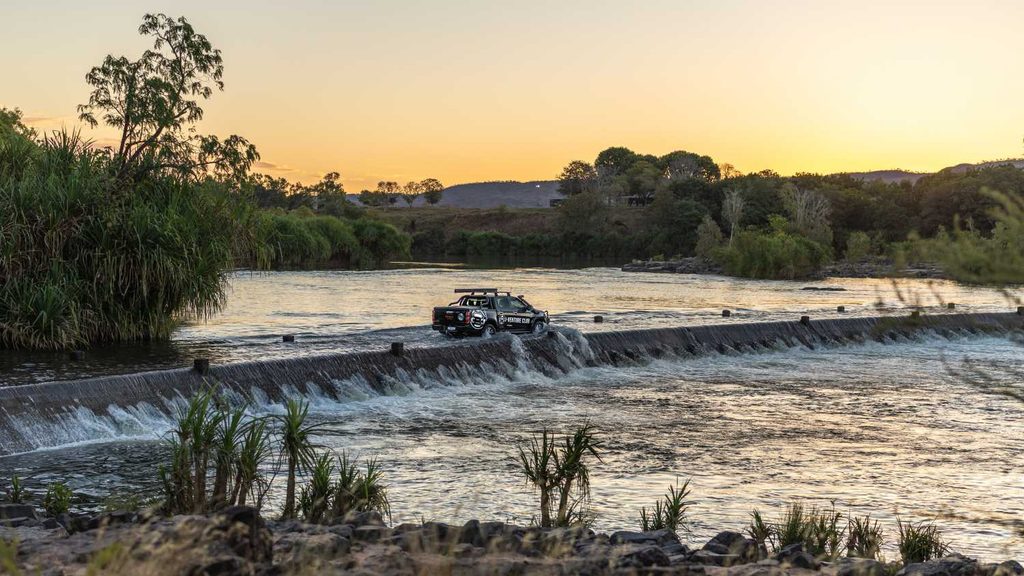
From there, pick your entry and exit points, and your line if there are obstacles to avoid. On a recent trip to the Kimberley with the Isuzu I-Venture Club we had to zig-zag across a straight-looking crossing several times, which also showed the importance of spotters from elevated positions on the banks who may have a better view of the hazards than you do.
Also keep in mind that many crossings, the Ivanhoe and Pentecost for example, can change massively even after what seems like a light rain. You may have driven them 100 times, but the minute you think you can’t be caught out is right when Murphy shows up and lays down his law. It sucks but it happens.
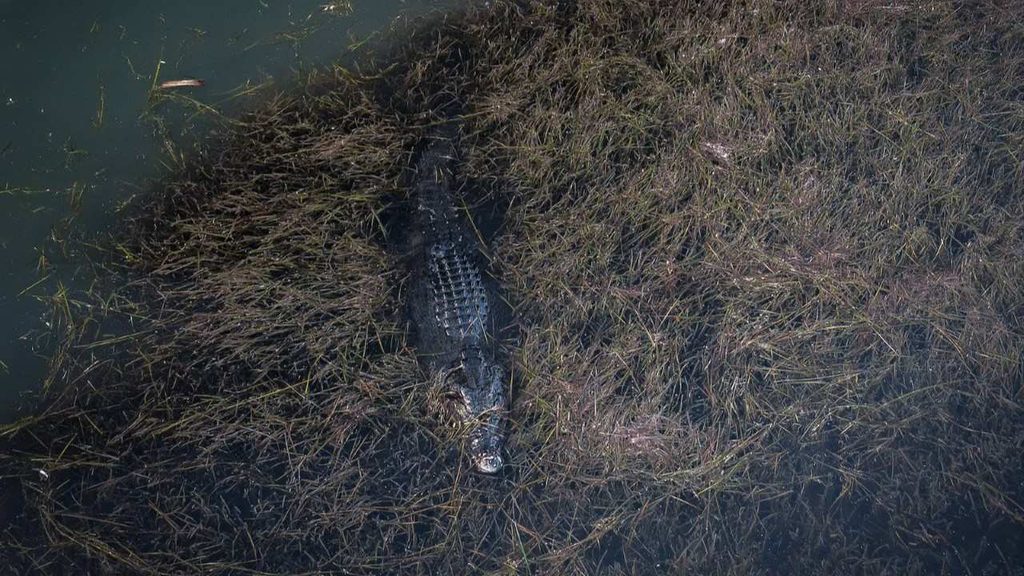
Saltwater crocodiles are an apex predator and will have no problem causing you a bunch of discomfort and pain in the few milliseconds between you seeing them and you no longer hanging out among the living. If you’re driving anywhere in the Top End and are unsure then give it the old yeah-nah and do the stick poke instead.
What’s the stick poke?
Find the longest stick or branch you can find, ideally 3-metres or more, and walk along the crossing poking it down into the water until it stops. While far from perfect it’ll give you a pretty good idea of the depth, current and base of the crossing. But yeah, being croc-wise the whole time is a must. Big salties don’t play.
I really can’t stress this one enough, and 4X4 advertisers and seemingly every YouTube show about wheeling have a lot to answer for here, but DO NOT hit the water at speed with the throttle pinned and the engine screaming. Yeah, it makes for heaps cool water-thirty-feet-into-the-air shots for the `gram, but everyone who knows what they’re doing thinks you’re a f**ken idiot. It’s basically like power washing dirty creek water past every seal and grommet in your engine bay. It’s dumb. Stop it.
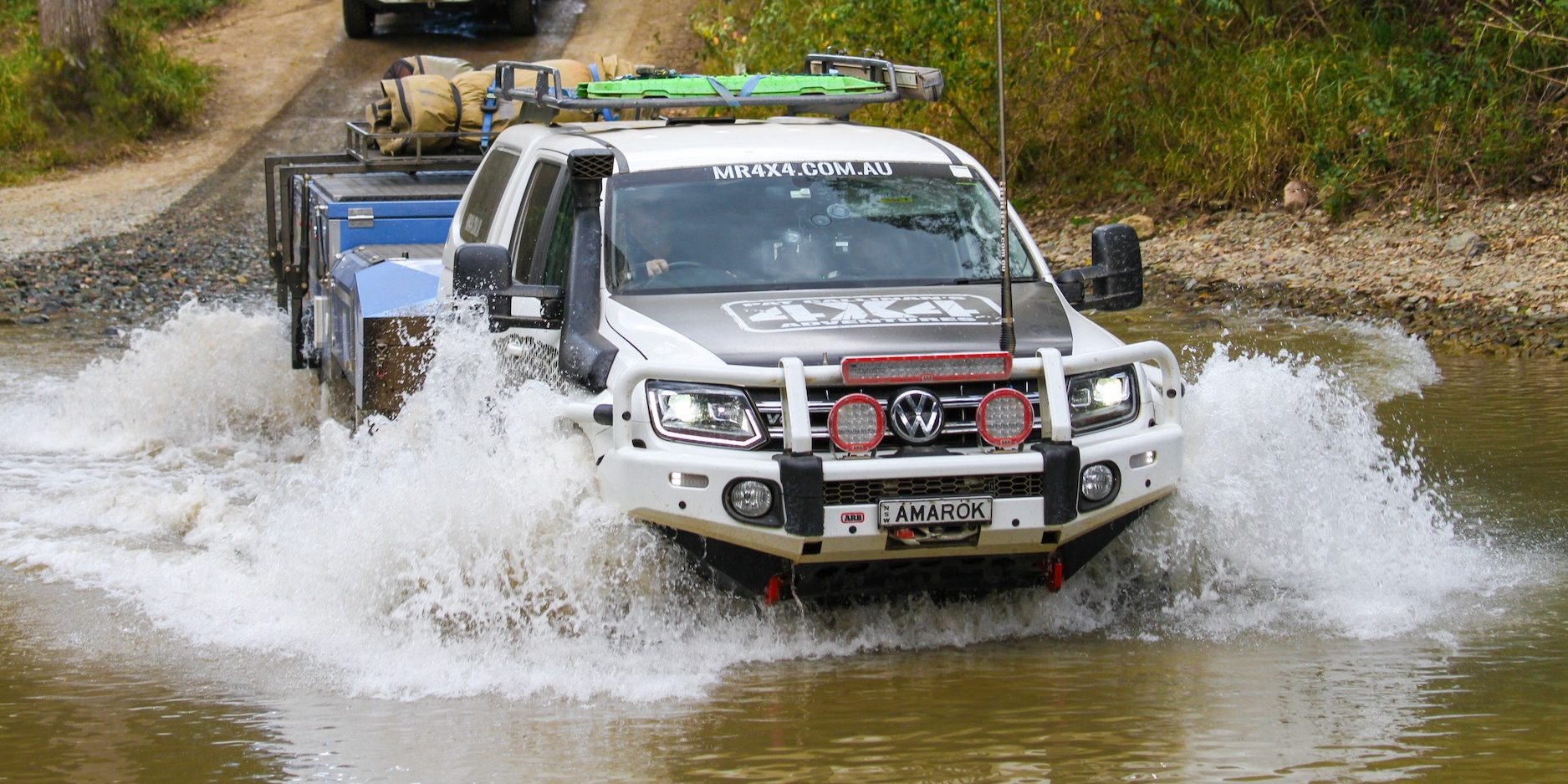
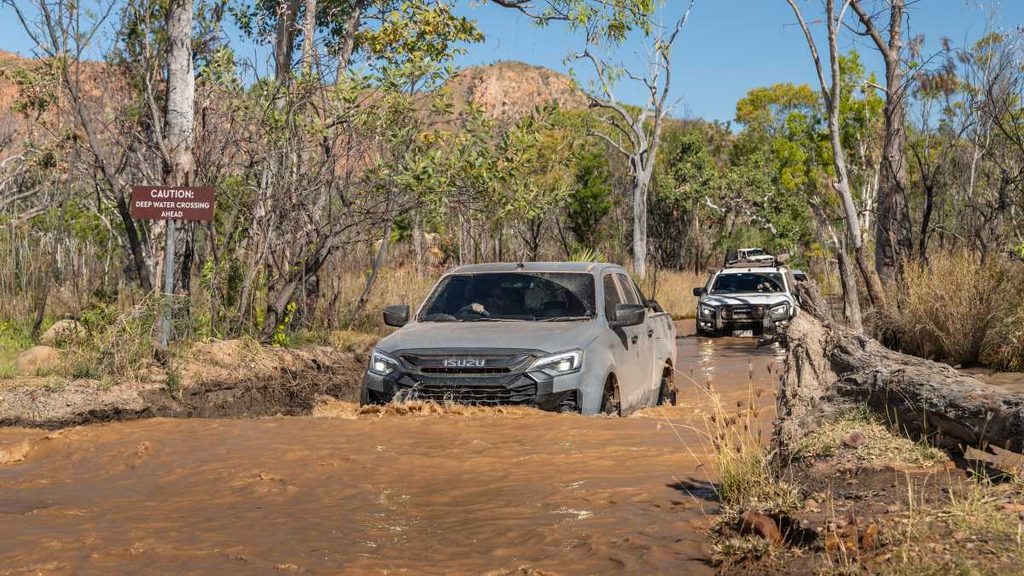
Second-gear low range is the speed you’re aiming for when crossing water in your 4WD. For auto drivers that’s roughly between 10-15km/h. Not fast. You’re aiming to maintain your momentum to keep a bow wave out ahead of the front bar, which creates a trough of shallower water behind that your engine sits in. No massive stabs on the throttle either. Keep it smooth and consistent. Add a little more if you feel traction slipping, a little less if your speed picks up too much.
Also, tyre pressures should be roughly what you run on soft sand. If you know the crossing has a firm base then you can obviously run a little higher, but if traction gets sketchy you’re generally better off with a few less psi than a few more.
If you’re in a ute with drum brakes on the back then a couple of short bursts of throttle followed by hard braking will dry them out pretty quick. If your 4WD is petrol powered and was coughing a bit towards the end of the crossing, then pop the bonnet up and have a cuppa to let the ignition coils dry out after the water crossing. This isn’t the worst advice for any vehicle really.
As you head off again, make sure your brakes are working. You’d be amazed how many snagged-on-submerged-branches brake lines we’ve heard of that go undiscovered until you need to stop in a hurry. Also, turn the stereo down for a few minutes to make sure your engine is happy. Even if you’ve got a snorkel, popping the airbox lid and checking the filter isn’t soaked is good practice as well.
Our gut is one of the most under-utilised and flat out ignored pieces of equipment we have, and we should all be trusting ours more. If yours is screaming at you to give this 4WD water crossing a miss and find another way around, then listen to it.
Almost every 4WDer I’ve met who has come seriously unstuck during a water crossing has said something like “I had a feeling things weren’t right before I went in.” Sometimes it could be just taking a few minutes and having a good inspection of the crossing to find the best way through, other times it could be deciding to give this one a miss and find a new route.
Yeah, you may cop some flack from your mates, but unless they’re going to help you pay for a new engine they can zip it.