Isuzu D-MAX and MU-X power upgrades: 4JJ1 and 4JJ3 tuning explained
Want more grunt from your Isuzu D-MAX or MU-X? Explore 4JJ1 and 4JJ3 tuning, exhausts and other power upgrades.
Last Updated: 28 October 2026

The Isuzu D-MAX and MU-X have plenty going for them, but a loaded touring rig or a heavy trailer can leave you wishing for a bit more grunt. If you’re looking at power upgrades, where should you start and which modifications are actually worth your money?
Whether you’ve got a 4JJ1 or the newer 4JJ3 under the bonnet, there are several ways to approach it, from tuning to supporting upgrades such as an intercooler or exhaust. What makes sense depends on your engine, its condition and what you’re asking it to do.
For most owners, the goal is usable performance: stronger pulling power and better response without creating an expensive headache down the track. Here’s what to consider before you start throwing parts at your D-MAX or MU-X.
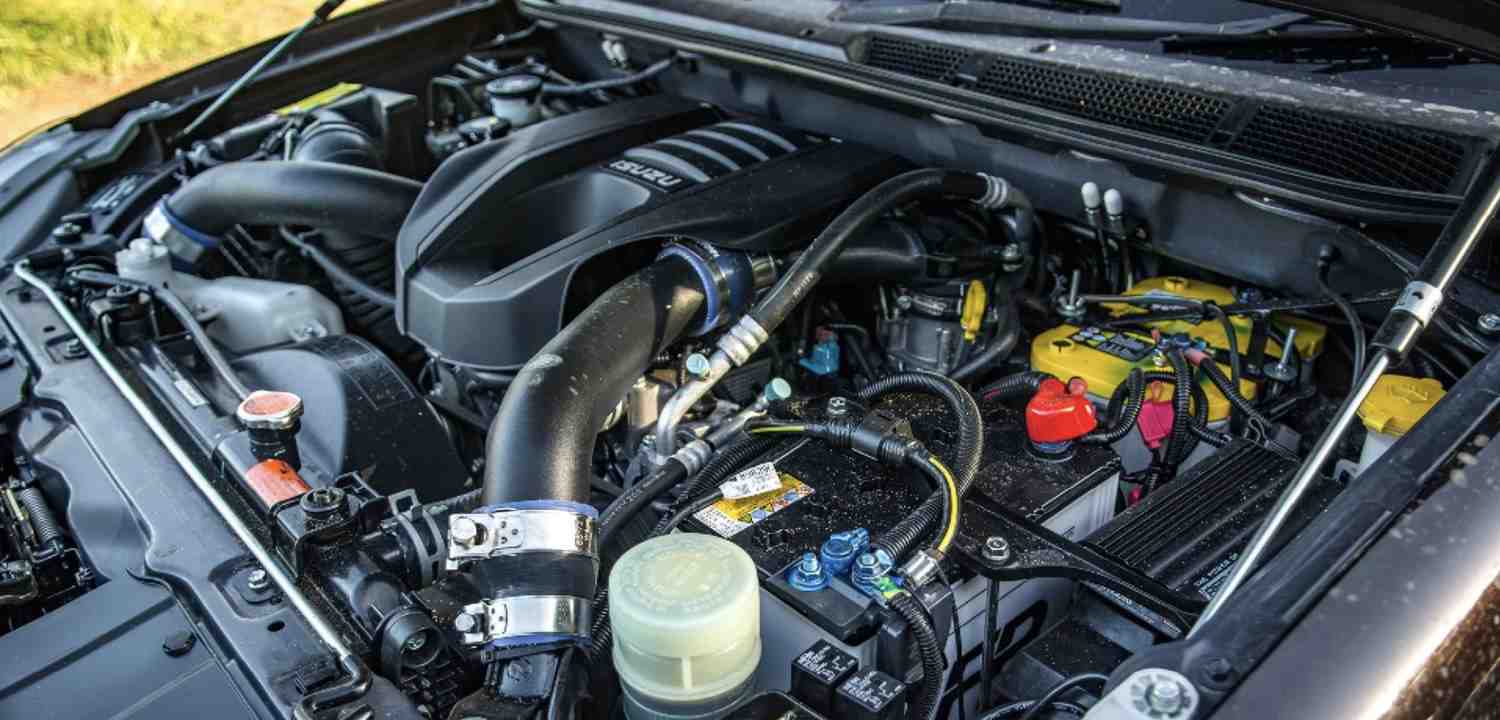
First things first: which engine have you got? We’re covering the 3.0-litre common-rail 4JJ1 and 4JJ3 turbo-diesels here. They share some DNA, but don’t assume a tune or part that suits one will work on the other.
The 4JJ1 is the engine you’ll find in earlier Australian D-MAX and MU-X models. Power and torque vary depending on the year, with later versions putting out 130kW and 430Nm. Check your particular model before getting too excited about someone else’s before-and-after figures.
The 4JJ3 landed in the Australian D-MAX in 2020, followed by the new-generation MU-X in 2021. It’s still a 3.0-litre, but Isuzu revised the internals, injection system and turbo hardware. Factory outputs climbed to 140kW and 450Nm, with peak torque available across a wider stretch of the rev range than its immediate predecessor.
In a word, yep. Both have tuning options, but the engine badge is only part of the story. A well-maintained, standard ute and a high-kilometre tow rig with a mystery tune need different conversations at the workshop.
Before spending anything, get the engine’s health checked and tell your tuner how you actually use the vehicle. Towing a caravan, crawling up tracks and chasing big dyno numbers are different jobs, and your upgrade plan should reflect that.
As for reliability, neither engine gets a free pass once you start chasing more grunt. The 4JJ1’s reputation doesn’t make it unbreakable, and the newer 4JJ3 isn’t immune to a poor tune or neglected servicing.
Work out what you’ve got, make sure it’s healthy, then chase the performance you’ll actually use.


Look, by now, we all know that these systems are (a) good for diesel emissions (arguable maybe, but still), (b) required by law for road use (because without them, we’d all be allegedly gasping for breath) and (c) absolutely craptastic for an engine’s reliability (yep, any engine).
Nevertheless, removing any or all of these components, while potentially good for reliability, is still highly frowned upon by the long arm of the law, and because we’re a law-abiding publication, we’re not going to get into recommending removal of them.
With that said, having worked in a diesel workshop and having seen firsthand the damage these systems cause, I can’t really say enough bad about them. But that’s just my personal opinion, and it’s not the opinion of Unsealed4X4, Diesel Care (who helped us out with some tech questions on this article), Isuzu Australia or anyone else who has more lawyers than I do.
I just think these emissions systems are heinous but also can’t in good faith recommend removing them. Kind of like how I’d never condone anyone sack-whacking a particularly unlikeable radio host. It’s illegal but shouldn’t be. But it is. So don’t do it.
Anyway, let’s move on.

When it comes to getting more from your Isuzu, it’s always best to have a goal in mind. Sure, 500hp sounds great, but do you really want to go to all that trouble and expense if all you’re doing is towing the van twice a year and hauling a tool trailer around during the week? Not only that, but do you want to put up with the decreased fuel economy and impacted reliability, not just on the engine but the rest of the driveline as well?
Think of it like this: These engines are capable of 500hp, imagine how much happier and long-lasting it’ll be at a much easier and cheaply-attained 250hp, which is still a hell of a lot for a 4WD.
When you’ve past the exhaust/tune/maybe-an-intercooler stage and are getting into bigger injectors, fuel pumps and turbo territory, you’re really starting to flirt with the possibility of expensive parts going bang. For our needs, keeping things reliable is key, but that’s us.

The first step to gaining more power is often not actually about getting more out of the engine, but more preparing it to handle a significant increase in oomph. From factory, the Isuzu comes with a 2.75-in diameter exhaust, which is pretty darn good right out of the box. If you’re going to be chasing decent figures then it’ll be worth upgrading to a 3-in pipe, but up until that point, it’s only going to make your engine noisier (not necessarily a bad thing, you do you).
Even so, Diesel Care did mention that the 4JJ3 in particular can benefit from a 3-in exhaust being fitted up, so make sure you discuss your requirements with your diesel specialist before spending anything. You’ll be dollars ahead in the long run.
Speaking of, we’ve seen a lot of folks go for the cool points with a shiny stainless snorkel and upgraded airbox combo. While these certainly don’t hurt anything, they’re not really that important until you’re up over the 250hp mark, so don’t feel the need to jump in right away.
Tuning comes in many different shapes and sizes these days. From Dynamometer tuning with special software to $30 ‘chips’ bought online to a bloke with a laptop and stained wife-beater working out of a shed while punching a dart and sipping on an energy drink. It can be a confusing time trying to determine which option will suit you (spoiler alert: the cheap eBay chip and Captain Singlet-Stain are never the answer).
Despite the many options, the pathway is straightforward. Go with a tried, proven and respected product. For our coin it’s difficult to go past the Steinbauer Power Modules, which are one of the more comprehensive piggyback tuners on the market and consistently deliver reliable, affordable and grin-inducing amounts of response from under your right foot.

The modules work by tweaking a variety of parameters directly from the Engine ECU, maintaining safe emissions levels, exhaust gas temperatures and won’t affect overall reliability. For most people, fitting up a Steinbauer will be all they need to tow their trailer or just have more torque for wheeling.
Interestingly, if you do want to chase some big numbers, then dyno tuning may not be the answer, given that the stock ECU cannot be improved in certain areas. This means a power module or standalone ECU will be required to get the figures needed for the power being produced.
While the stock intercooler is no slouch, it can be improved with a quality aftermarket front mount that will cool the intake charge more effectively. We’ve seen up to 10% improvements in torque from an intercooler upgrade alone, but they’re really an ‘as needed’ modification depending on your individual requirements.

Ok, we’re getting into serious figures here, and moving forward has to be done with care lest you undo all of Isuzu’s hard work in making one of the most reliable engines of all time. New injectors or high-flowed units with +30 nozzles can deliver more fuel (which in a diesel essentially means more power) which in turn allows you to up the boost.
Same goes for the pump. While rail pressures are already fairly decent on the 4Js, a larger fuel pump really allows you to bump those numbers up into the stratosphere. Is either of these mods needed for a daily-driven tow pig? Absolutely not, but this is a diesel power-up article and they at least deserve a mention.
The stock turbo has been known to put out 30psi so it’s not exactly a weak link, however assuming you’re up for the expense of bigger injectors, custom tuning and a more ‘flowy’ fuel system then throwing a turbo that’s capable of providing the boost needed to take advantage of all that fuelling (in order to maintain Air-Fuel ratios) is the next logical step.
Plus, you get to use a high mount manifold and impress all the bros and scene queens the next time you’re at the drag strip. Add a hard cut limiter to your tune for that popcorn sound and you will have all the internet points.

It may sound like we’re kind of bashing people chasing 300+hp, and we promise we’re really not. It’s just that in a 4WD context, big power is almost always secondary to reliability, and that’s precisely what these 4Js do so well.
They have that magic combo of over-engineered internals coupled with an excellent fuel system that’s backed by a sweet-as turbocharger. They’re fun, they’re fast and, what’s the word of the day? That’s right, they’re reliable.
If this were a drag-racing publication, we’d be all about those larger turbskis and as much rail pressure as she could handle, Captain. But a lot (most) of the folks reading this will be heading deep into the bush before long, and the last place you want something to go pop is when you’re eleventy-hundred kays from the closest workshop.
Grab yourself a useable amount of power economically, easily and without stressing anything out, and rest easy knowing that you have one of the best diesel engines ever built.