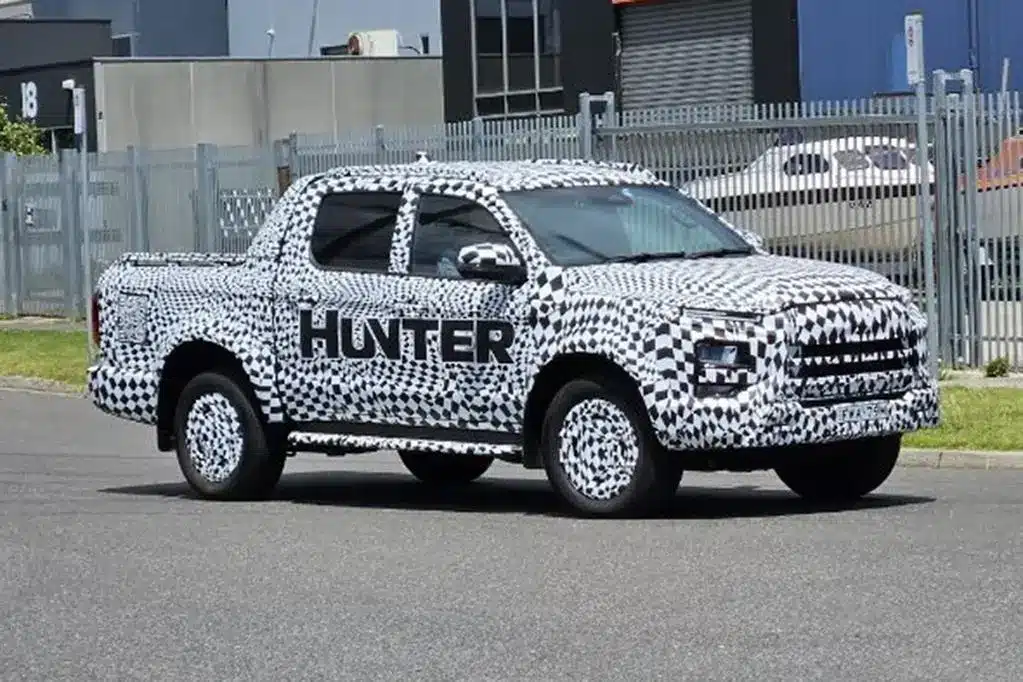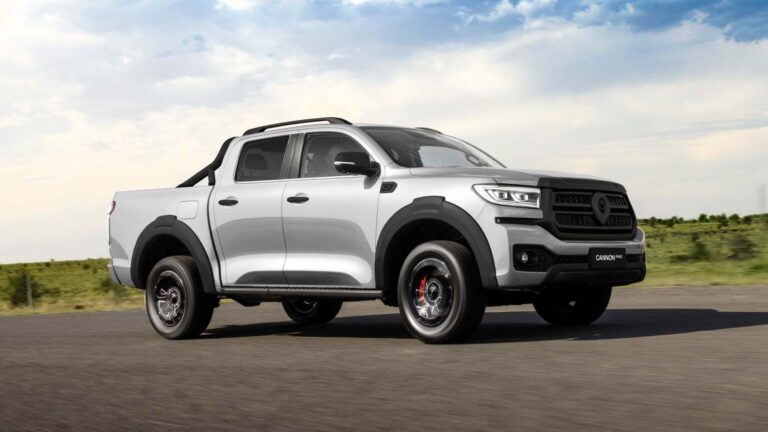
GWM’s new Plug-in Hybrid Cannon is coming for the ute market
The new GWM Cannon Hi4-T PHEV is headed to Australia with 310kW, 750Nm, 115km electric range, mechanical 4WD, V2L and 3500kg towing.
Last Updated: 19 August 2026

GWM has revealed more details of its incoming Cannon Hi4-T plug-in hybrid ute, confirming 310kW and 750Nm, up to 115km of electric-only range and a 3500kg braked towing capacity.
The plug-in hybrid ute market is about to get another contender, with GWM detailing its new Cannon Hi4-T PHEV ahead of its Australian launch.
Sitting alongside the larger Cannon Alpha Hi4-T PHEV, the new Cannon will give GWM two plug-in hybrid utes in Australia. More importantly for those of us interested in what happens once the bitumen ends, the new PHEV retains a mechanical four-wheel drive system rather than relying solely on electric motors to provide drive to the wheels.
Under the bonnet is a 2.0-litre turbocharged petrol engine paired with a high-output electric motor, producing a combined 310kW and 750Nm.
GWM’s Hi4-T system has been developed specifically for body-on-frame 4WDs and retains a traditional transmission and mechanical four-wheel drive system. That should make the Cannon Hi4-T an interesting proposition for buyers who want the efficiency and performance benefits of a PHEV without moving away from a more conventional 4WD drivetrain.
GWM claims combined fuel consumption of 2.4L/100km under the NEDC testing standard. As always with PHEVs, real-world fuel consumption will depend heavily on how regularly the battery is charged and how the vehicle is used.
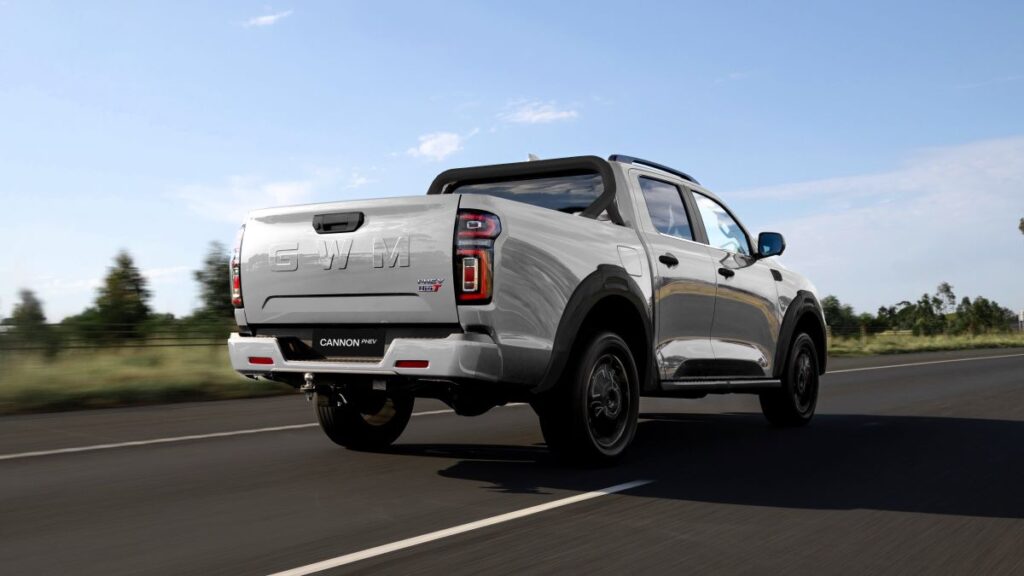
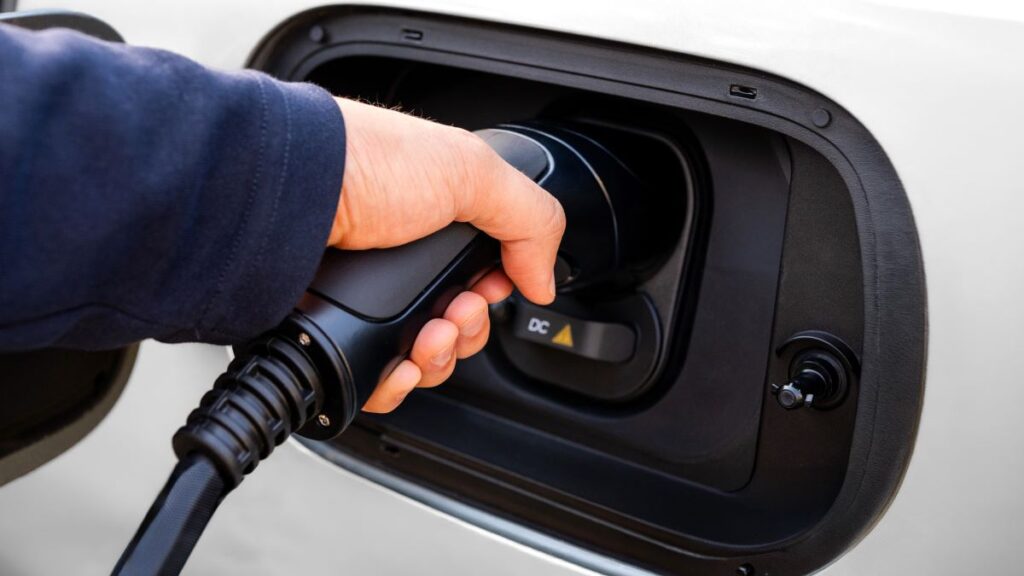
The Cannon Hi4-T gets a sizeable 33.1kWh battery, with GWM claiming up to 115km of electric-only driving range under NEDC testing. For owners able to charge at home, that’s potentially enough to cover plenty of everyday commuting without firing up the petrol engine.
When petrol and electric power are combined, GWM claims a total driving range of up to 1,037km under NEDC testing.
Those figures should be treated as indicative rather than a guarantee of what you’ll see while touring, particularly once you add passengers, camping gear, accessories or a trailer.
Another feature likely to interest campers and tourers is Vehicle-to-Load (V2L). The Cannon Hi4-T features integrated 230V outlets in the tub, allowing energy stored in the vehicle’s battery to power external electrical equipment.
That opens up plenty of possibilities at camp, from running appliances and charging equipment to powering tools without needing a separate generator.
GWM has also confirmed a 3500kg braked towing capacity for the Cannon Hi4-T PHEV.
However, we’ll need to wait for the full Australian specifications before getting a clearer picture of its suitability as a tow vehicle. Kerb weight, GVM, payload, GCM and towball download limits will be important numbers for anyone considering loading the Cannon up for touring or hitching a heavy caravan to the back.
Likewise, GWM hasn’t yet provided all the details we’d want to see before assessing its off-road credentials.
The Cannon Hi4-T will join the larger Cannon Alpha Hi4-T PHEV, expanding GWM’s electrified ute range to two models.
GWM says the new model will become one of Australia’s most affordable plug-in hybrid utes when it arrives, although it hasn’t yet announced exactly how much it will cost. That pricing will be particularly interesting given the increasingly competitive PHEV ute market.
The combination of 310kW, 750Nm, a 115km claimed EV range, mechanical four-wheel drive, V2L and 3500kg towing certainly looks promising on paper. Whether those numbers translate into a genuinely capable touring and off-road ute is something we’ll be keen to find out once we can get behind the wheel.
Australian pricing, final specifications and launch timing will be announced closer to its arrival.