Toyota LandCruiser 300 problems: The faults, fixes and what to look for
Thinking about buying a Toyota LandCruiser 300? Discover the most common problems, reliability concerns, faults and fixes before you buy.
Published on: 9 July 2026

Many of you reading this may not be old enough to remember the complaints back in the early ’90s when Toyota released the then-new 80 Series with coils all around, a comfortable interior and full-time 4WD. Some called it “soft” and argued Toyota had strayed from its roots.
Father time, of course, proved those folks wrong. The 80 Series went on to become the benchmark against which many off-road vehicles are still measured. And in many ways, the same conversations are happening around the latest 300 Series.
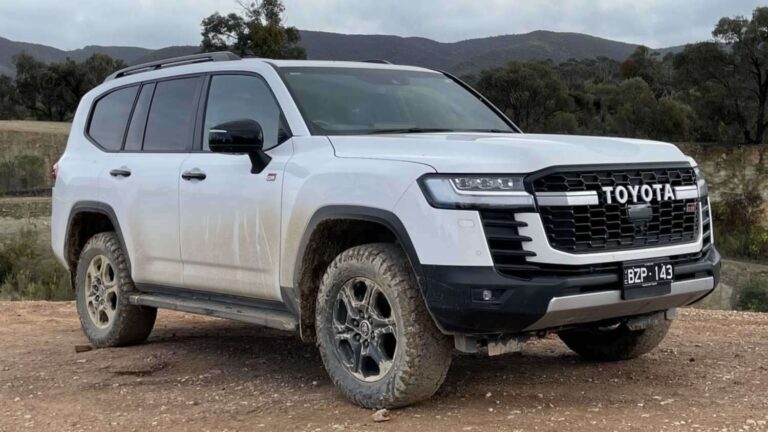
With its 3.3-litre twin-turbo V6 diesel, 10-speed automatic, modern interior and long list of driver-assistance tech, the LC300 is a very different LandCruiser to the ones that came before it. The price tag is serious, the panels are thinner than old-school Cruiser fans might like, and the styling doesn’t exactly scream “built for the hard tracks.”
Still, the newest Cruiser is a sales juggernaut, and plenty of owners swear by them. They’re comfortable on-road, hugely capable off-road and able to tow without breaking too much of a sweat. But now that the LC300 has been on sale since late 2021, we’re starting to get a clearer picture of the common problems, owner complaints and fixes worth knowing about.
Despite what you’re about to read, the answer is yes. Overall, the Toyota LandCruiser 300 Series has proven to be a reliable touring and towing platform. While some early vehicles experienced teething issues – including a small number of well-publicised engine failures – the vast majority of owners have had trouble-free ownership.
As with any modern 4WD, there are some known issues worth understanding before you buy. Some are relatively minor annoyances, while others can be expensive if left unchecked. Here’s what owners and workshops most commonly report.
Modern diesel engines, including the LandCruiser 300 Series, rely on a Diesel Particulate Filter (DPF) and Exhaust Gas Recirculation (EGR) system to meet emissions regulations. While these systems are common across almost every new turbo-diesel, they can become problematic if the vehicle is used primarily for short trips and urban driving.
Soot build-up and carbon deposits can affect engine performance and, if left unresolved, lead to expensive repairs.
These problems aren’t unique to the LandCruiser 300 – they’re common across many modern diesel 4WDs. Owners who regularly drive long highway distances are generally far less likely to experience DPF-related issues than those whose vehicles rarely leave the suburbs.
When one or both fail the usual suspects are lack of power, check engine lights and limp mode being instigated. The thick-with-irony suspects are excessive smoke, excessive fuel consumption and burning of oil. Just the thing every “environmental aid” is designed for.
Repeated stop-start driving may prevent the DPF from completing its regeneration cycle, allowing the DPF to clog up. This is mainly caused by urban driving where your vehicle doesn’t get a good run on the highway. EGRs can slowly choke your engine’s intake manifold, making it hard for your vehicle to ‘breathe’. Neither system is perfect, not just in the LandCruiser 300, but on every turbo-diesel sold since they came into being mandated.
Drive on the highway at least once a week and have your intake cleaned at least annually to help prevent this expensive replacement.
Take your diesel on weekly runs up the highway and have your intake either chemically or manually cleaned once a year and the emissions systems should work fine for a long time. Unfortunately, there are plenty of examples of this not being the case.

I’ll admit that some of these things are handy. I’m a big fan of reverse cameras, proximity sensors, and I can even make time for those little alarms that tell you the handbrake lever isn’t all the way down or your boot is open. Probably a couple others I can’t think of right now. But most of them can get in the bin. If the driver could turn off every chime, jingle and chirp they don’t like without them automatically turning back on then world peace couldn’t be too far behind that momentous event.
I’m not alone in thinking this way, many 300 owners are annoyed by the ding-dongs and vibrating steering wheels that tell you that you’re 30mm off the direct centre of the lane you’re driving in. Heaven forbid you’re actually using the entirety of your lane to maintain a line through a corner!
You know them. They’re one technological evolution away from those machines in the film Demolition Man that fine you for swearing. You have exceeded the posted speed limit by 0.5km/h, ding. The brakes will now automatically be aggressively applied because the sensors have picked up a random inanimate object not remotely in your path of travel, Ding. You look tired, why not stop and have a coffee in the middle of this traffic jam, DING!
Is the “consistent and completely arbitrary bubble-wrapping of society” a good enough answer? No? Well, I hate to lean back on the old “blame government” post but these things are all passed in the name of safety by our overlords. It would be great if they were optional, but they’re not, so we all get them, all the time. Forever.
Look, I’m being a bit of a crybaby here. You can turn them off via the dash or steering wheel controls and it’s not the biggest hassle in the world to do so. It’s more the impotent frustration of being effectively forced to do so. Again, I’m not alone here. Many of the 300 Owners we spoke to for this yarn really don’t like the overbearing nature of these gadgets.
Depends… how prone to tearing apart dashboards with your bare hands are you?

The V6’s turbo sits in the valley between cylinder banks. The inlets are situated on the outside edges of the block and the exhaust is on the inside, sort or inverse to how it’s usually done. This is called a hot-vee set-up, and it serves a few purposes, but it also has its drawbacks.
The big one is that due to the location of the turbo and exhaust the engine internals can become significantly hot, resulting in complete heat-soak of the oil under heavy load driving, such as on sand or when towing a hefty trailer up a steep hill. This heat-soak can cause the top piston rings to expand and lose their end gap and not allow enough oil to lubricate the sides of the cylinder wall, leading to fine metal paste appearing in the sump come service time.
Basically, the too-hot oil can’t do its job, so as the piston walls are being damaged, so too is the crank. The lower half of the big end clamshell bearings have to work harder to overcome the resistance from the non-lubricated piston’s added friction in the bore. The little-end bearings have the same thing but in the top half. This all leads to engine failure after some time.
Call it the hot-vee configuration’s fault, call it the oil not being able to handle the heat build-up, call it the rings and crank bearings not having enough redundancy engineered into them, call it all of the above. No matter what your take on it is, the fact remains that 300s that are consistently worked hard beyond the point of the oil being able to adequately cool the piston, they’re going to suffer damage.
The cheap (free) fix is to never work your Cruiser too hard and baby it as much as possible. Unfortunately, that’s not an option for those of us who like sand-driving or towing the van across the country.
There are quite a few aftermarket high-capacity sumps that can be fitted, allowing more oil to be held internally and significantly increasing heating efficiency. If you’re going to be heavy towing or doing a lot of high-load driving, then a larger sump should be high on the to-buy list
For vehicles that don’t habitually work hard, no. Even for those who do the incidence of engine failure is statistically low, but no engine ever died because it had too much oil capacity. Just sayin’.
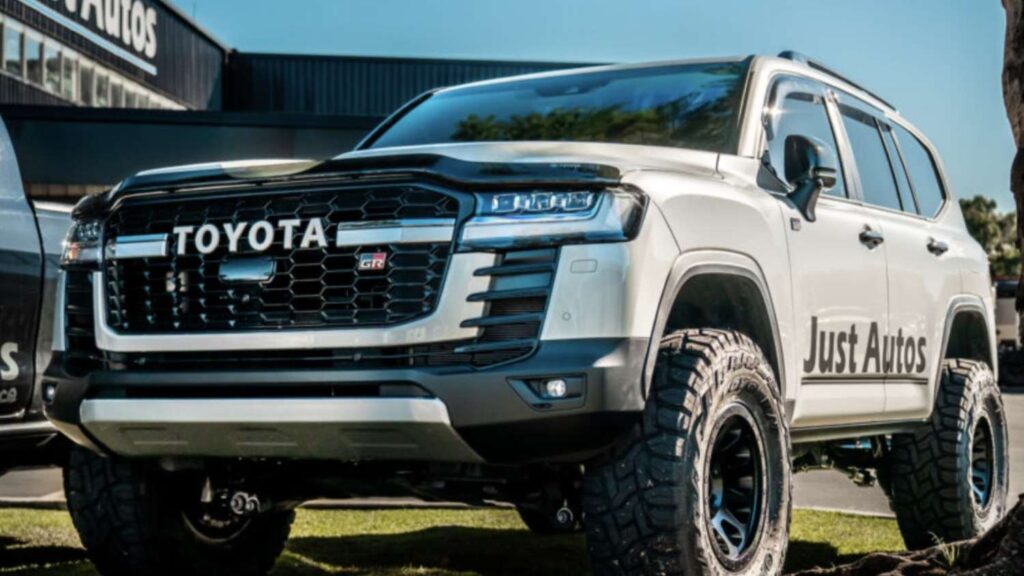
The above point also ties in with this one, which is that the three-hungies can burn up to 1.7L of oil between services. For those playing along at home, that’s a metric shitload. Toyota actually released a leaked internal memo about this and advised that it’s to be expected and for their dealers to play it off as normal. Naturally, the internet got involved and essentially made them admit it’s not normal and they had to walk it back, but still, pretty scary.
You rock up to a service and they drain up to 1700mL less oil than they put in and you’re left scratching your head wondering where the hell it went.
As above, the piston rings expand as the engine becomes heat soaked from a hard-worked turbo system and the oil becomes hot to the point it no longer lubricates and is simply burned off with the fuel-air mixture.
Again, large sump capacity and efficient cooling are the key to making pretty much any engine last. Many owners upgrade the intercooler/heat exchanger not only for increased power, but more reliability as well. The stock one is 2.5L in volume with some aftermarket units nearly tripling that to over 7L, so it’s a bit of a no-brainer for hard working Cruisers.
Not really, the 200 V8s had an oil burning issue with the early models too. As the oil builds up it does sort of seal the gaps after a while in most cases. And again, it’s a very small percentage of vehicles that will even have the problem noticed.
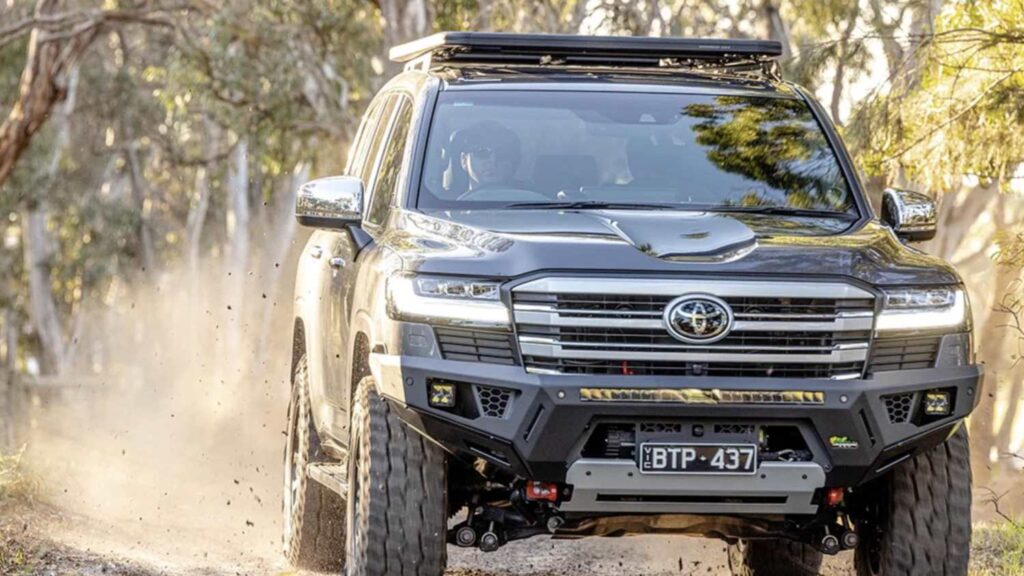
The twin-turbos runs sequentially, meaning there’s a little turbo that kicks in at low revs and spools up nice and quickly and a bigger one that comes on higher in the rev range and is fed by the smaller one. Some owners notice a hell of a lull in between the little one clocking off and the big one clocking on.
As you accelerate away from a stop, the momentum builds nicely as the speedo needle climbs. Then, torque suddenly drops off between 2200-2500rpm. Like you’re driving a manual and you’ve forgotten to change out of third. Then it seems to remember there’s a second turbo and the power comes back on tap and you’re back on your way to getting pinged by the road pirate hiding in the bushes up ahead. You remembered it’s double-demerits too, right?
This only usually happens when towing north of 3T, but it’s basically due to a software issue with the ECU. At certain revs the computer can’t decide which turbo it wants to use so it chops back and forth between them, sometimes causing a surge accompanied by a shrieking intake noise.
Toyota can update the ECU which fixes, or at least minimises, the problem most of the time. We did hear from several owners that Toyota weren’t able to resolve the issue to a satisfactory degree and they had to get an aftermarket tune to sort it.
Not unless it’s happening to you. It doesn’t seem to occur to most 300s, just the lucky ones.
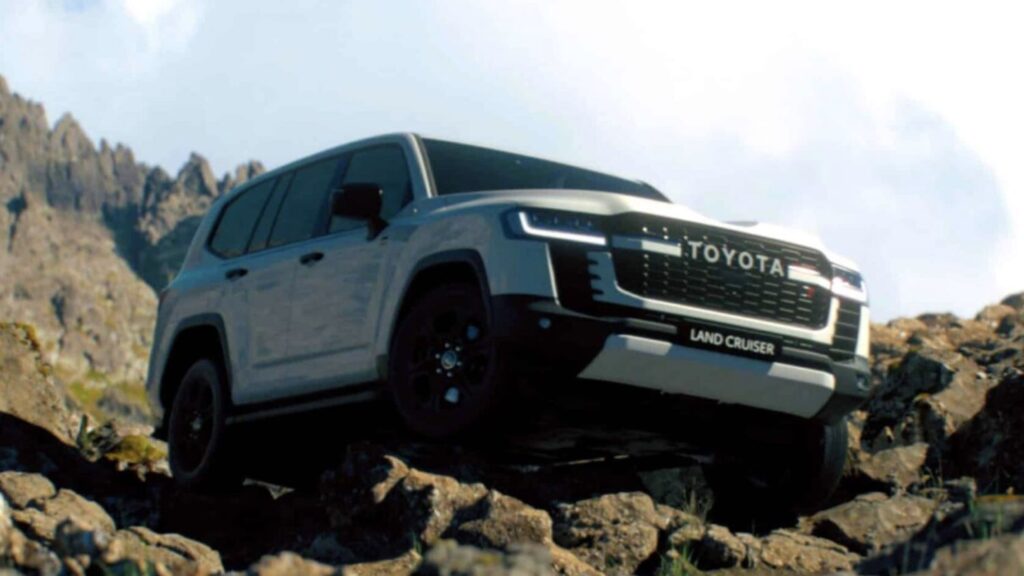
Just prior to the DPF on the exhaust is a 7th fuel injector which squirts a little diesel into the hot pipe to aid with the DPF regeneration. However, many folks have had a code thrown and limp mode engaged by this injector.
Limp mode, excessive smoke and a scheduled appointment with your Toyota dealer’s service department to get the code cleared.
The reason we’ve added this as a standalone complaint rather than including it in with the emissions problem is that one Senior Service Technician we spoke to said it happens to “every” (sic) 300 at around the 20K mark. Can’t really speak to the accuracy of that but it’s pretty alarming and at the very least the same bloke said he fixes at least a few every week.
Toyota apparently can tune the issue out and sort it for the rest of the vehicle’s (or at least DPF’s) life. Some folks reckon the problem is recurring, but they’re in the minority.
Not unless the problem continues after having Toyota sort it.
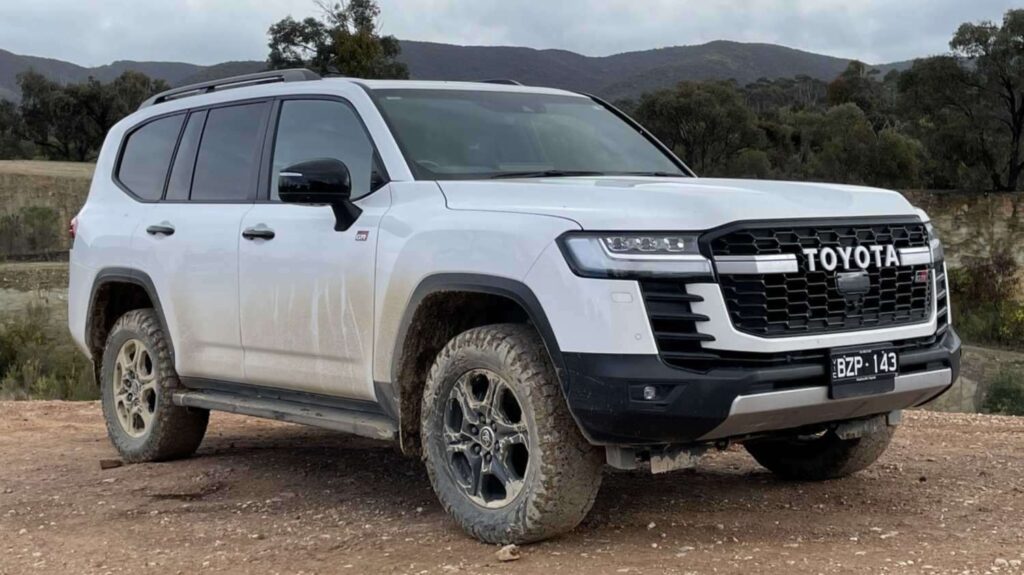
Let’s just say up front that the 10-speed in the three-hundo is an excellent box. It’s the same one as used in the heavier-duty Tundra and is commonly seen as one of the best in the game. But, and it’s a big one, if you’re towing heavy they have been known to overheat.
Usually, the box will throw a code that puts the vehicle in limp mode, most commonly after an extended period of towing 3T+ up a long and steady hill at speed. Once the fluid has cooled enough, which doesn’t take long, you’re good to continue on your way
Heat is the enemy of all transmissions. Even the best of them will heat up when towing heavy, and when things get to a point where the TCU thinks it may damage the internals it’ll shut things down in the name of self-preservation. Which is fair enough, really.
Grab the biggest transmission cooler you can and win. If you’re GVM and BTC upgraded, and are lugging the Moby Dick of caravans or the Carnival Cruise of boats behind you, then you could also slap on a larger-capacity transmission sump too. But at that point, you have to ask if maybe it’s time to upgrade to a more purpose-built tow pig?
Like we said, these boxes are generally placed in the excellent category so there’s no real need to stress if you’re pulling a relatively lightweight trailer along. It’s only really when towing super heavy does it become an issue.

A lot of owners have complained of the paint being applied in super-skinny coats and the clear coat peeling off the already-thin panels on their 300s. Ordinarily this wouldn’t be a huge problem, but come on, this vehicle costs more than everything I own, and I own a really nice welder and a fair amount of Australian-made camping gear.
You know those early 2000s Subarus in the shopping centre car parks that look like someone’s attacked the bonnet with a scourer then given up halfway through? Yeah, that.
Difficult to put a finger on this one, but the usual safe bet would be some douchebag in Toyota middle management who doesn’t know a single thing about 4X4s but knows several spreadsheet shortcuts. They probably determined Toyota-corp could save a few bucks per vehicle on paint.
If you’re particular about your paintwork, grab your favourite paint protection film and call it good. Otherwise, it’s getting the panels paint-matched and given proper coverage by your local sheetmetal beautician.
If it was a $16,000 hatchback built in a country you can’t pronounce, then no. But for the big dog six-figure bush limo, it’s a bit piss-poor.
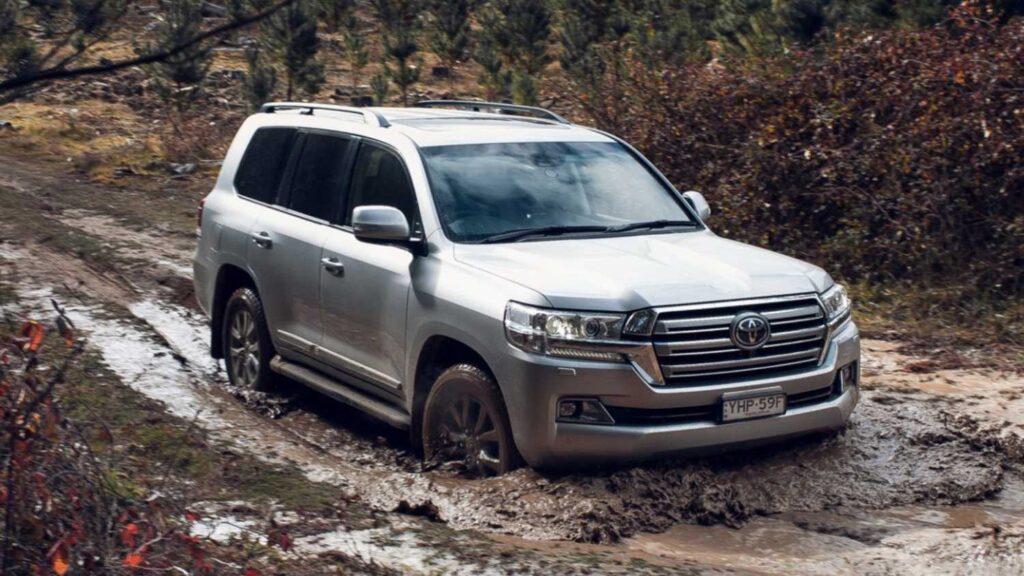
Excluding Lexus, Toyota has never really been known for their outstanding interior appointments. I mean, sure, the Sahara and Sahara VX are super-comfy and a 12 hour day in the saddle is handled easier than Timothee Chalamet challenging you to a fist-fight, but the infotainment unit has earned a reputation for being buggy and a little hit and miss in terms of overall quality.
Random re-boots, radio drop-outs, touchscreen losing all functionality, screen adhesive coming unstuck and Bluetooth connectivity leaving the chat are the most common issues that seem to arise. Again, not really a problem from an entry level commuter hatchback, but from this end of the market it sucks.
I am not nearly qualified enough to say, and nobody I spoke to could pin it down either beyond “some operate flawlessly and others are chock full of problems,” which seems to be the prevailing gist.
Many issues seem to have been resolved by Toyota both under warranty and good will. However, there are also plenty of aftermarket head units on the menu if you’re at your wits end. Pick which features you like and go from there.
Depends if your 300’s head unit is playing up. If it is first step is to take it to Toyota and see what they reckon.

Remember the middle manager who has no idea about 4X4s? Well, his brother apparently works in the engineering department and decided that placing the filter right next to the rear wheel arch directly in the path of impacts was a grand idea, because that’s where it ended up. Yep, a plastic component that ensures your engine is healthy and delivers half of the air-fuel ratio is out blowing in the breeze just waiting for a rock or stick to beat it up and take its lunch money.
You’ll know it’s been snuffed out off-road when your engine cuts out and there’s a growing pool of diesel next to your right rear wheel. For an off-road vehicle it sure is a crazy place to put it.
Middle management. It’s always middle management. They’re the people who drop a speed limit that should be 120km/h down to 60km/h for no apparent reason. Or determine that 70 Series Land Cruisers should cost over a hundred gorillas despite not being meaningfully updated since 1984. They’re lucky I don’t have three genie-supplied wishes.
Luckily, the aftermarket has come in on a white horse and delivered a fair range of protection plates that attach in a few minutes and turn a potentially serious issue into a non-event. Sucks they have to, but again, sigh.
If you take your Land Cruiser off-road then yes. If you don’t take your Land Cruiser off-road but really want to look like you do, then also yes.
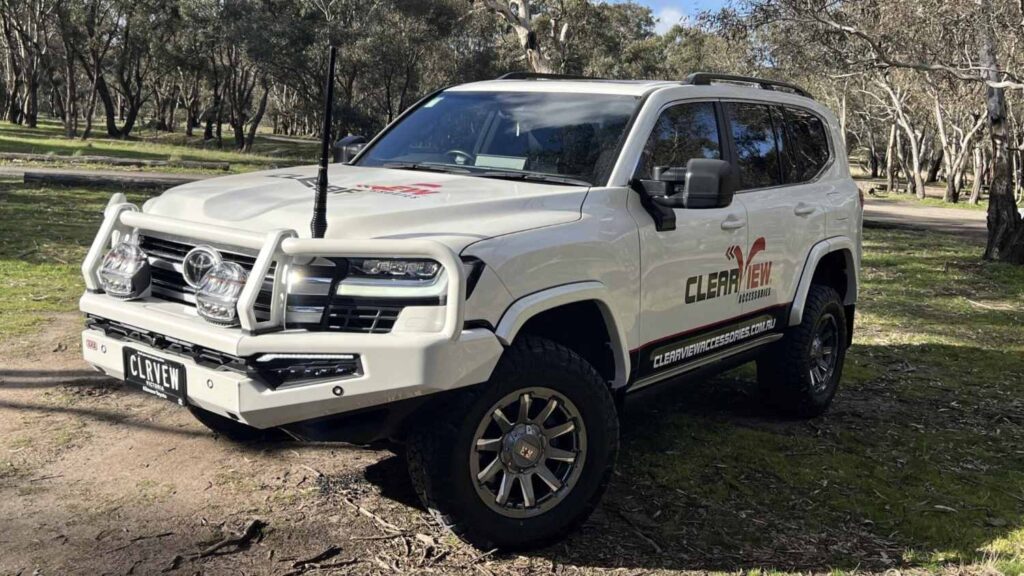
Despite the list above, the Toyota LandCruiser 300 remains one of Australia’s most capable touring and towing wagons. Most owners experience years of reliable service, and many of the issues we’ve covered either affect a relatively small number of vehicles or are common across modern turbo-diesel 4WDs rather than being unique to the 300 Series.
If you’re buying used, a complete service history is the biggest thing to look for. Check that any software updates or recall work have been completed, inspect the vehicle for signs of excessive towing or off-road abuse, and pay close attention to any unusual engine noises or warning lights during a test drive.
For buyers who regularly tow, travel long distances and maintain their vehicle properly, the LandCruiser 300 continues to be one of Australia’s benchmark touring wagons.