The Kimberley on highway tyres? We put the D-MAX and MU-X to the test
We put both the Isuzu D-MAX and MU-X through their paces in one of the most unforgiving (and beautiful) places on earth. And we did it on factory highway-terrain tyres.
We put both the Isuzu D-MAX and MU-X through their paces in one of the most unforgiving (and beautiful) places on earth. And we did it on factory highway-terrain tyres.
We all know that Isuzu 4X4s hold a special place in Australia’s heart. They’re well priced, they’re comfy, they’re capable, and they have one of the best four-cylinder diesels ever produced. They may not be at the top of the sales charts, but those who own them love them.
With that in mind, it was high time for us to cover some serious off-road kilometres in the latest Isuzu D-MAX and MU-X, driving bucket-list Kimberley terrain to find out how they compare and whether they’re as good as their reputation suggests.
Surely there must be more to these things than just a great engine, right? Speaking of engines…
Isuzu Kimberley trip 2026
Isuzu D-MAX and MU-X engines: 2.2L vs 3.0L
Both models come with either a 2.2L or 3.0L four-cylinder turbo diesel. The smaller displacement has the advantage of an 8-speed transmission while the 3.0L makes do with a 6-speed. At least for now.
The 2.2L puts out 120kW and 400NM from its double-overhead cammed RZ4F-TC. It may not look like a lot but coupled with the 8-speed Aisin LB500 auto it has plenty of get-up-and-go for a stock powerplant, and off-road the broader range of gearing really amplifies the available torque nicely allowing it to idle up rock steps with ease.
The 3.0L 4JJ3 really needs no introduction. While the factory specs of 140kW and 450NM won’t light your world on fire, the real value is the amount of reliable power that’s available once you start working them (once warranty runs out, naturally).
They’re a proven engine with one-million km reliability and they’re capable of nearly doubling the output with a few tweaks. While the 2.2L felt busy at times, the extra displacement of the 4J was noticeable on the high-speed sections. It just felt like it did it easier with only a whisker more fuel use.
For serious off-road driving, or just heavy duty usage such as towing or carting a bunch of work gear this is the choice. If you’re chasing a daily driver, kid-carter-arounder and the occasional run up the freeway bus then the 2.2L will be more than up to the task.
Let’s talk bouncy bits.
Isuzu Kimberley trip 2026
D-MAX vs MU-X suspension and ride
The front suspension throughout the MU-X and D-Max range is basically the same, with only the Blade variant D-Max getting the (much better) Walkinshaw-tuned struts. All have the double A-arm and coilover strut combo found on most modern utes these days. It’s not exactly revolutionary but it sure doesn’t suck either.
Out back the D-Max’s get the leaf springs and shocks that are again found in almost every dual-cab with only a couple exceptions. Again, the Blade cops Walkinshaw-upgraded componentry.
The MU-X ditches the leaves and has a tidy 5-link rear end with coils which make corrugated road driving and unloaded ride comfort a lot nicer than the more rough-and-tumble utes. Don’t get me wrong, I wouldn’t call the D-Max uncomfortable by any means, but it’s still a work vehicle. The MU-X is like driving a couch. The D-Max is like driving a work bench. One is not better than the other, it’s more depends on what you’re using them for.
Isuzu Kimberley trip 2026
How do the D-MAX and MU-X perform off-road?
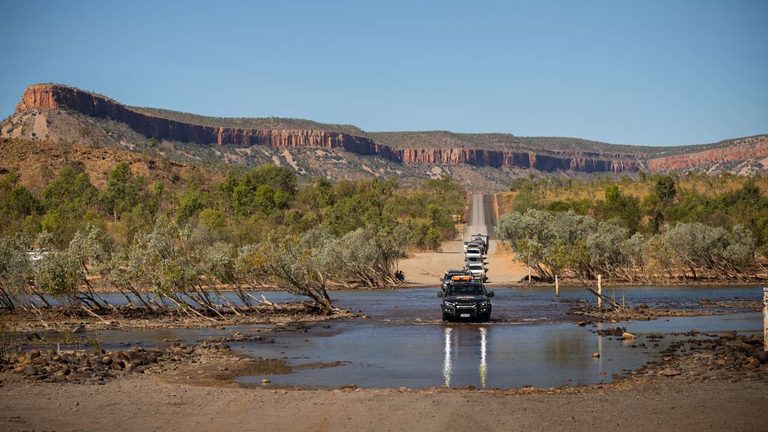
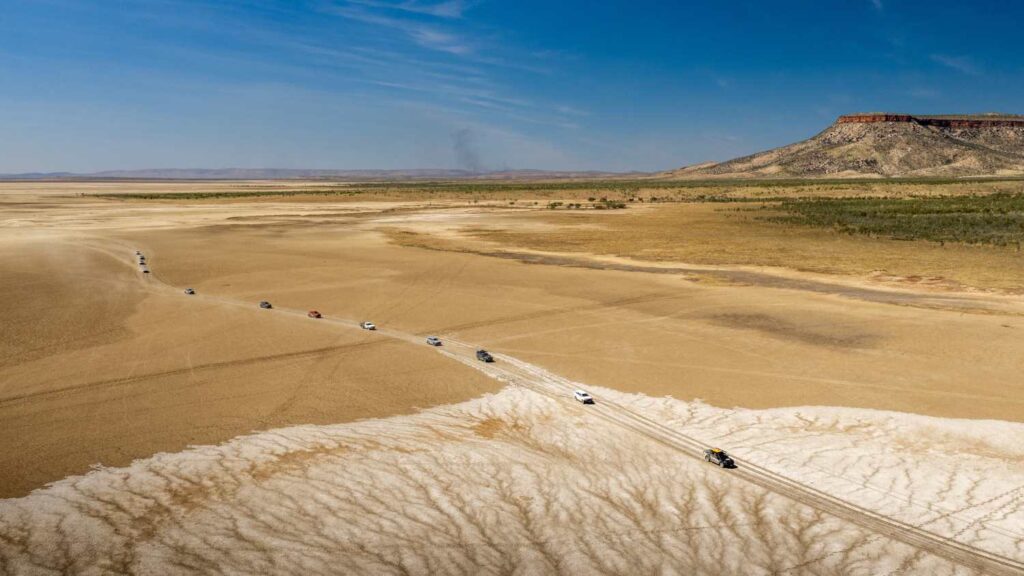
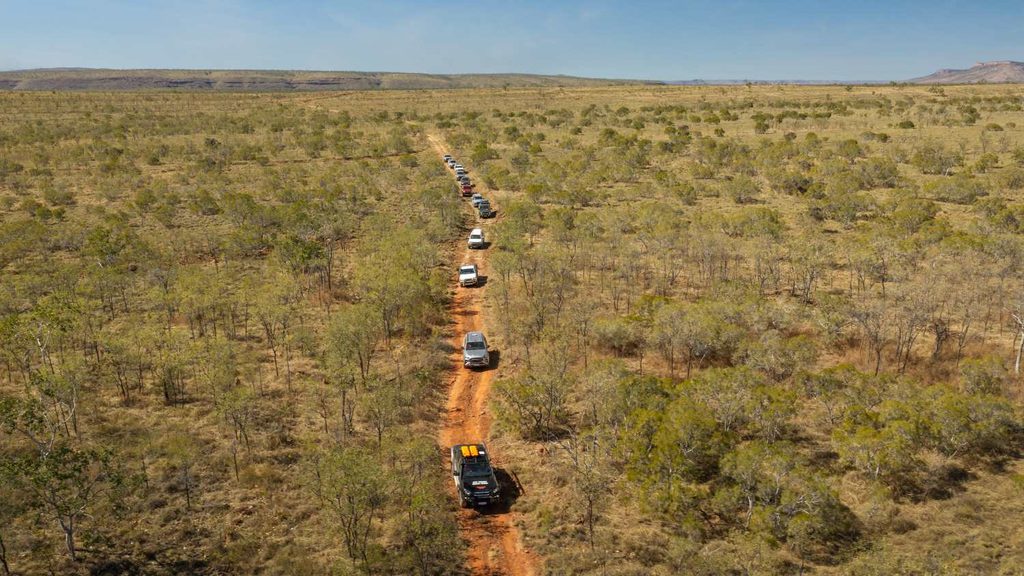
Did I mention we were in the Kimberley courtesy of the Isuzu I-Venture club yet? Not only is this place what touring dreams are made of, but it also has some seriously technical and challenging driving if you know where to look. Apparently, Isuzu did because we drove a bunch of it.
We already know this brand knows their way around building a sweet engine, but it turns out their traction control is one of (if not the) best in the game as well. To prove the point, they equipped all of their vehicles (except for the Blade which comes with ATs) with the factory HT tyres.
Yep, straight off the showroom floor, run of the mill highway terrains. Arguably the worst possible tyre you could choose to run out here.
The Isuzu team wanted to take the tyres completely out of the capability equation and let the vehicles speak for themselves. While we wouldn’t usually condone this when travelling alone, there was a full team backing us up, and I have to give them full credit for putting their product on the line. Takes balls.
Isuzu Kimberley trip 2026
With no added traction from the tyres, no fancy suspension or even just shocks, no long-range tanks, no bullbars, winches or even a snorkel (again, except for the Blade which comes with most of that stuff) the big question is: how did they do?
Pretty effing excellent, it has to be said.
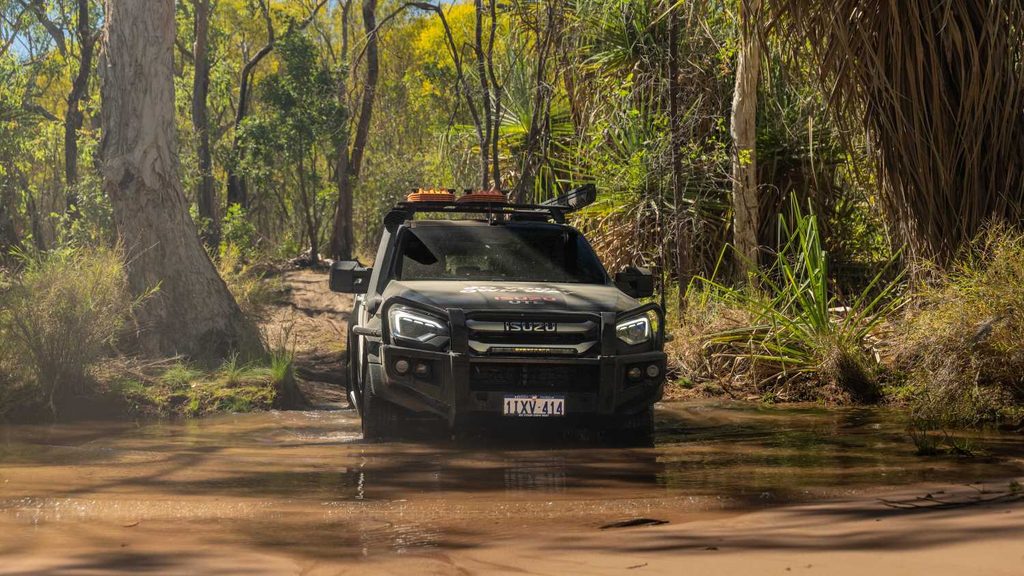
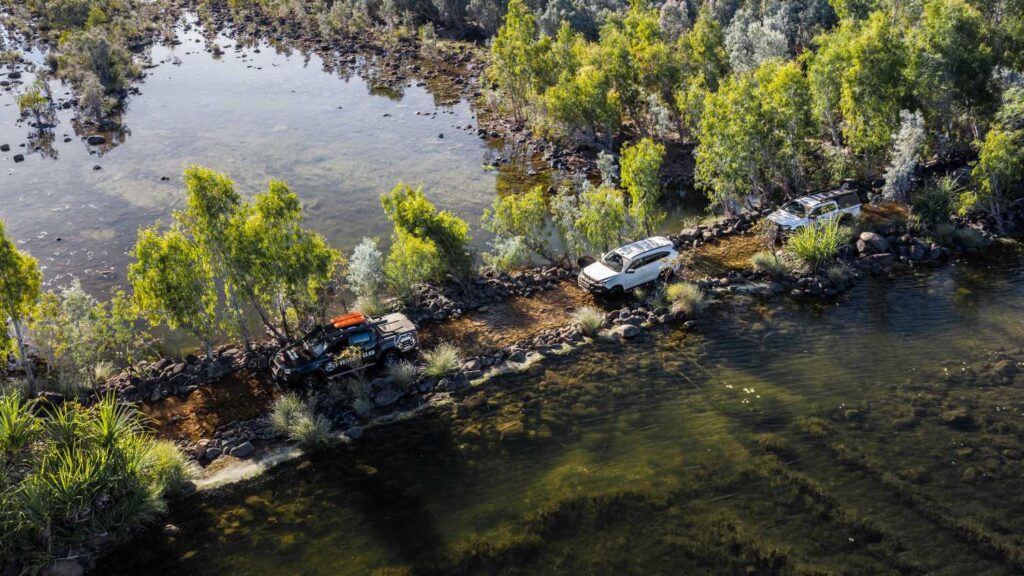
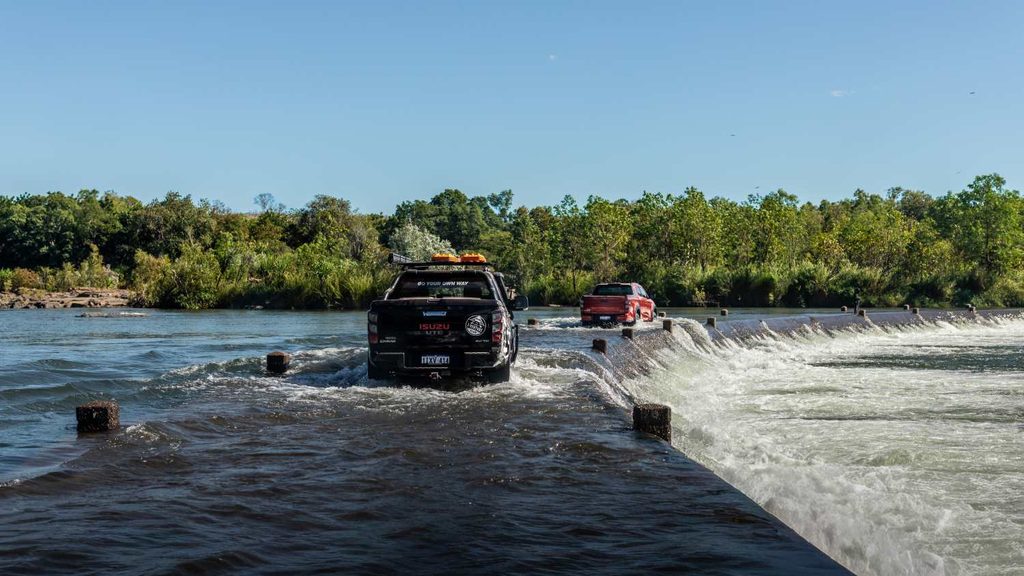
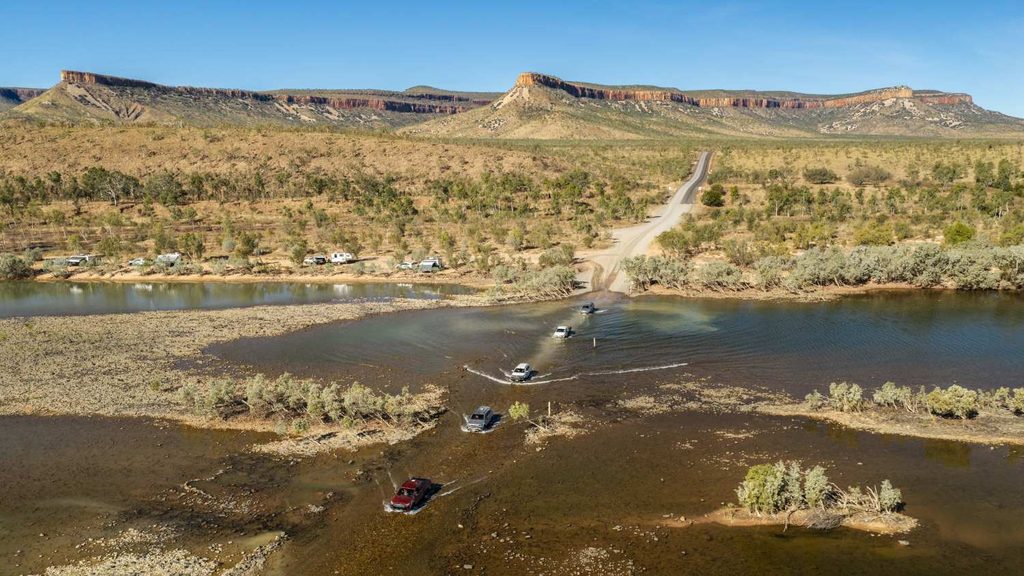
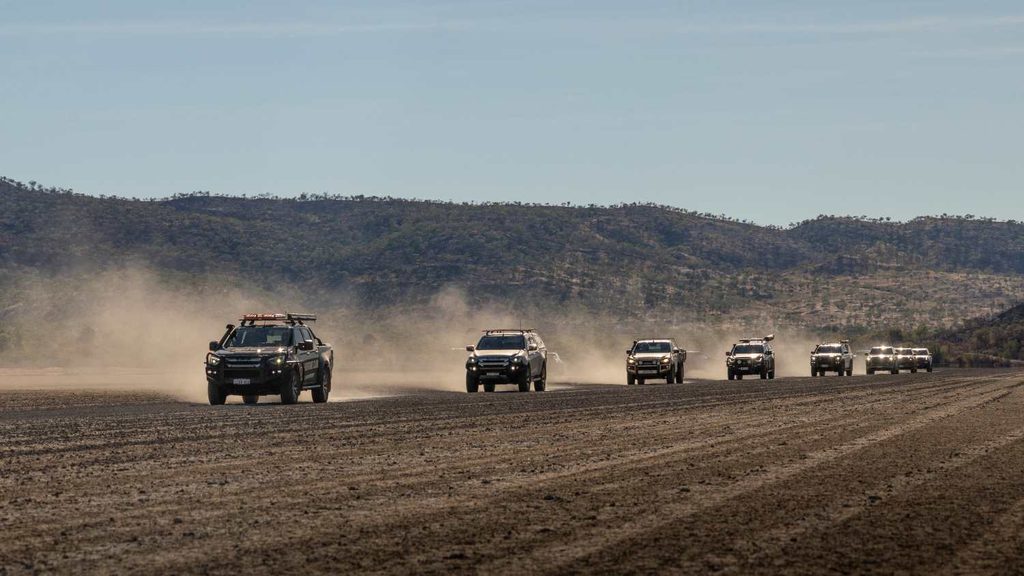
A lot of soft sand, unforgiving gibber-stone-laced corrugations, deep water crossings, rock gardens and even a stretch down the infamous Gibb River Road couldn’t upset these things. Just goes to show what the right tyre pressures and a solidly-built 4X4 can handle hey? Score one for HTs and bone-stock touring rigs.
Again, we’re not saying you should forget about mods and head off into the wild unknown and hope for the best, that would be nuts, but it does highlight that we all probably need way less than what most of us take to have a once in a lifetime adventure.
And again-again, you have to give Isuzu props for putting their money where their mouth is. The traction control slaps, the more than respectable 800mm of wading depth, the off-road capability and torque availability in low range is nothing short of great, and if you’re new to the four-wheeling world nothing inspires confidence like having a well-built four-wheel-drive to take you where you’re not entirely sure you can go.
Isuzu Kimberley trip 2026
Technology: useful or annoying?
We all know that engineering on this planet peaked with the mechanically injected and turbocharged diesel powerplant. Adding superfluous tech to what’s already perfect is an exercise in redundancy, but that’s the way the automotive cookie crumbles these days.
Tech is one of those things that is not only mandated by law but is actively sought after by folks who don’t know any better. Sure, things like reverse cameras, common-rail injection, Bluetooth and GPS are all cool and get a pass based on their functionality. But things like the incessant beeping when the posted speed limit is exceeded by half a kilometre per hour or the ultra-creepy “you look tired, Dex, have you been hydrating?” camera that watches you like Gollum and randomly sets off an alarm while you’re driving can all get in the bin.
Now to be fair, the D-Max and MU-X have all that gear, but, and it’s a big one, it’s all quickly and easily switched off. Which also should be mandated by law in my opinion but whatever. And there are some gems in amongst the miasma of complexity. Namely, the camera systems are pretty excellent for positioning your wheels pretty much exactly where you want them. And all-round visibility is about as good as a dual-cab ute gets.
Isuzu D-MAX vs MU-X
Some practicalities
I can’t actually tell you how much fuel we used because the Isuzu team looked after all of the refuelling duties, which frankly made me feel way more important than I actually am. Still, going off the trip computers in the vehicles we averaged a little over 10L/100km, which given the terrain we were driving, was impressive.
We had a few different model D-Max vehicles to choose from and going from the mid-tier X-Rider (just over $60K as tested) to the highest-spec Blade (nudging $90K as tested) was interesting.
The Blade just did everything easier, but at ~$30K more expensive that’s kind of expected. The MU-Xs were a little harder to see the big differences in. The top-spec X-Terrain ($79K plus change as tested) was definitely more comfy than the lower-spec models, but the capability didn’t feel as improved like the Blade did with its upgraded Walkinshaw suspension.
The 2.2L was definitely noticeable against the 3.0L on the faster sections of sand and dirt but in low range the 8-speed made up for a lot with its wider gearing range giving a lot more access to low-down torque.
Isuzu D-MAX vs MU-X
D-MAX vs MU-X: which is the better tourer?
As for which one makes the best tourer? Ask yourself if you’re going to put a tub-topper canopy on your D-Max. If yes, then buy a MU-X and get a cargo barrier. The coil rear end (over the D-Max’s leaf springs) and disc brakes out the back (versus drums) make a significant difference to overall daily driveability.
In terms of which one to choose, I would either buy the top-flight Blade and kiss the sky or buy the lowest-spec I could live with and use the savings to invest in quality aftermarket suspension, barwork and maybe some aftermarket seats and call it a win. But that’s me. The best advice would be to take them all for a drive and see which one speaks to you.
Keep an eye out for more yarns from our Kimberley trip. It was a huge one, and the sheer magnitude of this sort of adventure is difficult to confine to a single yarn. Stay tuned.