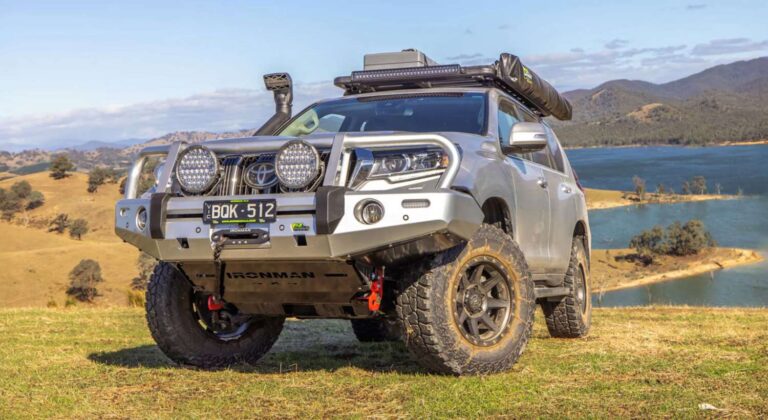
Toyota Prado 150 problems: Common issues, reliability & what to watch for
Thinking of buying a Toyota Prado 150? Here are the most common Prado 150 problems, reliability concerns, fixes and what to check before buying.
Published on: 25 May 2026

Thinking of buying a Toyota Prado 150? Here are the most common Prado 150 problems, reliability concerns, fixes and what to check before buying.
The Prado 150. The 150 Prado. The Land Cruiser 150. Prados from 2009 to 2022. The Prado before they went all boxy. Whatever you call them, the mighty Prado buck-fifty is a mainstay on the Aussie touring scene. They’re comfy, they’re decently capable and they’re up for covering big distances in between stops at the servo. Chuck a few mods at them and there’s very few tracks in the country that can’t be tackled with a whole bunch of style and class. If you’re into that sort of thing.
They also make for better-than-average tow rigs, are fantastic family wagons and are really one of those 4X4s that are often overlooked as dedicated off-roaders, even though they can easily hang with the IFS HiLux crew and post-100 Series Cruiser posse without too much effort. They’re a dark horse that kicks like a mule and can be worked harder than a set of rented vice-grips (aka a welding clamp, hammer, pry-bar and throwing weapon all in one).
As with every 4WD on the planet, however, the Toyota Prado 150 does have a few problems to be aware of. The usual emissions nonsense, which we’ll cover, but a few model-specific things can also jump out at you when you’re least expecting and give you a nasty uppercut right in the wallet.
As with all of these articles, it’s important to note that we are not hating on this vehicle. We love a good Prado, but the nature of these yarns is to point out the shortcomings. Don’t let it put you off buying one, more try to look at it as research for potential issues during ownership. Again, every make and model of 4X4 has them. The Prado is actually better than most.
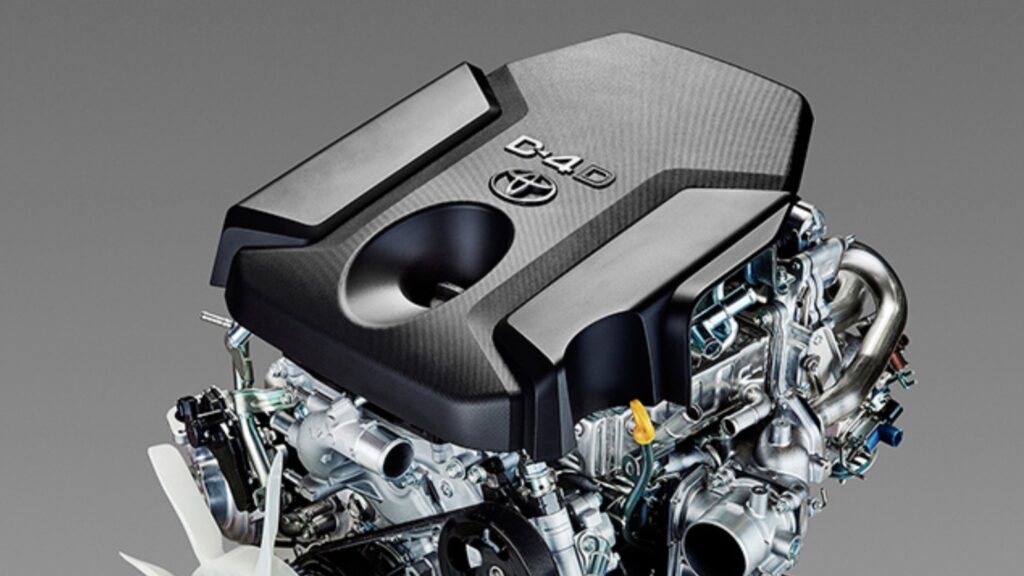
2009 to 2022 is nudging a decade and a half long model run, and as you can imagine, there were a fair few changes in those years. The big one is the engine, swapping over from the 3.0L 1KD turbo-dizzle to the 2.8L 1GD-FTV in 2015. And yep, that’s the same 2.8L as in the 70 Series, the HiLux and probably several other Toyotas too.
There was also a 4.0L petrol V6 engine, which was only available in the early years before being phased out due to low sales numbers. By all reports it was a thirsty-boy, especially when off-roading or towing, but otherwise a decent engine. Nevertheless, for this article we’ll stick to the diesel offerings, which were really pretty and captain of the cheerleading squad levels of popular.
The first major update for the Toyota Prado 150’s was in 2013, with new cool-guy LED DRLs, new front and rear bumpers and grille, slightly better suspension and a bit of churching up in the interior.
In 2015, there was the shift to the much stricter Euro 5 emissions compliance, which saw the introduction of the 2.8L turbo-deezy and the relegation of the 3.0L to the annals of history (it was still sold alongside the 2.8L briefly, but not for long). It also brought the Diesel Particulate Filter (DPF) with it which purportedly increased fuel efficiency and lower emissions. It also introduced the usual slew of DPF-related problems, which we’ll get to in a sec.
This first effort with the 2.8L produced 130kW and 450 Nm, which, by most estimates, was fairly abysmal for the modern era. It was definitely felt when towing or, you know, driving “sportingly.”
2017 had big old revamp with fancy new looks, both inside and out, and a bunch of new safety features. Some owners prefer the simplicity of earlier models without the added driver-assistance systems.
The final upgrade package came in 2020 and saw out the model run until 2022. Toyota finally removed the digit and bumped power up to 150kW and 500NM, which let’s be honest, are still not fire-breathing numbers, but the extra power was appreciated nonetheless by the Prado faithful.
The 150s also finally got an infotainment unit capable of supporting Android Auto and Apple CarPlay, and yeah, did the masses rejoice, to put it biblically. This last iteration is often seen as the most desirable due to the extra balls under the right foot (that came out weird), and the head unit that was almost modern, which, if you know your `Yotas, was very welcome.
Would we buy one? Absolutely. The Prado 150 remains one of Australia’s best touring and family 4WDs.
Best engine? Many owners still prefer the older 3.0L 1KD for simplicity, while the later 2.8L 1GD offers more refinement and better tech.
Most common issues? DPF problems, injector failures on early 1KD engines, suspension wear and dusting issues on some 2.8L models.
Best years to buy? Many buyers target 2020-2022 models thanks to the power upgrade and Apple CarPlay/Android Auto.
So yeah, that’s the bare bones rundown of the Prados, let’s crack open the worm-can of problems and tell you how to solve them.
Have I mentioned that DPFs and Exhaust Gas Recirculation (EGR) valves are rubbish yet? If you don’t believe me, take a poll of ten mechanics and ask them what the number one reliability issue with modern diesels is. I guarantee at least nine of the will mention the emissions systems. The other one will probably just grunt at you, which is mechanic-speak for “please stop talking to me.”
The Prado was not immune to these problems. And I should also mention that this isn’t Prado-specific, but it is an issue that you should be aware of if any modern diesel is on your to-buy list.
Excessive smoke, limp mode, increased fuel consumption, power loss and a sense of impotent rage are all likely symptoms when dealing with an EGR or DPF fault.
DPFs clog up over time, especially on short runs to the shops and grabbing the kids from school. In order to properly regenerate the vehicle needs to be taken for a run up the highway at least weekly. I’ve seen them fail at anywhere from 60,000km to 200,000km. It’s completely dependent on how the vehicle has been used.
EGRs will clog up your intake by design. They divert exhaust into your intake so it can be re-burnt and emissions reduced. And they work great, until they don’t. I’ve seen intake runners so clogged air can only get through a hole the size of a 5c piece. They require cooling via the engine’s coolant as well. The EGR cooler on the 2.8L in particular loves to develop leaks leading to all sorts of issues. In short: left unchecked these things kill engines.
Run your vehicle up the freeway weekly and have your intake removed and cleaned every 50,0000km to 100,000km or so. If the chickens have already come home to roost, your options are a highly illegal removal and re-tune of your engine or to replace the system to the tune of at least a couple grand.
If you drive your vehicle “correctly” then no, there’s no reason both systems can’t last a good long time. It’s just that doing the correct thing is often inconvenient to our lifestyles. If you’re running your diesel Prado to the shops and back every day, make sure your mechanic is aware and ask them to do a manual regen with each service. Even then, it may not be enough, but it’s better than nothing.
The 1KD injector fault was actually the subject of a recall on the early 150s. In fact, we covered the problem in our D4D problems and solutions article, but it bears repeating here as well. In a nutshell, the injectors were not up to snuff and could fail prematurely, leading to catastrophic failures, including cracked pistons.
It usually manifests as a knocking noise, coupled with some pretty lousy fuel economy and a noisy idle. Black smoke from the exhaust and excessive crankcase pressure could also present. A Technical Service Bulletin acknowledged the problem and Toyota issued a recall.
The sub-standard injector washers would fail and the piston crowns were weaker than previous models, creating a perfect storm. This led Toyota to recommend that the engine not be tuned, that the injectors be swapped out every 100,000km, and that the vehicle not be driven under load for excessive periods. Yeah mad.
There’s no “real” fix other than servicing and maintaining your injectors at the recommended 100,000km intervals. Some mechanics will even do feedback and total volume diagnostics on the injectors to ensure they’re within spec.
It should be noted that as a percentage of Prados sold in Australia, it’s an incredibly small number that had this problem, so no, don’t worry too much. If you do notice some rough running, smokiness and any knocking sound coming from the engine bay, though, get it to your mechanic ASAP.
The design of the airbox on the 1GD-FTV equipped Prados is, um, shite. Specifically, the air filter seal is not as tight as it should be on the box and it can allow fine dust particles through and throw you into limp mode. Awesome when you’re cruising the Outback five hundred kays from the closest garage. To learn more about the 1GD-FTV-specific issues check out our rundown of the N80 HiLux.
Sudden loss of power; limp mode engages. You may also get an error message on the dash, unhelpfully telling you to take the vehicle to the nearest Toyota dealer or consult your owner’s manual. Cheers for that.
The seal between the filter and box is not sufficient to stop fine dust from skating past the filter and continuing on to cover the MAF sensor in grit, throwing off the values it feeds to the ECU, making it freak out and throw you into go-slow mode.
The problem actually has a fairly straightforward solution. Change the filters more frequently than suggested if travelling in dusty conditions, and if it does happen, spray compressed air past the MAF to clean it. Some mechanics apparently apply a thin smear of grease around the filter seal to catch dust as it sneaks by, but we can’t speak to its efficacy.
If driving in the city and local tracks, no, not unless they’re super dusty. But it’s really places with fine bulldust that create the issue. Regular filter swaps will help the most.
In pre-2012 models, the brake booster was known for causing grief to the point Toyota updated the system for the subsequent models. The brakes would be spongy or super-hard and sound like a snake hiss whenever you hit the anchors. Full brake failures didn’t occur, but it’s always a bit nerve-wracking when the skids don’t work as they should.
The brakes would feel spongy upon deceleration, or the pedal would be overly hard to push. There’s also a hissing sound coming from the booster when hitting the picks.
Both the booster and the master cylinders were a bit suss on these early models. Even though the problem was uncommon, Toyota still upgraded them both in later models.
It’s common practice to replace both the master and the booster with a pair from a later model Prado, which install fairly easily and rarely fail.
Depends what year model Prado you have, but no, not unless your brakes feel weird.
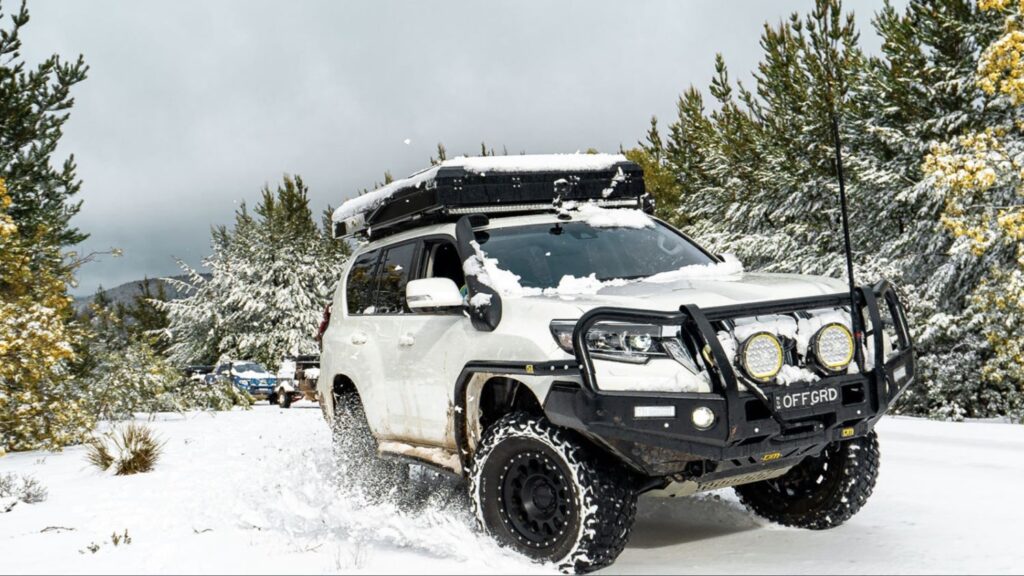
Look, the Prado suspension is not inherently bad. Far from it, in fact. However, there have been numerous reports of bumpy riding, prematurely worn components and generally just poor behaviour from what is otherwise a decent set-up.
Bumps, rattles, jouncing and generally just uneven compression and rebound of the springs, shocks and suspension members. It’s not year-dependent, but it does depend a lot on what the vehicle has been used for and, more importantly, how it has been driven.
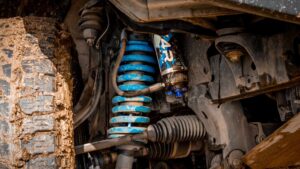
Lower shock bushes have been known to flog out, often within 20,000km of new units being fitted. Same with lower control arm bushes. Similarly, the airbags found in up-spec models can occasionally develop a harsh ride with some fairly violent bumpiness coming from the rear end.
With the bushing wear, a lot will come down to how it has been fitted. Many a shade-tree workshop will fit the new suspension on the hoist, tighten it all up, then drop the vehicle onto the ground and let it rest on its own weight. The problem is that the shocks and control arms are already at their lowest point (assuming a two-post hoist is being used), so when the vehicle comes down to rest on its wheels, it binds the bushes up way more than they’re designed to handle.
Bush wear and tear is also exacerbated by harsh off-road use, and the Prados are a bit of a victim of their own success here. Because they’re so capable out of the box, people tend to push them well beyond their limits when driving in the bush, making the fairly soft factory rubber bushes in the control arms give up the ghost.
Finally, the airbags are not immune to developing leaks. Again, not a design fault so much as the springs are a consumable item that will eventually need replacing. Sooner rather than later if the vehicle has been “sent” over rough terrain.
Numerous aftermarket replacements exist and should be chosen according to vehicle usage. Harder duro bushes will lend themselves better to hard driving, where softer bushes will provide more comfort. Suspension is always a compromise so pick what will work best for you. Oh, and make sure your installer knows what they’re doing.
No, it’s just part of owning a vehicle. Suspension is a wearable item on your rig, but with the right set-up and driven accordingly, it’ll last a solid amount of time. If you’re replacing bushes, springs and shocks on the reg, it’s time to upgrade to a heavier-duty aftermarket set-up.
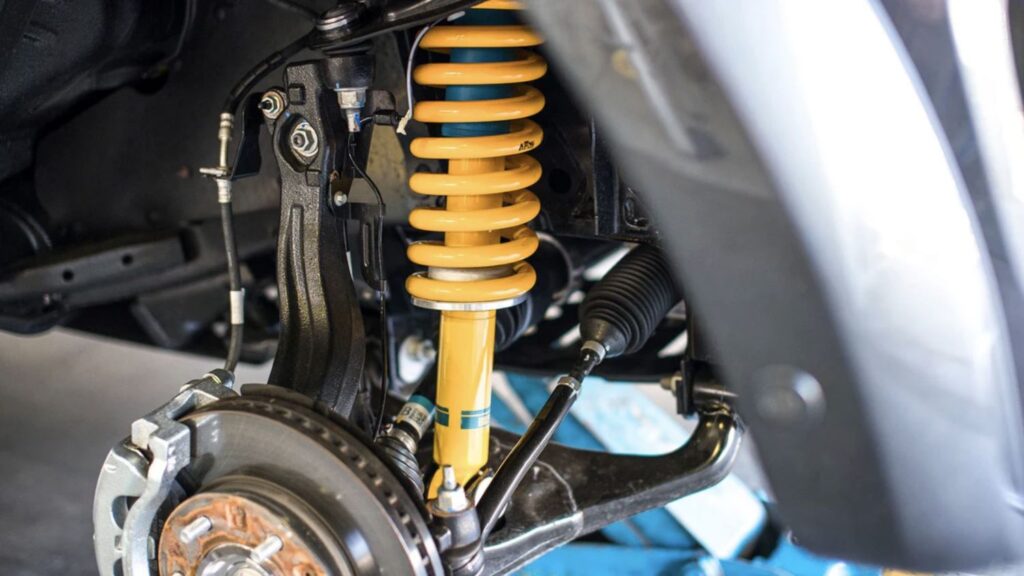
When replacing a cam belt (aka a timing belt) on your 3.0L diesel (the 2.8L ran a chain), which should be done every 150,000km as part of your regular maintenance schedule, there is a return fitting on the radiator that is RIGHT where you don’t want it to be. It’s also made of a fairy’s whisper and is easier to accidentally break than a Ming vase in a Mr Bean episode.
You’re putting the new timing belt on and you’ve got everything timed and lined up. You have the tensioner installed, everything is going great, then you gently exhale and… bang! The fitting on the radiator snaps off and the will to go on leaves your body like you’re vaping your own soul. The best part? It’s not replaceable and just like that you’re up for a whole new radiator.
Engineers. Unfortunately, the placement of the fitting makes the job far more difficult than it probably needs to be. Hell’s engineering department must be second to none because they all undoubtedly end up there.
Bad news: you probably need to buy and install a new radiator. Good news: tears make excellent coolant (probably).
Not unless you do your own timing belts. If you do, please be careful.
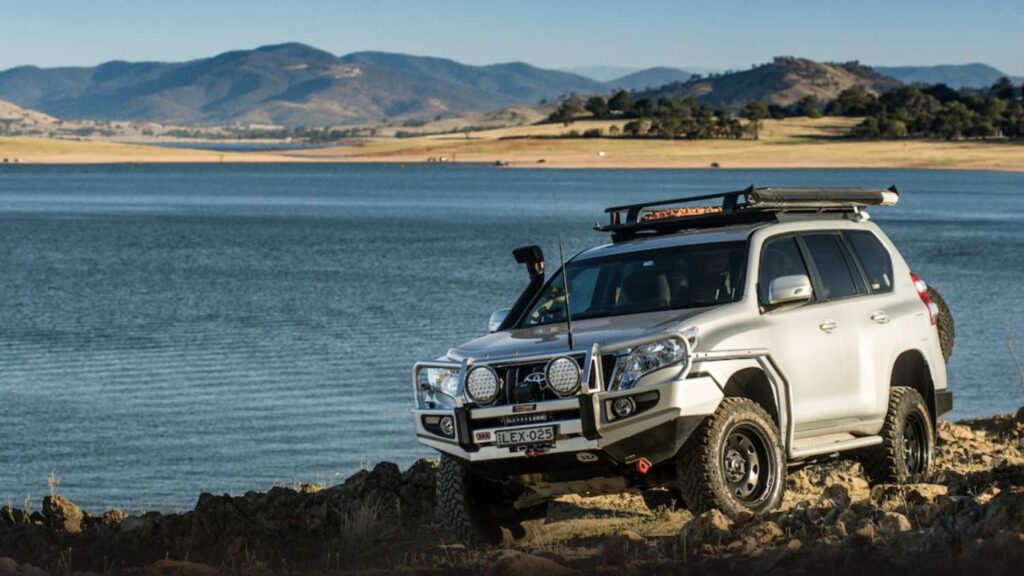
The Prado received big electronic upgrades in 2009 and 2017. The first was the year the 150 was introduced. The second is the year of the major facelift, when it received new driver aids, an advanced touchscreen head unit and a bunch of other electrickery. In both of these years, the electronic gremlins are remarkably worse than at any other point of Prado production.
In the `09 models there were recalls for airbags, numerous incidents of faulty heater elements and weird stuff like sporadic throttle lag. Things generally got better as the years went on, but then in 2017 the model updates came with issues like rough gear shifts, ESC warning lights, and plenty of cases of ‘touchscreen no-worky.’
New tech is almost always riddled with glitches when it first arrives on the scene. Maybe it’s the rush to put it out to market, maybe it’s not enough beta testing, maybe it just sucks? I don’t know. But to be fair to Toyota, they were pretty quick to remedy these dramas and outside of these two years, the 150s were above average in terms of tech-based-headaches.
Don’t buy a 2009 or 2017 model without a bunch of documentation saying that all issues have been found, fixed and won’t be a problem again. Preferably witnessed by a JP and signed in the presence of at least three iron-clad references.
Outside of those years, no. If the Prado you love happens to be one of them, then proceed with caution.
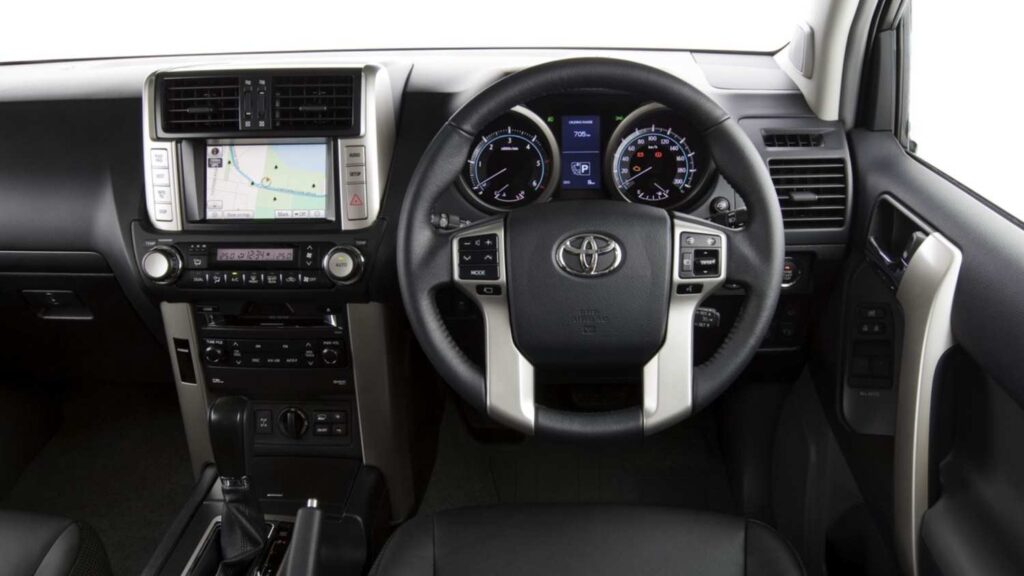
Absolutely, provided you buy carefully and understand what you’re getting into.
The Toyota Prado 150 has earned its reputation as one of Australia’s go-to touring wagons for a reason. They’re comfortable on-road, capable off-road, tow well, have excellent aftermarket support and generally hold their value ridiculously well. There’s a reason you still see them absolutely everywhere from school pickup zones to the middle of the Simpson Desert.
Like any modern diesel 4WD though, they’re not perfect.
The biggest things to watch are DPF and EGR-related issues on later models, injector concerns on early 1KD engines, and ensuring the vehicle has actually been serviced properly rather than just given the “yeah mate, she’ll be right” treatment every 15,000km. A good service history is everything on these vehicles.
If you’re regularly towing, touring or planning big off-road trips, the Prado 150 still makes a lot of sense. The aftermarket support is massive, parts availability is generally excellent and there are few vehicles that balance comfort, reliability and capability as well as a Prado.
At the end of the day, none of the issues listed above are automatic deal-breakers. Most are well-known, well-documented and manageable if you stay on top of maintenance and don’t ignore warning signs.
The Prado 150 isn’t perfect, but compared to a lot of modern 4WDs, it’s still one of the safer bets on the used market.
The most common Toyota Prado 150 problems include DPF and EGR issues, injector failures on early 1KD engines, dusting problems on some 2.8L models, suspension bush wear, brake booster issues on early vehicles and occasional electronic gremlins on some 2009 and 2017 models.
Yes. Overall, the Prado 150 is considered one of the more reliable modern touring 4WDs in Australia. Most issues are well-known and manageable if the vehicle has been properly serviced and maintained.
It depends on what you value most. Many owners prefer the older 3.0L 1KD diesel for its simplicity and proven reputation, while the latter 2.8L 1GD offers better fuel economy, more refinement and newer technology. The 2020-onwards 2.8L models are especially popular thanks to the power increase to 150kW and 500Nm.
Some diesel Prado 150 models can experience DPF issues, particularly if they are mainly driven on short trips around town. Regular highway driving and proper servicing can help reduce the likelihood of DPF-related problems.
Many buyers consider the 2020-2022 Prado 150 models the most desirable thanks to improved power, updated infotainment with Apple CarPlay and Android Auto, and overall refinement. However, well-maintained earlier models can still make excellent touring vehicles.
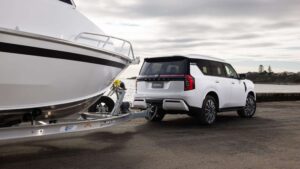
Yes. The Prado 150 is widely regarded as a strong towing platform for caravans, camper trailers and boats. Its comfortable ride, strong aftermarket support and long-distance touring ability make it popular with Australian travellers.
With proper servicing and maintenance, Prado 150 diesel engines can comfortably exceed 300,000km and many go significantly further. Regular oil changes, injector maintenance and keeping on top of cooling and intake issues are key to long-term reliability.
High kilometres alone shouldn’t automatically scare you away from a Prado 150. A well-maintained vehicle with detailed service history is usually a safer bet than a lower-kilometre example that has been neglected or poorly modified.
Generally speaking, Prado 150 parts are reasonably available in Australia thanks to the vehicle’s popularity. Genuine Toyota parts can be expensive, but there is also huge aftermarket support for maintenance, suspension and touring upgrades.
That largely comes down to personal preference and intended use. The Prado 150 is known for strong resale value, touring comfort and aftermarket support, while rivals like the Ford Everest and Isuzu MU-X may offer more modern interiors, stronger performance or better value for money depending on the model year.