Common Toyota LandCruiser 200 Series problems and how to fix them
Thinking about buying a Toyota 200 Series LandCruiser? Learn the most common problems, reliability issues, fixes and what to look for before you buy.
Published on: 4 June 2026

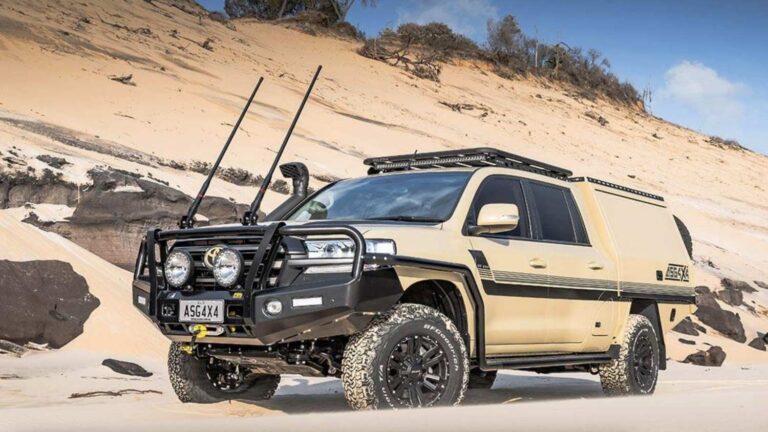
From 2007 to 2021, if you wanted an ultra-comfy, turbocharged diesel vehicle that was just at home taking a weekend winery jaunt as it was on the hardest tracks in the country, then you only had one choice… the mighty 200 Series Land Cruiser.
Sure, some of the American full-size rigs had more power and arguably towed better, and some might posit that the Y62 Nissan Patrol was more fun to own, or that even some of the Chinese chariots offered better value for money. You could absolutely say that and not be incorrect, but the Cruiser’s the one they were all being compared to.
It was, is and probably always will be the benchmark for Australian rigs. A legitimate all-rounder that had plenty of off-road credentials while being a pleasure to pilot around town with one of the nicest engines ever put in between a pair of chassis rails. The creature comforts and all-round adaptability of the two-hundos will probably be studied by car-builders for decades to come. They really were that good.
However, just like every other vehicle ever built, they had their share of quirks, quibbles and question marks that were honestly more frustration-causing than actual design faults. Nevertheless, there has been more than one horror story to come from owning the top dog in Aussie wheeling.
Given the 200s are coming down to non-stratospheric prices now (thanks, fuel crisis) and more folks are looking to pick one up for a bargain and hold onto it rather than go for the comparatively softer 300 Series (sorry 300 owners, you know it’s true), we thought we’d better continue our problems-and-fixes series with the big two-hunge.
If you’re comparing used Toyotas, also read our guides to common Toyota Prado 150 problems and Toyota HiLux N80 problems.
While none of these problems affect every vehicle, they are the issues most commonly reported by owners and workshops servicing the Toyota LandCruiser 200 Series.
2007 to 2021 is not a short model run. On the one hand, it’s a time-honoured Toyota tradition to have models hang around longer than your mate who just won’t take the hint and leave your BBQ that finished three hours ago. On the other hand, there was plenty of opportunity to dial things in to near perfection. In fact, Sadayoshi Koyari, former lead engineer for Cruiser development (aka Mr Land Cruiser), famously said, “The 200 Series is the strongest Land Cruiser ever produced by Toyota,” which, at the very least, shows a strong level of confidence in the product.
Across this 14 year span there were two major updates. 2015 brought with it some LED DRLs, an updated grille and the much-loathed DPF as well as a few other things like piezo injectors. 2019 had further cosmetic refinements, but other than that, the model remained fundamentally the same rig for a decade and a half. To be honest, they got it mostly right straight out of the box so probably didn’t see the need to give the gift horse a tonsil inspection.
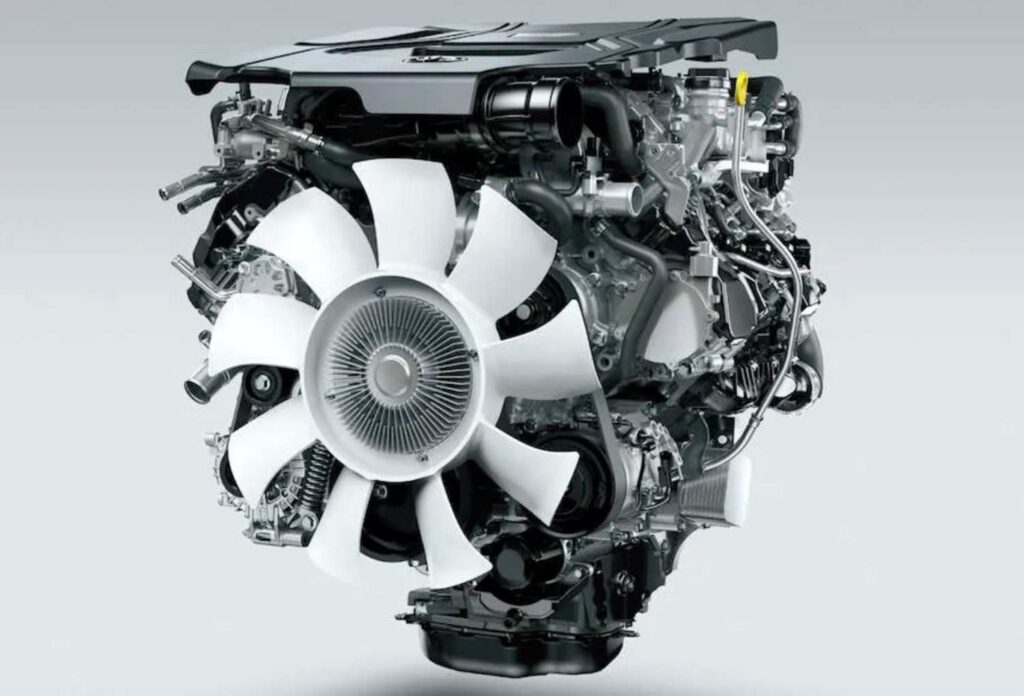
Oh, there were several petrol engines available too, with the 5.7L 3UR-FE getting an 8-speed auto (which really should have been slapped behind the diesel as well), but Aussie Cruiserheads overwhelmingly opted for the 1VD-FTV 4.5L V8 twin-turbo 32V diesel which pumped out 210kW and 650 Newtons from the factory, which was good enough to move weights well above the two-hundo’s 3350kg GVM and 6850kg GCM.
It’s a gem of an engine, sorely missed by more than a few LC300 owners, and is capable of so much more than the factory power figures. And for that reason, we’ll focus on the diesel 200s, which accounted for 90% of sales. Nevertheless, those V8 petrols are still fantastic, if thirsty, engines.
For many buyers, the sweet spot is a well-maintained 2012-2015 Toyota LandCruiser 200 Series. These vehicles received a number of updates over the earliest models while avoiding some of the DPF-related complications introduced with the 2015 facelift.
That doesn’t mean later models should be avoided. Many 2015-2021 vehicles have covered long distances without major issues, particularly when they spend time on the highway and are serviced properly. However, buyers should pay close attention to injector health, DPF operation and service history.
Regardless of year model, maintenance history is far more important than build date. A regularly serviced 300,000km LandCruiser is often a safer purchase than a neglected low-kilometre example.
Emissions systems, by design are good for two things. The first is getting the car through emissions testing on initial release. The second is royally screwing your engine’s reliability. The diesel particulate filter (DPF) and exhaust gas recirculation (EGR) systems on the 200s were no exception to this.
Multiple problems, particularly with the DPF models, reared their head upon its inclusion in the 2015 models, and there’s not a lot you can legally do other than bend over and take the several-thousand-dollar replacement pineapple when they do let go.
To be fair, the EGRs aren’t too bad, but the intake still needs close monitoring for excess carbon build-up.
Worst case scenario is an overheated and cooked engine. Best case is rough idling, loss of power and blowing a lot of smoke. An easy check is to wipe a light-coloured rag around the inside of the tailpipe. If it comes out with a lot of black soot on it, chances are you’ve got problems
Toyota actually issued a recall for the 2015 and 2016 models. The DPF system was faulty and replaced under warranty. Keep in mind that these vehicles are now ten years old and the emissions systems will be coming out of warranty, so it’s worth checking before pulling the trigger on a new-to-you two hundred.
A lot of folks don’t realise that the emissions systems on the Cruisers was ten years. If yours is younger than that and having issues, get it replaced under warranty. If not, the only legal option is to replace the DPF, which is not cheap.
Some people remove it entirely and have their vehicle tuned to allow for it, but that’s a big no-no on the legality side of things, and fines are ridiculously high if you’re caught.
Read our guide on what to look for in second-hand vehicles with DPFs.
This is a case of monitor closely but don’t panic. The key with DPFs is to run your vehicle up the highway for an hour a week to allow it to regenerate and clear itself out. It’s only when you’re nipping up the shops and doing the school run without any longer-than-an-hour-drives does it become a problem.

Arguably the biggest problem with the 200s, apart from the price of the things, are the injectors. They changed over to piezo injectors when they introduced DPFs, but this didn’t fix the problems (some would argue it made it worse).
Basically, they allowed too much fuel into the combustion chamber and caused all sorts of dramas with the DPF, EGR, idle, fuel-consumption and generally just made life difficult for everything downstream of the fuel delivery (which is most things).
Rough idle, poor fuel economy, excessive smoke, and sludge build-up in the intake over time. In severe cases, the excess fuel prevented the DPF from burning off, causing major engine issues that resulted in more than one long motor being replaced under warranty, and a few more that Toyota didn’t pay for.
The seating washers were the most common culprit, not doing their one job and letting fuel leak into the cylinder. It got so bad that at one point it was almost impossible to find a full set of 8 injectors for the 1VD in the country.
Ideally, a full set of 8 new injectors with updated washers done under warranty. More commonly, though, partly due to the parts shortage, Toyota would only replace the faulty injector, and many customers had the problem repeat itself a few months later. Nevertheless, replacement is a well-trodden path these days, with many mechanics able to do it cheaper than Toyota if you’re out of warranty.
If your rig is exhibiting no signs of overfuelling and has no codes from the fuel system then you should be right. If that’s not the case, expect to pay around $4000-ish for a DIY job and tack on another few grand’s labour for a professional to do it.
If you’re looking to tune or chase better performance, it’s also worth understanding the differences between power modules, ECU tunes, and diesel chips before making changes.
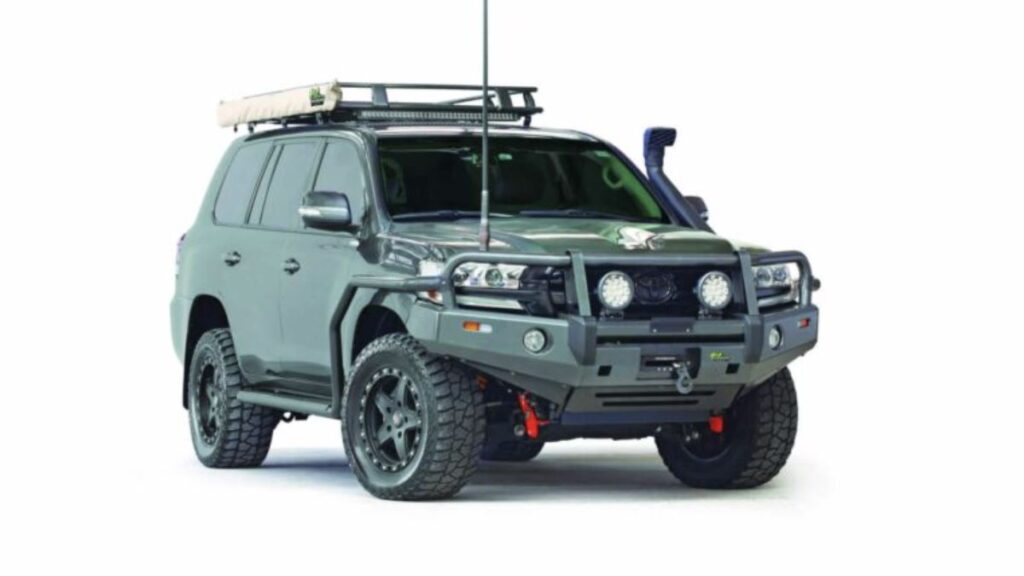
Similarly to the HiLux, the 200s airbox did not seal properly and let all sorts of dust and contaminants past the air filter. This led to quite a few MAF sensors, turbos and owners to lose their cool and chuck a tanty. It’s especially prevalent when driving in dusty conditions.
A nice film of red dirt covering the airbox post-filter is the first clue, followed by your MAF sensor throwing a code and often sending the engine into limp mode. In bad cases, it caused the right-side turbo in particular to go bang.
The seal between the two halves of the box and around the filter was not up to task. They’re generally fine for urban driving and places where dust doesn’t get everywhere. But if you’ve ever driven through a patch of bulldust, you know you’ll be finding traces of that stuff all over your 4X4 for the rest of its life.
Some mechanics say that a smear of grease around the filter sealing surface works wonders, but if I wanted to protect my six-figure investment, I’d pony up for an aftermarket airbox. They offer better flow, better filtration and most importantly, a proper seal between the outside and your engine internals
It takes about one minute to pop the cover off your airbox and check the clean side under the filter for signs of dust contamination. If there’s no dust in there you’re in the clear. If there is, time to whip out the credit card before you head off on your next trip. Giving the MAF sensor a quick clean and checking your right-side turbo for excessive shaft play wouldn’t hurt either.
For anyone doing regular dirt-road touring, tyre choice and pressure also make a big difference to how much dust, vibration and punishment your 4WD cops.
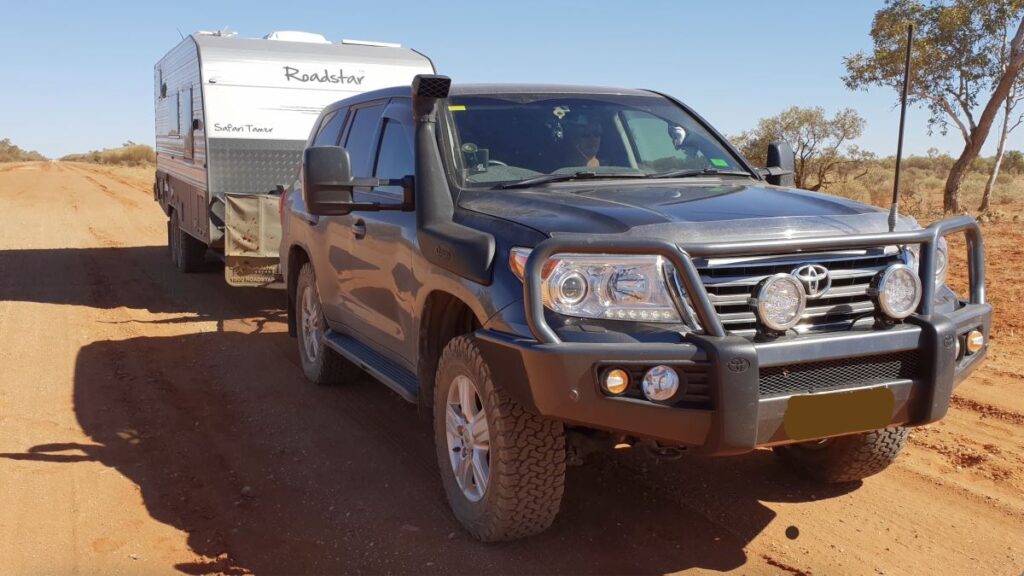
While the six-speed (which should have been an eight-speed, as the petrols got, but whatever) was an overall decent transmission, the driveline often developed a thunk when taking off. This caused a lot of people to think there was something expensive that had let go inside the transmission, but luckily, it was a fair bit easier to fix than that.
Coming to a stop at a set of lights and the driver would feel a slight impact, like they’d nudged the back of the car in front of them. Then again when taking off there’s an audible clunking from the driveline, which one might assume was a transmission or differential problem.
In fact, it was the universal joints. Now, if I were to tell you that they require occasional greasing, you would probably already know that, but when was the last time you actually did so? Now I’m sure the comments will be full of folks mortally offended that I have impugned their religious servicing schedule, but the reality is most of us simply don’t clamber under our rigs with the grease gun with any regularity.
The issue was common in two-hundos that regularly travelled off-road. The grease would gunk up with contaminants, be washed away by water crossings or simply lose efficacy after a lot of high-load crawling.
As fate would have it, this one is a fairly cheap fix. No prizes for guessing that the fix is to grease your unis every six months or so and call it good.
This is also a good reminder that basic 4WD maintenance matters just as much as big-ticket mods.
Does your driveline clunk? If no, then don’t stress. If yes, still don’t worry, just give greasing the unis a go before spending up big at your local transmission specialist.

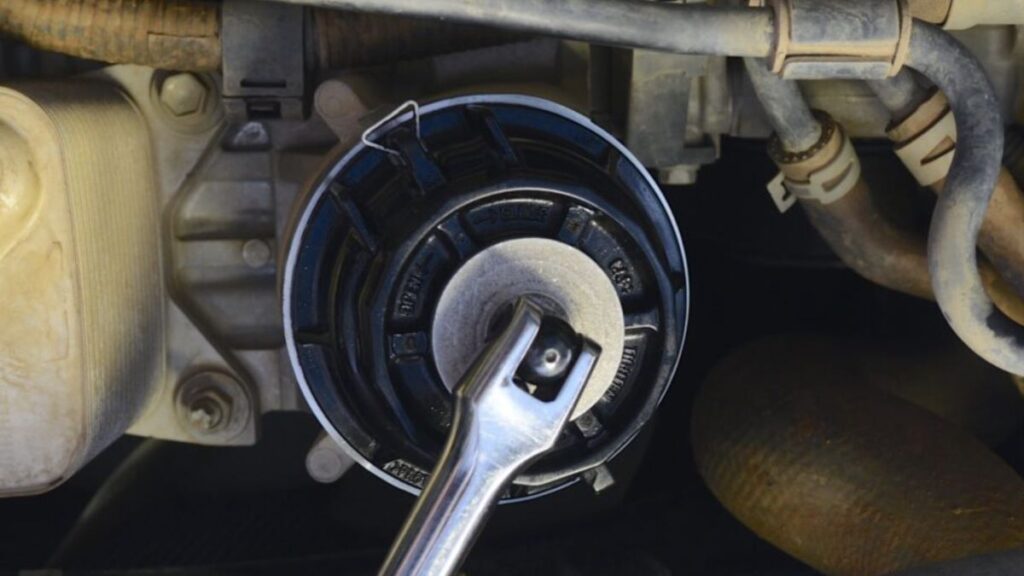
Personally, I reckon having the oil filter at the base of the engine, accessible only with a specialist tool, is a bit sh*t. But I can’t afford a two-hundred, so I’ll saddle up my moral high horse and ride on. However, having the filter housing in that location and in its horizontal orientation meant leaks were not uncommon. In a few cases, it even led to full engine failure.
Best case: a few drops of black gold on your nice concrete driveway. Worst case: the slipper bearings on the crankshaft don’t get lubed and the engine finds itself in an early grave.
It doesn’t take much to distractedly not fully tighten the housing back up and allow small leaks, more weeps, to occur. However, it’s worth noting that there is a tube attached to the lid of the filter housing that can become detached. Most folks simply slip it back inside the filter, nip it all back up and carry on.
But in rare cases, this can cause the filter to become squashed, preventing oil from reaching the engine and leading to catastrophic engine damage. Often, before the engine oil light even has a chance to come on.
Once you’ve refilled your oil, run the engine for a sec to build oil pressure then duck back underneath to check there’s no weeps evident from the housing. Also, if the tube has become disconnected from the lid, replace it.
Honestly, no. It’s an exceedingly uncommon event, but the fact you’d be up for a five figure repair where the first of those figures isn’t a 1 or a 2, it’s worth mentioning.
The 200 has long been one of those vehicles that simply vibrates. It can happen either from the body or through the steering wheel or both. Some people can put up with it while it drives others crazy. I once drove one through the Victorian deserts over several days and never noticed it, while my passenger said it drove them insane. So I don’t know, drive one and see if it bugs you, I guess.
The body vibes seem to be more of a harmonic thing that happen at certain speeds. With the 1VDs most owners seem to report them at slower speeds or as the engine warms up. The steering wheel comes through the steering box and front of the chassis and may be exacerbated by incorrectly rated front springs and larger tyres.
It’s a bit of a mystery. One mechanic we spoke to said that as soon as his customers report it he does a chemical intake clean and it clears right up. Others say it’s from the design of the engine mounts and it worsens incrementally as they wear. The steering wheel vibration is not actually due to the usual culprits like wheel alignments or incorrect steering geometry, it’s more transmitted through the front of the frame and the steering box.
This is one of those things that you could tear your hair out chasing phantom misalignments and trying different speeds and tyre pressures until the cows come home. It’s honestly not that bad and most people won’t notice it, but if you’re one of those who do, maybe try an intake clean and go from there?
Only if you’re hypersensitive to motion sickness.

Another one that’s not as common as the others is when owners notice that when the outside temperatures are north of 30°C, the engine noticeably drops in power. The temperature gauge on the dash stays normal, but the temperatures inside the intake manifold are often over double the ambient temperature.
A loss of power and sluggishness when driving in hot conditions, particularly when towing or in high load circumstances like sand driving.
Toyota actually tested this and determined that when the temperature creeps up over 30°C the engine cuts fuel to protect itself. It generally only happens in conjunction with another underlying issue, such as a split intercooler hose.
If you’ve noticed this happening, book in with your local Cruiser specialist and get them to give it the once-over. Chances are something has let go.
Nah, this is super-rare and generally only happens with heavy towing or hard driving over sand. If you’re nervous about it, swapping out your intercooler hoses with aftermarket silicone items won’t hurt anything.

The Toyota LandCruiser 200 Series has earned a reputation as one of Australia’s most capable touring wagons, but preventative maintenance is still essential.
A few simple habits can help avoid many of the common issues discussed above:
Catching small issues early is often the difference between a simple repair and a major workshop bill.
Absolutely… provided you buy carefully.
The Toyota LandCruiser 200 Series remains one of the most sought-after touring wagons in Australia for good reason. It combines long-distance comfort, strong towing capability, genuine off-road performance and one of the most respected diesel V8 engines ever fitted to a production 4WD.
Like any modern diesel, there are known issues to watch for, particularly with injectors and emissions systems on later models. However, most of these problems are well documented and can be managed through proper maintenance.
A vehicle with a comprehensive service history, evidence of regular maintenance and no signs of injector or DPF issues can still provide hundreds of thousands of kilometres of reliable service.
For many enthusiasts, the 200 Series represents the last of the traditional V8 LandCruisers, and demand remains strong despite its age.
If you’re still weighing up other used touring wagons, our common problems guides for the Prado 150, Land Cruiser 80 Series, N80 HiLux and Next-Gen Ranger are worth reading too.
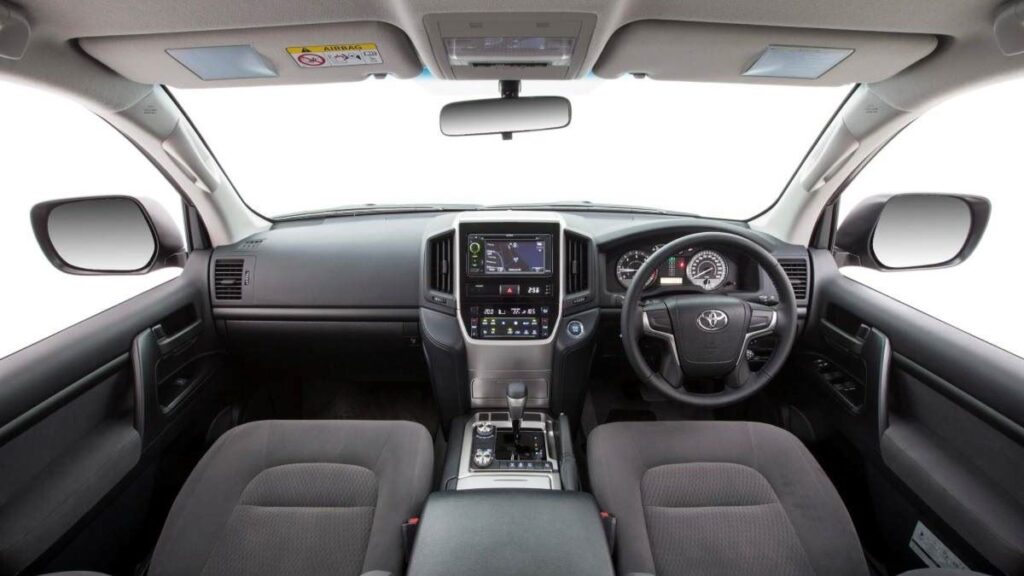
Yes. The Toyota LandCruiser 200 Series is generally regarded as one of the most reliable large 4WD wagons sold in Australia. However, injector issues, DPF-related faults and airbox dust ingress are known concerns that buyers should inspect carefully.
Many enthusiasts favour 2012-2015 models because they combine later updates while avoiding some of the DPF-related complications introduced in late 2015. Service history is usually more important than model year.
A well-maintained 4.5-litre twin-turbo diesel V8 can comfortably exceed 500,000km. Many examples have travelled significantly further with proper servicing and preventative maintenance.
Injector issues are one of the best-known problems affecting the 200 Series, particularly on higher-kilometre vehicles. Symptoms include rough idling, excessive smoke and poor fuel economy.
No. The diesel particulate filter was introduced during the 2015 update. Earlier diesel models do not use a DPF.
Yes. The 200 Series remains one of Australia’s most popular towing vehicles thanks to its strong diesel V8 engine, stable chassis and long-distance comfort.