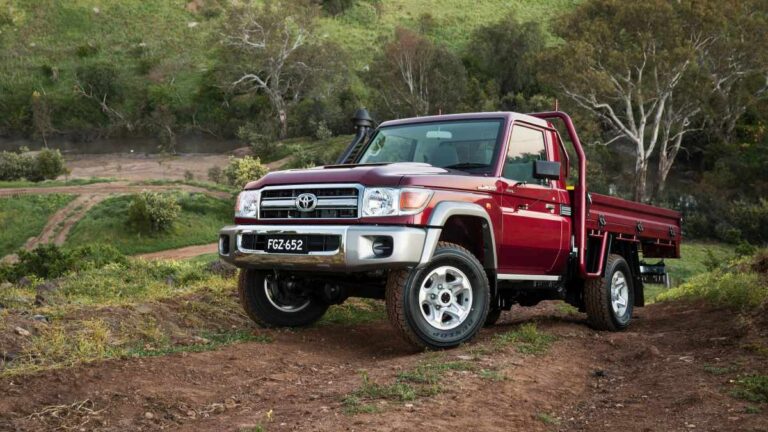
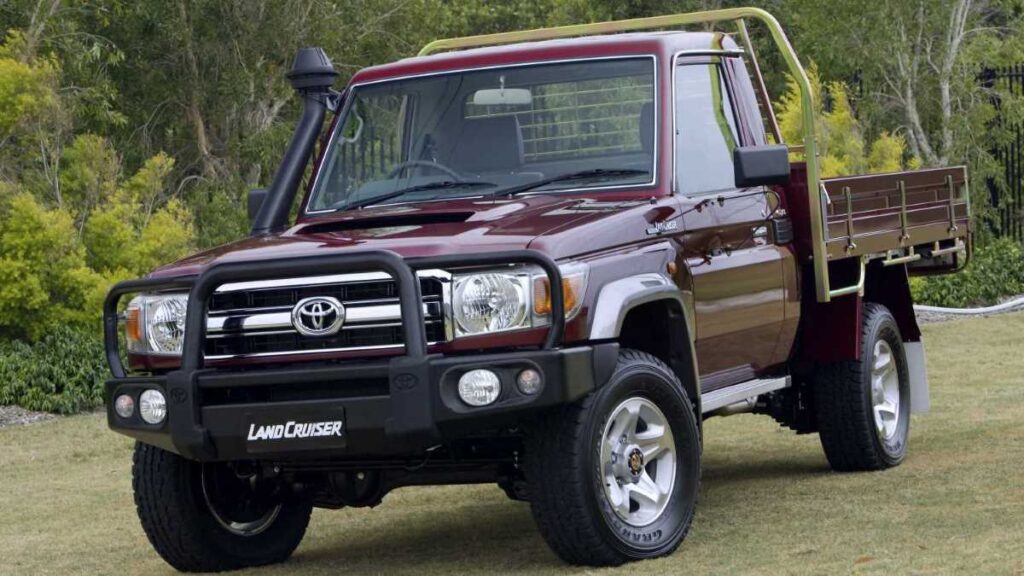
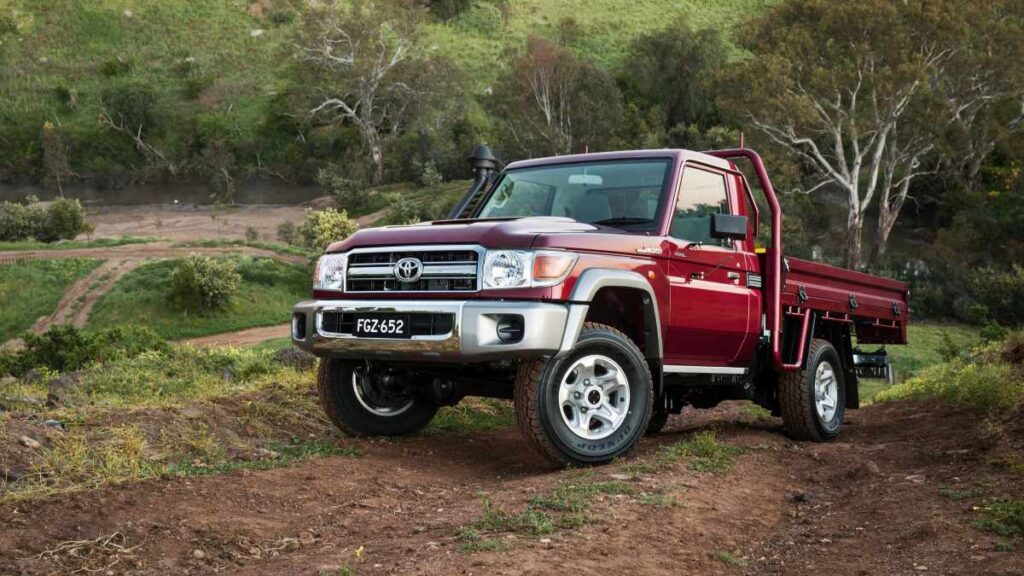
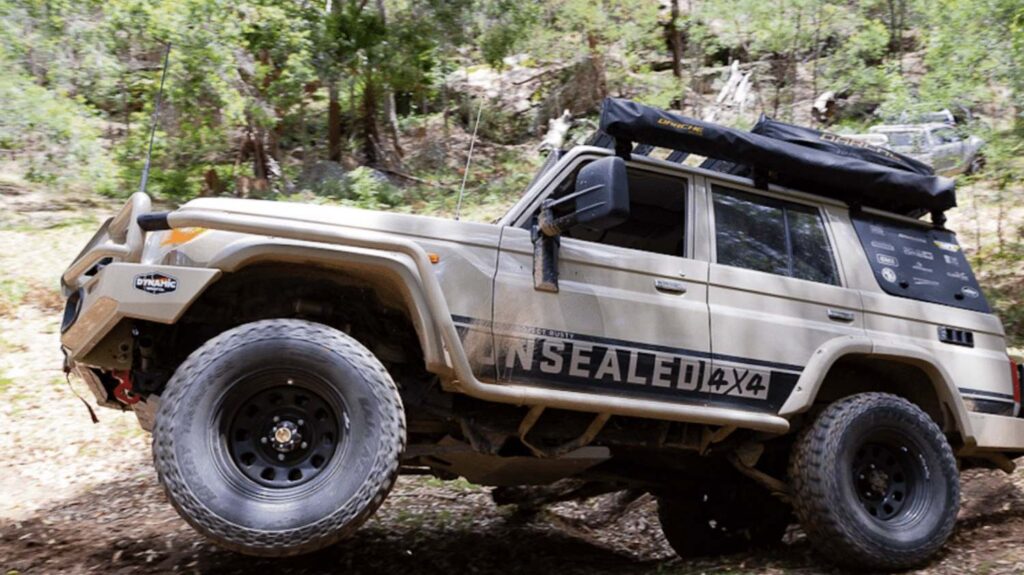
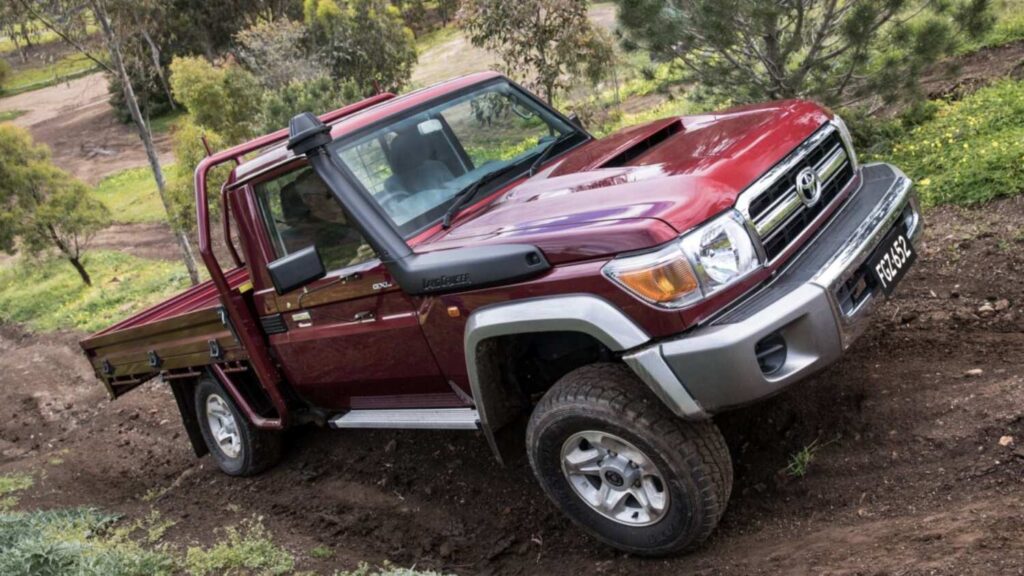
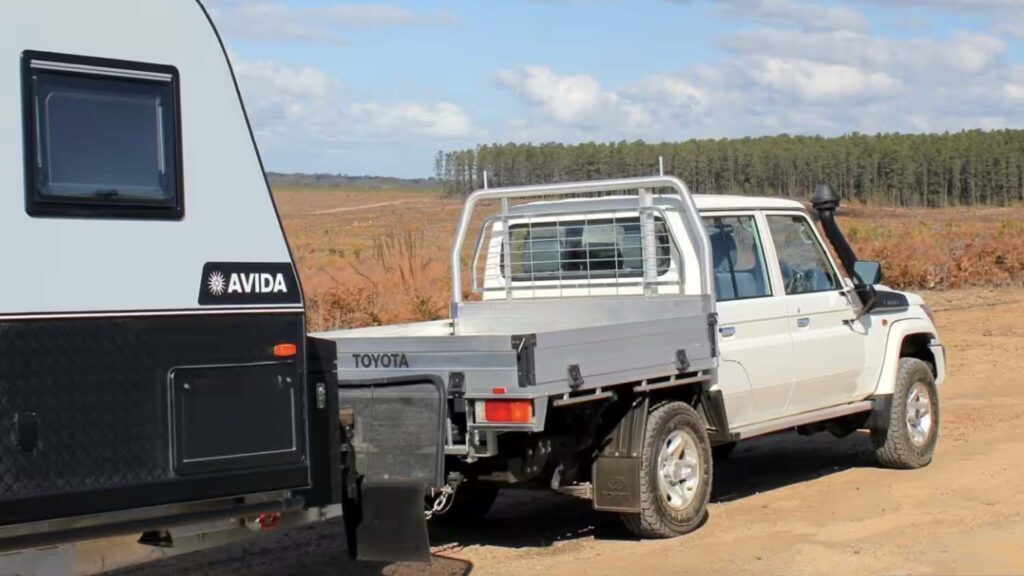
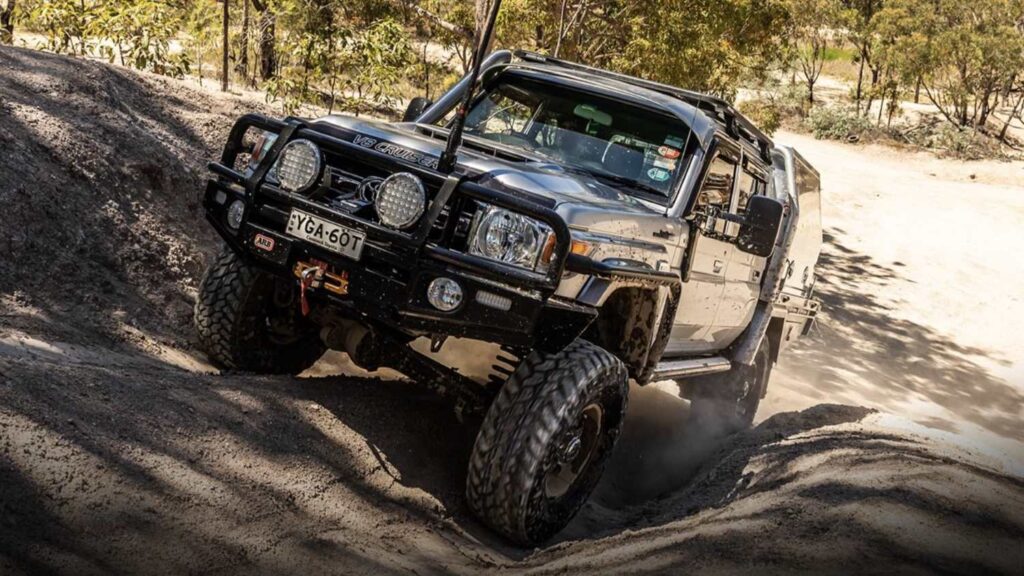
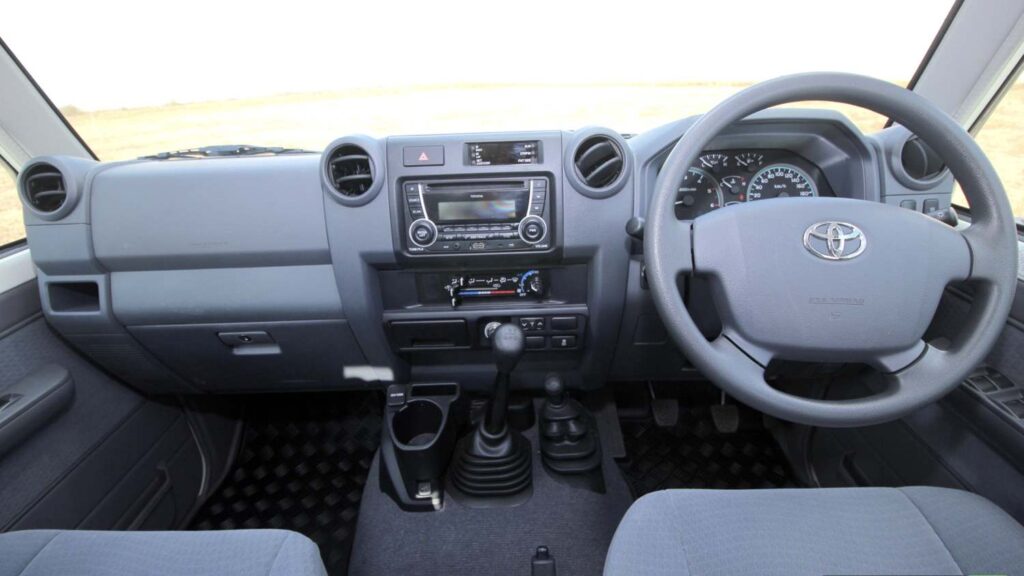
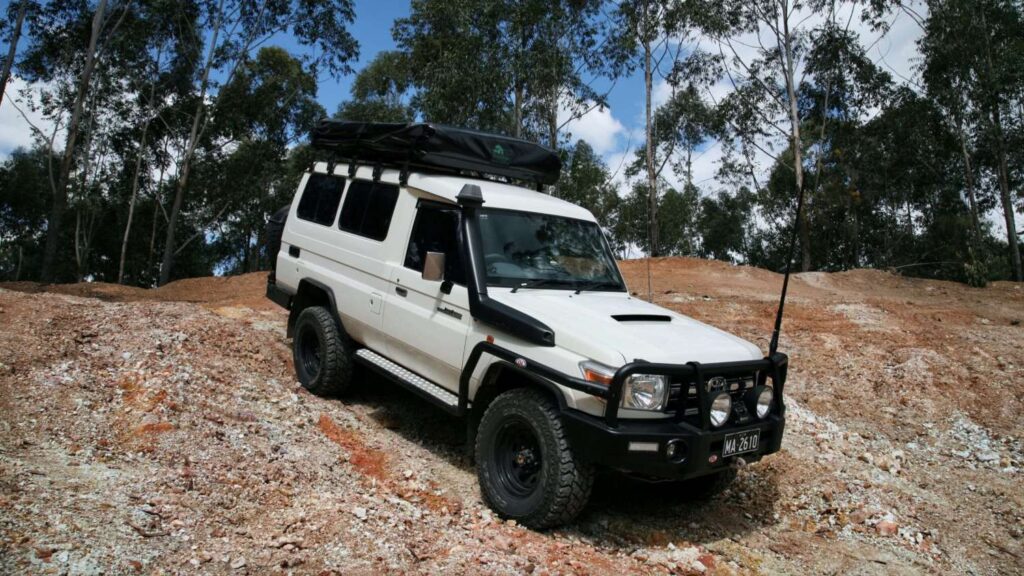
The mighty 70 Series Cruiser is a mainstay at every campsite, caravan park, cattle station, jobsite and wheeling track in the country. Ever since they dropped in 2007, Toyota could barely keep up with demand. To the point where the wait list was years long and people were selling their “brand new” 70s on the second-hand market for significantly more than they paid for them.
They’re that popular.
It’s not hard to see why. Solid axles, a nice big diesel V8 and a utilitarian nature that just begs to be ridden hard, put away wet and loaded up with much more weight than they were ever designed to handle. And they took it all, too. It’s the last of the “real” 4WDs available on the new car market.
But like any vehicle, the 70 Series has its share of common faults. Some are simply the result of hard use over hundreds of thousands of kilometres, while others stem from factory design compromises or emissions regulations introduced over the years. The good news is that most are well understood, widely documented and, in many cases, relatively straightforward to fix.
Quick answer
The Toyota LandCruiser 70 Series is one of Australia’s toughest and most reliable 4WDs, but it isn’t without faults. Common issues include DPF problems, clutch wear on tuned vehicles, gearbox synchro wear, wheel bearings, chassis cracks on overloaded utes, airbox dust ingress and poor factory comfort. Most issues are well understood and have proven aftermarket fixes.
Common Toyota LandCruiser 70 Series problems at a glance
Common Problem
How common?
Expensive?
DPF
Medium
$$
Clutch
Medium
$$
Synchros
Medium
$$$
Rust
Medium
$$$
Wheel bearings
Common
$
Door seals
Very common
$
NVH
Very common
$$
Rough ride
Very common
$$
Air conditioning
Common
$
Chassis cracks
Rare (stock) / Common (overloaded)
$$$$
Alternator
Medium
$$
Airbox dusting
Common
$$
Are the 70 Series Toyota LandCruisers reliable?
Overall, yes. The 70 Series were not about being the belle of the ball. They’re about putting in the work and handling business. The V8-powered 70 Series is known for its strong engine, durable driveline and ability to handle demanding work, whether that’s towing heavy loads, touring remote Australia or spending its life on farms and mine sites. With regular servicing, many owners report exceptionally high kilometre figures without major engine or drivetrain failures.
With that said, don’t buy one if you’re looking for Range Rover comfort, Ford Raptor handling or the stylish flair of a Lamborghini Urus. They have none of that. They’re for people who want a tow pig that can also haul several bales of hay over to the back paddock and can also cruise on the highway at the posted limit without sacrificing the ability to party hard in low range.
However, reliability doesn’t mean the 70 Series is fault-free.
Many of the common issues covered in this guide are related to wear and tear, heavy use or modifications rather than catastrophic mechanical failures. Others, such as DPF issues on later models or the factory airbox sealing problem, are well-known design shortcomings with established aftermarket solutions.
As with any used 4WD, how the vehicle has been maintained is often far more important than its odometer reading. A well-serviced 70 Series with 300,000km can easily be a better buy than a neglected example with half the kilometres.
Which 70 Series years are best?
The “best” Toyota LandCruiser 70 Series depends on what you’re looking for, but many enthusiasts favour the 2007-2016 V8 models. These vehicles use Toyota’s 4.5-litre 1VD-FTV turbo-diesel V8 without the diesel particulate filter (DPF) that was introduced in late 2016, making them mechanically simpler and popular with remote-area tourers.
From late 2016 onwards, Toyota added a DPF to meet stricter emissions regulations. While many owners have experienced years of trouble-free motoring, DPF-related issues are among the most commonly discussed problems on later V8 models, particularly for vehicles that spend most of their time on short trips rather than long highway drives.
In 2023, Toyota introduced the 2.8-litre four-cylinder turbo-diesel with a six-speed automatic transmission to parts of the 70 Series range. Although it lacks the character of the V8, the newer drivetrain offers similar power, improved refinement and a much more relaxed driving experience. More recently, the range has also adopted an AdBlue system to meet Euro VI emissions standards.
Ultimately, there isn’t a “bad” year to buy. A well-maintained LandCruiser 70 Series with a comprehensive service history is almost always a better purchase than a neglected example, regardless of its build date. Understanding the common issues for each generation – and checking that they have been properly addressed – is far more important than chasing a particular model year.
Which LandCruiser 70 Series models does this cover?
In this guide, we’re focusing on the V8-powered 1VD-FTV 4.5-litre turbo-diesel models introduced in 2007. We’ve already covered the newer 2.8-litre turbo-diesel engine in our Prado and HiLux common problems guides, so this article concentrates on the V8 that has become an Australian icon.
Whether you’re researching your next purchase or already own a 70 Series, here’s what you need to know about the most common problems, how to spot them and what can be done to fix them.
Toyota LandCruiser 70 Series common problems
DPF problems
In September 2016 the Cruisers needed to meet the Euro 5 emissions standards, so the government Department of Ineptitude slapped on a Diesel Particulate Filter and called it good enough. We’ve banged on about our prolific dislike for DPFs previously in these yarns, so I won’t re-scramble old eggs here.
But yeah, DPFs are not great for diesels that don’t see a lot of highway kilometres and are well known for causing no end of issues that range from minor annoyance to “yes, and how does sir like his pistons melted?”
Symptoms
Smoke, limp mode and check engine lights get handed out like headbutts in a mosh pit. Pretty ironic that DPFs are installed “for the environment” yet often end up doing more damage to it than a vehicle that never has one fitted. Just saying.
Cause
If you don’t do a lot of highway kays, the DPF cannot get hot enough to burn off and will eventually clog up. Luckily a lot of 70s are mile-munching monsters so many of them get away with it, but even so, there have been too many failures not to report it.
Fix
A spirited highway drive every 1000- 2000 km is a good start, but there’s no real legal fix for DPF dramas.
Should you worry?
There’s no reason a 70 driven on the highway every now and then can’t live a long and fruitful life with a DPF installed. Plenty do just that. Unfortunately, there are still way too many examples of people who drive them correctly and still have problems. But it’s important to remember that this problem is not unique to the Toyota LandCruiser 70 Series.
Clutch wear
The thing about having a sexy V8 turbo engine is that the stock power figures are rarely going to do that lovely engine note justice. Thus, the hunt for more begins. Most folks start with an exhaust, maybe an airbox (which we’ll get to in a minute) and a tune.
This provides a nice kick in the pants to the power, and more importantly, torque curves and can often have bonuses like better fuel economy and improved reliability to boot. All good stuff. What’s not good is more power means your engine now has the ability to turn your clutch disc into the ashtray of a two-pack-a-day dart fiend.
Symptoms
Revs go up, acceleration stays the same or drops off. Taking off now takes most of the pedal travel before she bites and shifting gears involves a lot more grinding. All signs your clutch is toast.
Cause
The stock clutch was designed to handle stock power and that’s about it. It’s not like they’re inherently bad, it’s more that the engine is capable of a hell of a lot more than the clutch can handle. Sort of like never breaking Suzuki Sierra axles under a stock Zook, then putting them under a comp-Patrol and hoping they’ll last. Fine up to a point, but ask any more of them and they’ll fold faster than a cheap camping chair.
Fix
One of the best things about the 70s is the gigantic amount of aftermarket support. Not only are heavy duty clutches an option, but you can take your pick from several different reputable companies to supply one for you. Also, many tuning workshops offer package deals with a tune and an uprated clutch in the one hit, which is pretty rad if you ask me.
Should you worry?
Not really. Clutches are a wearable part even if you’re sticking with stock power figures. Once it goes, throw in a decent replacement and call it good. If you are chasing more torque, then factor in a heavy-duty item to take advantage of those Newtons.
Manual gearbox synchro wear
Why the hell didn’t Toyota add a sixth gear to the manual box, or heaven forbid, an auto? I’ll probably pass into the next life without answers to these questions, even though we all know it was a middle-management pen-pusher who didn’t see the ROI or something lame like that.
Anyway, the manuals are known for developing synchromesh wear, particularly between second to third, which can be slowed down with some preventative maintenance and good driving habits. However, if the problem persists, it’s gearbox rebuild time.
Symptoms
It sounds like taking your 16-year-old out for their first driving lesson in a manual. That is, a godawful crunching sound that’s right up there with nails on a blackboard or the sound the fuel bowser makes as it drains way too much of your paycheque as you fill up your Hyundai Sonata. Much like mumble rap, it physically hurts to listen to.
Cause
It could be normal wear and tear on a high-kilometre rig, or it could also be the incorrect gear oil being used. It could also be the burnouts your teenager is doing on Friday nights or the fact you’re towing your 8T excavator to the jobsite through the week. Who knows?
Fix
Using GL-5 oil, with its high level of extreme pressure (EP) additives can attack the yellow metal used in the synchros, causing them to wear much faster. Make sure you or your mechanic are using the correctly specified GL-4 75W-90 oil to avoid early damage.
Good shifting habits, like briefly pausing mid-shift to let the synchros do their thing and not forcing cold shifts, can also help prolong your manual’s life. If left for too long with crunchy gears, you can eventually damage the gear teeth, which are much more expensive to repair when it comes time to rebuild, which it will need at some point once the crunchiness appears.
Should you worry?
Not unless your gearbox sounds like a rottweiler unwrapping a Christmas present between shifts. If so, it’s probably time for a birthday for your box. And hey, good opportunity to throw in a new clutch while you’re there.
Rust
Yep, the metal cancer is prevalent in the 70s. Especially coastal-dwelling vehicles or ex-mines rigs (they’re cheap for a reason, folks – ask us how we know). It’s just part of the deal with living in a country that’s an island and driving cars made out of steel.
Symptoms
It tends to start from the inside and work its way out, so can be tricky to detect until it’s well and truly eaten your panels. However, the paint bubbling and flaking are dead giveaways. If you’re shopping for a second-hand model, running a magnet over the usual areas of concern is good practice.
Cause
It’s not so much a problem with the Toyota LandCruiser 70 Series specifically, but more to do with the environment they live and operate in. Mine trucks often cop it worst in the chassis. Coast vehicles can develop metal cancer in the A-pillars in particular, causing issues like allowing water in during heavy rains and bubbly paintwork.
Fix
Preventative maintenance is way better (cheaper) than paying a panel beater to repair the affected metal. Regular washing of your vehicle is the best, and if you live near salt water make sure you regularly give the door seals and channels a good coat of lanolin or similar with every wash.
Should you worry?
Not unless you routinely ignore washing your six-figure rig, drive through the ocean (sorry, but you don’t deserve your vehicle if you do) or have an ex-mines “bargain”.
If you’re shopping for a new-to-you 70 then rusty A-pillars should be walked away from. The repairs can run up to silly figures. We know of at least one person who had to fork out nearly $15K to replace both pillars.
Front wheel bearing wear
Wheel bearings on most solid axle 4X4s live a hard life. Wheel bearings on LC70s that are not only solid axle but often also rocking big tyres, supporting a shitload of weight and driven off-road with minimal mechanical sympathy on the reg have an even rougher job.
Unsurprisingly, the “don’t worry, she can take it” nature of the 70s has led to their wheel bearings, particularly in the front, developing a bit of a reputation for coming unstuck.
Symptoms
It’ll start as a hum from the front end, becoming a growl, then a howl. The noise will go up as the speed increases and will allow a fair bit of play when the wheel is jacked up off the ground and you try to wobble it with your hands at 12 and 6 on the tyre.
Cause
As mentioned, 70s are routinely overloaded and driven hard. The heavy-duty nature of the rig means the bearings are always working and always wearing. Sometimes they can simply become loose and be nipped back up with some fresh grease, but more often than not changing them out is cheap insurance.
Fix
They’re a tapered roller bearing that sits inside the same-design hub that Toyota has used since the 40 Series and on every solid-front-axle rig they’ve made since. Whip off the locking hub, get your 54mm socket out and remove the locknut, then tighten up the bearing.
If swapping them out there’s a bit more to it, but not much. If getting covered in sticky and smelly grease sounds like hell to you, then expect to pay around $500-ish a side to replace the bearings at a mechanic.
Should you worry?
Nope. It’s just a part of maintaining a heavy-duty vehicle. Bearings are a wearable item, and all utility vehicles will likely need them done at some stage of their lives. A lot of people do the swivel hubs while they’re there, not because they’re fun (they’re really not), more because they generally have to be done every now and then anyway so if you’re getting that filthy you may as well.
Poor door seals
Sure, it’s a work vehicle and built for function over form, but damn, the flat pinch-weld door seals are as much of an afterthought as all the Cavill brothers not named Henry. They don’t actually close fully, allowing noise, dust and air through the gap between the door and the body.
It’s not too bad from new but get a few numbers on the odometer and it starts to become a real issue. Just ask any 70 owner who’s done a deep water crossing or driven in dusty conditions for a few hours.
Symptoms
Wind noise at highway speeds getting progressively worse is the first giveaway the seal gap has been widened. Then there’s the diesel fumes in traffic, dusty dash after a day on the dirt and some owners also report a whistling noise driving around at city-speeds.
Cause
As mentioned, the seal isn’t much to begin with, and once age and UV deterioration have been factored in, it becomes about as useful as a kickstand on a tricycle. It’s not so much that the door seals fail; it’s that they fail on a vehicle that a lot of people pay over six figures for. If these rigs cost fifty grand (cough, as they should cough), nobody would care.
Fix
The aftermarket once again has you covered here. The popular fix is to replace the factory pinch-weld with some proper bulb-type seal that properly compresses when the door is closed and keeps the noise, dust and water out like it should have done from the get-go.
It won’t cost you more than a couple hundred bucks for a four-door 76 either. Oh, and by the way, these seals work on every 70 series from 1985 to the present because the door openings are identical.
Should you worry?
Nope. But if you’re planning on a long trip, this sort of thing can add significantly to driver fatigue, so drop the coin before you leave and enjoy a quieter and dust-free(ish) trip.
Excessive noise, vibration and harshness (NVH)
While we’re on the interior comfort thing, the NVH levels in the Toyota LandCruiser 70 Series are what you’d euphemistically refer to as “boisterous.” In plainer language, they’re f*kn horrendous.
Look, we understand it’s a slab-sided rig with the aerodynamic profile of a prop forward, but there’s next to no sound deadening or insulation installed, which again, isn’t great considering the price tag on these things. Many owners complain of tinnitus-spec irritating whines and the seats are made from hardwood with a thin layer of cappuccino foam on top.
It’s just not a pleasant place to spend a 1000km day in the saddle.
Symptoms
Take a trip with a mate with a 300 Series and you bring your 79. See who is more tired after several hours spent covering some kays. You’re dealing with rattles, whines, wind noise and the back aches that come with sitting on a seat that can double as a blacksmith’s anvil in a pinch.
Meanwhile, your mate is ensconced in comfort, multiple layers of sound-deadening and enjoying functional climate control and the soft strains of a Brahms symphony. Chances are you’re going to be a lot more fatigued than they are at the end of the day.
Cause
Not to bang on about it, but the 70s are farm utes with luxury vehicle price tags. There’s nothing wrong with the simplicity and functionality of a farm ute, we love them, but including next to no creature comforts (early 70s had wind-up windows FFS), insulation or even door seals that work properly is pretty weak.
Fix
One of the most popular ways to get some comfort is fitting Black Duck seat covers, which add about 20mm or so of padding. You could also spend the few grand on some bolt-in Recaros or similar seats for the ultimate in mile-munching cosiness.
As for the sound levels, many 70 owners swear by sound-deadening mats from Carbuilders or similar. Reports suggest the 70s become, dare I say, comfortable with some fresh seats and a bit of insulation onboard.
Should you worry?
Depends. I’d suggest that the higher the number of remote kilometres you’re doing the more important comfort becomes. If you’re happy enough driving around town during the week and hitting up the local tracks on the weekend, then don’t fix what ain’t broke.
Rough ride quality
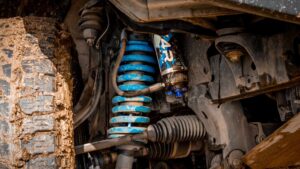
In case it isn’t clear at this point, the 70s are built for one thing: working hard. That means the suspension is designed to take a decent load right out of the gates. This is a double-edged sword.
On the one hand, when unloaded, they ride rougher than a flat-bottom tinny on the Bass Strait. On the other hand, it gives a false sense of confidence in their ability to handle heavy weights. Owners habitually load them up way over GVM, causing the rear leaf springs to prematurely sag and the ride to become bouncy, harsh and generally pretty shit.
Symptoms
When unladen, a sense of skittishness and a lack of positive road-holding on anything other than perfectly flat, freshly laid bitumen. When overloaded, harsh bottoming out over bumps and a lurching amount of body roll around corners.
Cause
Leaf springs are not really designed for comfort. They can be dialled in for a nice ride and high amounts of flex, but at the cost of carrying capacity. Like all suspension, they’re a compromise. In the 70s they tend to be completely overloaded or underutilised, resulting in poor performance either way.
Fix
Have we mentioned the aftermarket options available for these things yet? If you’re travelling heavy, look into GVM upgrades. There are a bunch of them and they all offer varying degrees of comfort and performance depending on your load.
If you’re constantly underloaded, look into fitting lighter-rated leaf packs to get some ride quality and improved road-holding. If you want to get the best of the best, plus fix the difference in track width between the front and rear in one hit, look into Superior Engineering’s coil conversions. Arguably the best option on the market, but not even Uncle Elon could call it cheap.
Should you worry?
A lot of people simply accept the ride for what it is and go on about their lives. It just doesn’t bother a lot of folks. But if it does bother you, it’s time to do some research into your options. Also, if you are rocking around over-GVM then your insurance and all legs to stand on from a legal perspective are null and void, so probably get it sorted sooner rather than later.
Weak factory air conditioning
Okay, this is the last thing on the interior comfort list, promise. But the stock AC is commonly rated as woefully underpowered and numerous owners wonder if their systems are defective from the factory. Not what you’d expect from Toyota or, for the last time, this price point.
Symtoms
It’s a scorching summer day, you’re in the back seat of your friend’s 79 dual-cab and you’re wondering why you’re currently suffering from heatstroke in a modern vehicle with the AC on full blast.
Even front-seat passengers complain that the AC taking a long time to get cool enough not to sweat in summer.
Cause
The factory AC is a single-zone system that is, frankly, under-designed for the task. It gets even worse on vehicles that head off-road regularly and the condenser clogs up with dust, grass and bugs.
Fix
Aftermarket AC amplifiers, like Freezebrain, plug into the factory Toyota AC controller and allow you to lower the evaporator temperature and increase AC performance. They also generally allow for things like idle-up controls, too. Handy bits of gear.
Should you worry?
If you’re planning a trip through the Red Centre in summer, then probably. Even if you live somewhere that gets north of 35ºC during summer it can be the best few hundred bucks you spend on your 4X4.
Chassis cracks on overloaded vehicles
One of the more serious issues with heavily loaded 70-Series Cruisers is the cracking at the weld of the rear spring hanger to the frame. It doesn’t happen on every vehicle, only on those that regularly travel past GVM (which is still a lot of them), and are driven on rough roads at speed.
Once the crack starts, they tend to spread quickly, and present a bunch of dangerous consequences if left unattended.
Symptoms
Often drivers will hear a clunk when driving under heavy load, such as towing up an incline. If it’s far gone a wandering feeling from the rear of the vehicle around corners can also be a sign something has gone worryingly wrong.
Cause
Can’t blame Toyota or the price tag here, this one almost exclusively comes down to using the vehicle outside of its design parameters. The big dawg attitude of the vehicle tends to make some owners confident enough to not even check the mass of their trailer or cargo, and the chassis cracking is the “find out” portion of the equation.
Fix
If it does happen, getting it professionally welded up is step one. Step two, which should follow step one immediately, is to have chassis bracing welded in by someone who is better than handy on the old MIG.
Step three is to fit the GVM upgrade you should have fitted from the get-go. If you’re shopping for a second-handy, chassis cracks and signs of fresh welds on the spring hanger is a sign to either walk away or bargain the seller down significantly.
Should you worry?
Again, for vehicles that only see within-GVM use it’s not a huge concern. There have been sporadic reports of the chassis cracking on those used appropriately but they’re thin on the ground. Regardless, checking the area as part of your regular servicing is a solid idea.
Alternator failures
This one is a two-pronged problem. While there’s nothing inherently wrong with the stock 130-150A alternator, it commonly fails due to one of two things. The first is its mounting location. It’s down low and right in the path of mud and dust ingress which would kill any alternator.
The second is the demand some touring rigs place on them. People fit extensive lithium battery systems up to 400A+ and expect the factory alternator to keep it up to charge.
Symptoms
The usual signs something is wrong are usually hard starting, slow charge of auxiliary systems and dash warning lights telling you in a Scottish accent that “she’s giving her all she’s got, Captain, but it cannae give no more.”
If you were born after 1990, that was a Star Trek joke.
Cause
People not taking the time to ensure their alternator has been properly rinsed out with a low pressure hose after an off-road trip is the first cause. The second is loading up your 12V system with every gadget and high-current-draw doodad under the sun and expecting the factory chargey-boi to suck it up and handle it.
Fix
Fit a bigger one. 240A replacements from Jaylec are popular, as are sealed units for people who drive off-road a lot. Talk to your auxiliary battery system installer and get their recommendations for keeping up with demand for charge.
Should you worry?
Do you make sure to keep your alternator clean and free of debris after a wheeling trip? Have you got enough charging capacity and a proper DC-DC charger to handle both your starting and auxiliary battery systems? Do you feel squirelly leaving your headlights on even though the engine isn’t running? If you answered yes to all these, then no.
Airbox dust ingress (engine dusting)
We’ve touched on this in previous Land Cruiser articles, but it bears repeating here. When Toyota were designing the airbox seal on the 1VDs they were clearly smoking crack as the seal may as well be made out of political promises it’s so ineffective. Dust routinely gets past the air filter causing MAF sensor issues and turbo dramas aplenty.
Symptoms
You’re in your third day into your remote trip and all of a sudden your engine goes all limp-mode on you or worse, your turbo starts making noises you’d expect from somebody with late stage tuberculosis.
Cause
The airbox seal is the proverbial screen door on a submarine. Pretty much useless, with more holes in it than a Nicolas Cage movie plot.
Fix
We’ve heard of some mechanics greasing the factory seal to make it a little more effective. We’ve also heard of people making their own seals for the airbox out of silastic and D-rubber, but by far the most tried and true method is to stump up for an aftermarket airbox.
They flow more efficiently and, more importantly, keep your inlet manifold completely sealed from the outside world other than via the air filter.
Should you worry?
It takes no time to unclip the top of the airbox and check the downstream side of the filter. If it’s clean, you can breathe a sigh of relief and start selecting an aftermarket airbox that you like the look of. If there’s dust in there, shorten the airbox selection timeline down drastically. Your engine is on borrowed time.
What should you check before buying a used 70 Series?
Buying a used Toyota LandCruiser 70 Series can be a great investment, but many have spent years towing heavy trailers, carrying large loads or working in harsh conditions. A thorough inspection before handing over your money can save you thousands in unexpected repairs.
When inspecting a used 70 Series, pay particular attention to:
Check for DPF warning lights or evidence the vehicle regularly enters limp mode on post-2016 models.
Test the clutch for slipping under acceleration, particularly if the vehicle has been tuned or fitted with performance upgrades.
Listen for gearbox crunching, especially when shifting between second and third gears, which may indicate synchro wear.
Inspect the chassis around the rear spring hangers for cracks, fresh welds or reinforcement plates that could indicate previous repairs.
Look carefully for rust, particularly around the A-pillars, door frames, chassis rails and underneath the body.
Jack up the front wheels if possible and check for excessive wheel bearing play.
Inspect the airbox for signs of dust getting past the air filter, which may indicate the factory airbox sealing issue.
Check the service history, including regular oil changes, gearbox servicing and wheel bearing maintenance.
Assess any modifications carefully. Lift kits, larger tyres, tuning and accessories aren’t necessarily bad, but poor-quality modifications can create new problems.
Ask about towing history and vehicle weights. A heavily worked towing vehicle may have experienced significantly more wear than one used primarily for touring.
A well-maintained 70 Series with a documented service history is generally a far safer purchase than one with extensive modifications and little maintenance history.
Should you buy one?
If your priorities are reliability, durability and genuine off-road capability, it’s easy to understand why the Toyota LandCruiser 70 Series remains one of Australia’s most sought-after 4WDs.
Its mechanical simplicity, strong aftermarket support and proven V8 diesel make it a favourite among tourers, tradies, farmers and anyone regularly travelling into remote areas. While the ride quality and interior comfort fall well behind more modern dual-cab utes and wagons, few vehicles can match its reputation for getting the job done.
Like any ageing platform, there are common issues to be aware of. Fortunately, most are well understood by owners and specialists, with proven fixes readily available. Buying a well-maintained vehicle, staying within its weight limits and keeping on top of routine servicing will go a long way towards ensuring years of dependable ownership.
If you’re expecting luxury SUV comfort, you’ll probably be disappointed. But if you want one of the toughest workhorses ever sold in Australia, the LandCruiser 70 Series continues to earn its legendary reputation.
FAQs on the Toyota LandCruiser 70 Series
What is the most common problem with the Toyota LandCruiser 70 Series?
Some of the most commonly reported issues include DPF problems on later models, clutch wear on tuned vehicles, gearbox synchro wear, wheel bearing wear, airbox dust ingress and poor factory door seals. Most are well known within the 70 Series community and have proven repair or upgrade solutions.
Is the 4.5-litre V8 LandCruiser engine reliable?
Yes. Toyota’s 1VD-FTV 4.5-litre turbo-diesel V8 is widely regarded as one of the most durable diesel engines fitted to a modern Australian 4WD. Regular servicing and addressing known issues such as airbox sealing and DPF maintenance can help maximise its lifespan.
Do all LandCruiser 70 Series models have DPF problems?
No. Diesel particulate filters were introduced to Australian V8 models in late 2016 to meet stricter emissions regulations. Earlier V8 models don’t have a DPF.
Which LandCruiser 70 Series model is the most reliable?
Many enthusiasts favour the pre-DPF V8 models built between 2007 and 2016 due to their simpler emissions systems. However, well-maintained later models can also provide excellent reliability.
Are Toyota LandCruiser 70 Series vehicles expensive to maintain?
Routine servicing costs are generally reasonable, but repairs can become expensive if major components such as the gearbox, clutch or chassis require attention. Preventative maintenance is the best way to avoid larger repair bills.
Is it worth buying a high-kilometre LandCruiser 70 Series?
It can be. A high-kilometre 70 Series with a comprehensive service history and evidence of careful ownership is often a better purchase than a lower-kilometre vehicle that has been neglected or heavily overloaded. Always inspect the vehicle carefully before buying.